
 Saagar Kote
‘Agnes’ revolves around the strange happenings at a convent called Carmelite Santa Theresa. Agnes, a nun, shows signs of possession and demonic activity. Her only friend in the convent is Mary, a fellow nun. Due to the seriousness of the situation, the regional church sends a senior priest, Father Donaghue, and his young mentee, Benjamin, to investigate Agnes’s case. With supernatural events occurring at the convent, the nuns’ lives become increasingly chaotic and difficult. As Donaghue and Benjamin try to resolve Agnes’s issues, they realize that the case is more complicated than they previously imagined.
While the two religious men investigate further, they must also come to terms with their own doubts and insecurities about the case, which seems beyond their control. Amidst all the noise, Mary has a crisis of her own and struggles to understand her role in the convent. As the story reaches its conclusion, Agnes and Mary’s fates hang in the balance. SPOILERS AHEAD.
Agnes Plot Synopsis
A group of nuns convenes to celebrate Sister Gertrude’s birthday at the convent, Carmelite Santa Theresa. However, Sister Agnes utters expletives in a demonic voice, disrupting the ceremony. A young priest, Benjamin, meets Father Donaghue, who congratulates him on passing the exam. Benjamin informs that he will be taking his vows in the spring. Benjamin and Donaghue are summoned by the Bishop of the local church, who tasks them with helping the nun who spoke with a demonic voice at Carmelite Santa Theresa. Father Cappa, one of the priests, asks Donaghue to leave the room and discreetly tells Benjamin that Donaghue will be sent away from the church, as he is accused of certain shameful acts. Benjamin is shocked and worried about whether he will be safe with Donaghue. At the convent, Sister Agnes shows increasingly risky signs of possession.
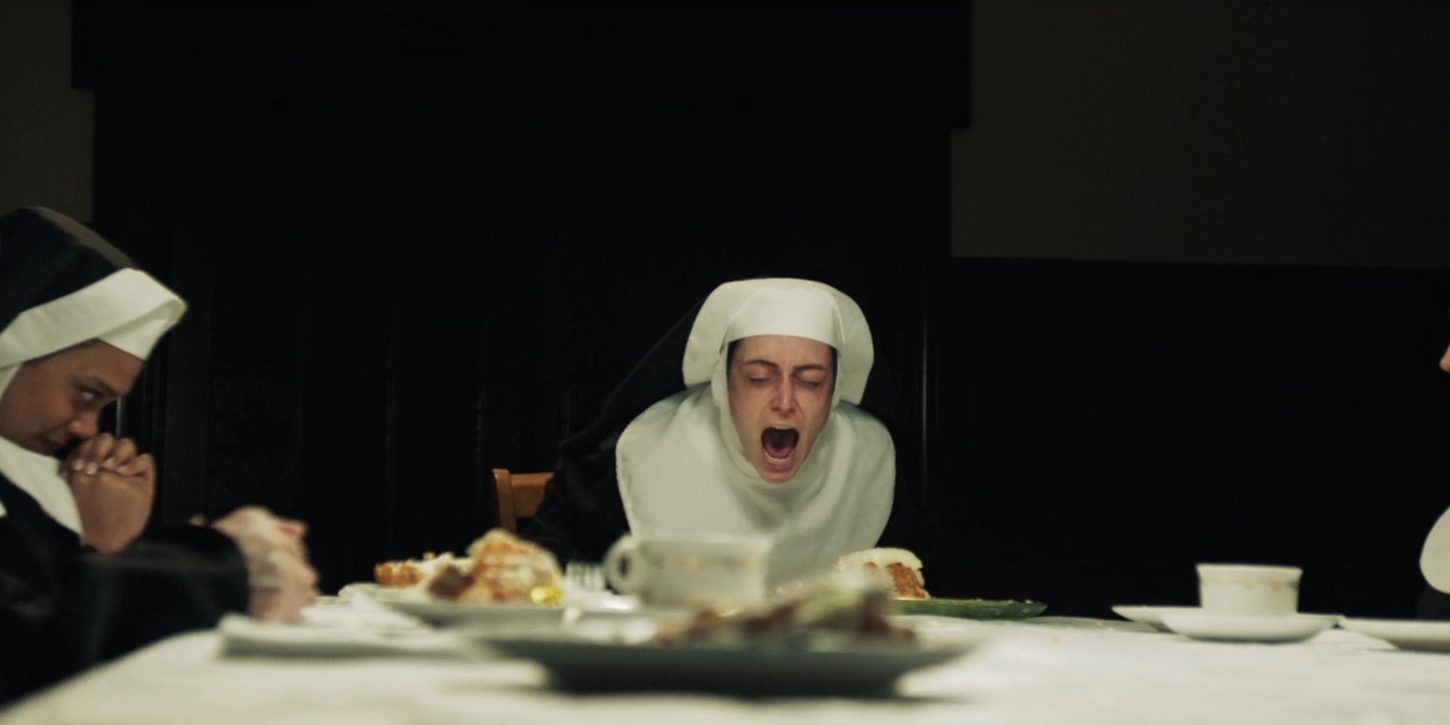
Donaghue and Benjamin eat at a diner, where the former talks about the difficulties of being a priest and the art of exorcism. Donaghue talks about his experience with exorcisms in the past and expresses that he doesn’t believe in the existence of demons. Sister Mary, the one who is Agnes’s closest friend, is tasked by the Mother Superior of the convent to clean the place before Donaghue and Benjamin’s arrival. As the two priests arrive, Benjamin refuses to wear the priest collar, as he hasn’t yet taken his formal vows. The Mother Superior expresses her displeasure because Benjamin is not ordained. Benjamin and Donaghue begin an investigation into Agnes, who is tied up. Donaghue tries to talk to Agnes, but she hisses at him and curses him. Agnes foams from her mouth and repeatedly utters expletives as Donaghue recites prayers.
As this happens, Mary remembers moments from her and Agnes’s life before they became nuns. During the mass, Donaghue invites Agnes to join them, but she starts kissing Donaghue suddenly. She then aggressively bites Donaghue’s nose. Donaghue recovers from his bleeding nose and tells the others that he may need help from Father Henry Black, a skilled exorcist, whom he served with at Rome. The Mother Superior tells Mary to care for Agnes. Mary sees supernatural phenomena around her and then has flashes of her past with Agnes. Mary talks to Agnes in the bedroom, and the latter says that she was in love with a teacher in the past. It is revealed that Mary lost a son before becoming a nun. Agnes starts foaming at the mouth again and tells Mary she will always be there for her. Donaghue worries about his future and gets emotional. The next day, Father Henry arrives with his female assistant.
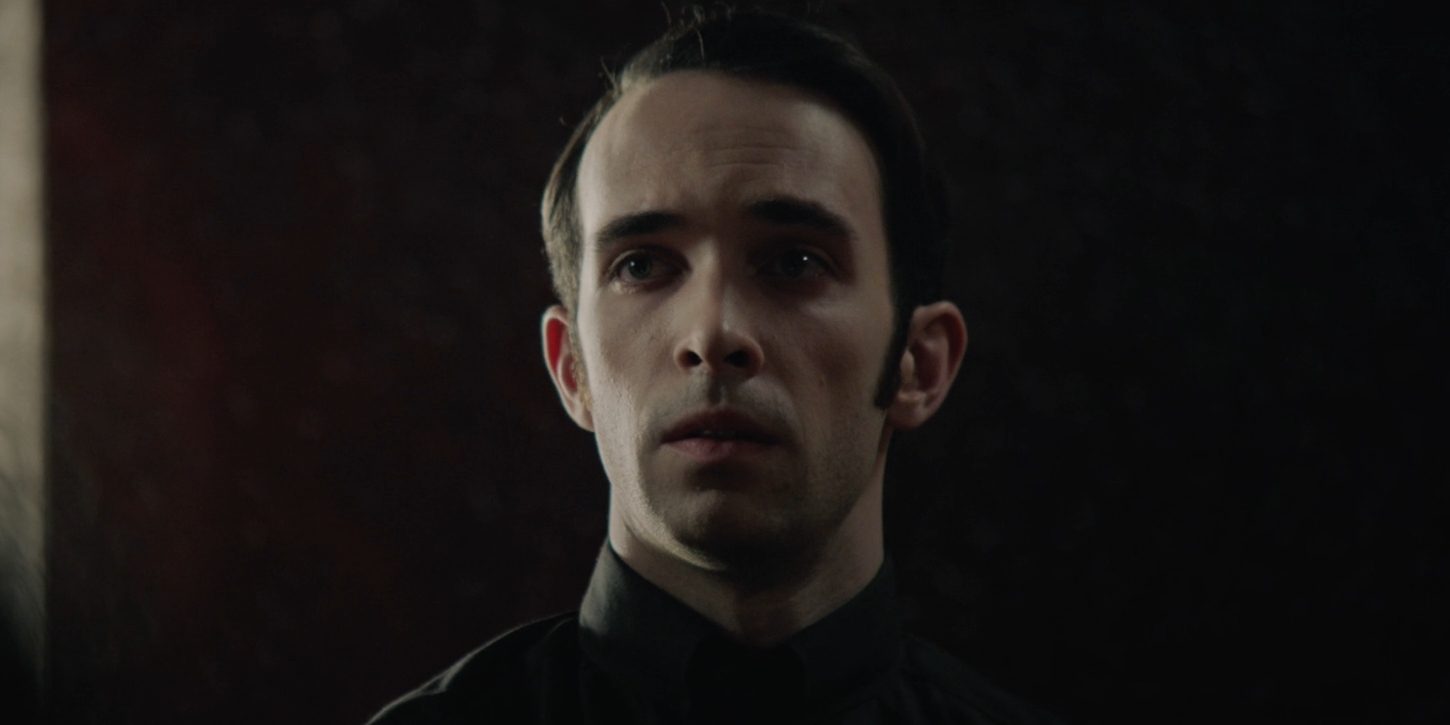
Henry lives a life of luxury and is not a serious priest, but somehow understands how exorcism works. The Mother Superior is displeased with the presence of Henry. However, Donaghue escorts Henry to Agnes’s room against the Mother Superior’s wishes. Henry tries to perform an exorcism on Agnes, but it goes horribly wrong, and Agnes bites his neck, leaving him bleeding profusely. Donaghue sees Mary in civilian clothes, carrying a bag, seemingly preparing to leave the convent. A few weeks later, Mary is no longer a nun and works at a convenience store, where the manager, Curly, takes an interest in her.
Mary is not able to cash her check because she doesn’t have a checking account. She also spends her nights in sadness, remembering her dead son. Mary also struggles with rent hikes from her landlord, Earl. She meets sisters Honey and Ruth, who tell her that they moved to a new convent in the town. The sisters ask Mary whether she is still a woman of faith, and she says she no longer has clarity. They ask Mary to join their new convent, but she hesitates.
Agnes Ending: Why Does Mary Show Signs of Possession?
Mary’s journey takes her to unexpected places after she leaves the convent. She works at a convenience store and struggles to make ends meet. She spends time grieving the death of her son. Though it has been a few months since she left the convent, she still feels a crisis of faith. This is the point at which she crosses paths with Paul, a stand-up comedian in the town. She takes an interest in his shows and also finds his jokes amusing. However, she doesn’t laugh at the show, but does so at her apartment and then at her workplace. Her hysterical laughter troubles Curly, who notices something is wrong and grows increasingly frustrated with Mary’s behavior. Later, Mary befriends Paul at the laundry shop and then goes on a date with him. It is revealed that Agnes and Paul dated in the past and that she was deeply in love with him.

Mary keeps remembering Agnes and the happy moments they shared in the convent. Paul used to be Agnes’s teacher, but still dated her. He exploits his position as a teacher to get romantically involved with a student. At this stage, Mary has serious doubts about her faith, misses Agnes, laments the death of her son, has a conflicted view on Paul, and also deals with workplace harassment and unruly advances from Curly. The combination of these factors changes her behavior. Though she shows signs of “possession,” the narrative’s real aim is to portray her battle to finally stand up for herself. The movie utilizes the idea of possession from a feminist standpoint. Agnes, too, was possessed, but her acts are not demonic. Though it appears supernatural, Agnes wanted to liberate herself from the clutches of religion and social morality.
Her acts of cursing her fellow nuns, biting Donaghue’s nose, and biting Henry’s neck are all acts of rebellion. Mary carries the same spirit and undergoes a transformation during her time at Paul’s house. She talks to Paul about her dead son and the grief she deals with. Later, as she gets intimate with Paul, Mary has visions of Agnes being nailed to a cross and violently bites Paul’s right cheek. Paul is petrified, and Mary starts laughing hysterically, in ways that resemble Agnes’s possession. The state of possession allows Mary to be free and follow her own voice. Her possession gets more intense, making her experience aggressive body movements and difficulty at her work in the convenience store. When Curly interrupts her during a call, Mary hisses at him with a seemingly unnatural voice.

She also finds the courage to quit her job and pursue her own path. Mary’s possession, though odd and unsettling, is not about ghosts or demons. It has to do with the insecurities of her own heart and the courage needed to let go of fear and hesitation. Ultimately, her desire for liberation from society’s injustices and the willingness to be an independent woman are expressed through strange behavior and violent acts that give the illusion that she is possessed by an entity.
What Does Mary’s Conversation With Benjamin Signify?
Mary manages to get Benjamin’s contact details, and the two meet in a cafe to discuss the troubles she has been facing recently. Benjamin plays a vital role in Mary’s life as she sees him as one of the only sane representatives of the church. When Mary tells Benjamin she might be possessed, he is shocked and considers it a serious issue. Mary remembers Agnes and everything that they experienced as friends. She also credits Agnes with helping her rethink her life. Mary also tells Benjamin about the uncertainty of her faith and how she has lost the ability to accept God. Mary also tells Benjamin that she is experiencing grief because of the death of her son, and Benjamin responds by saying that he, too, has lost a mother and knows what grief is.
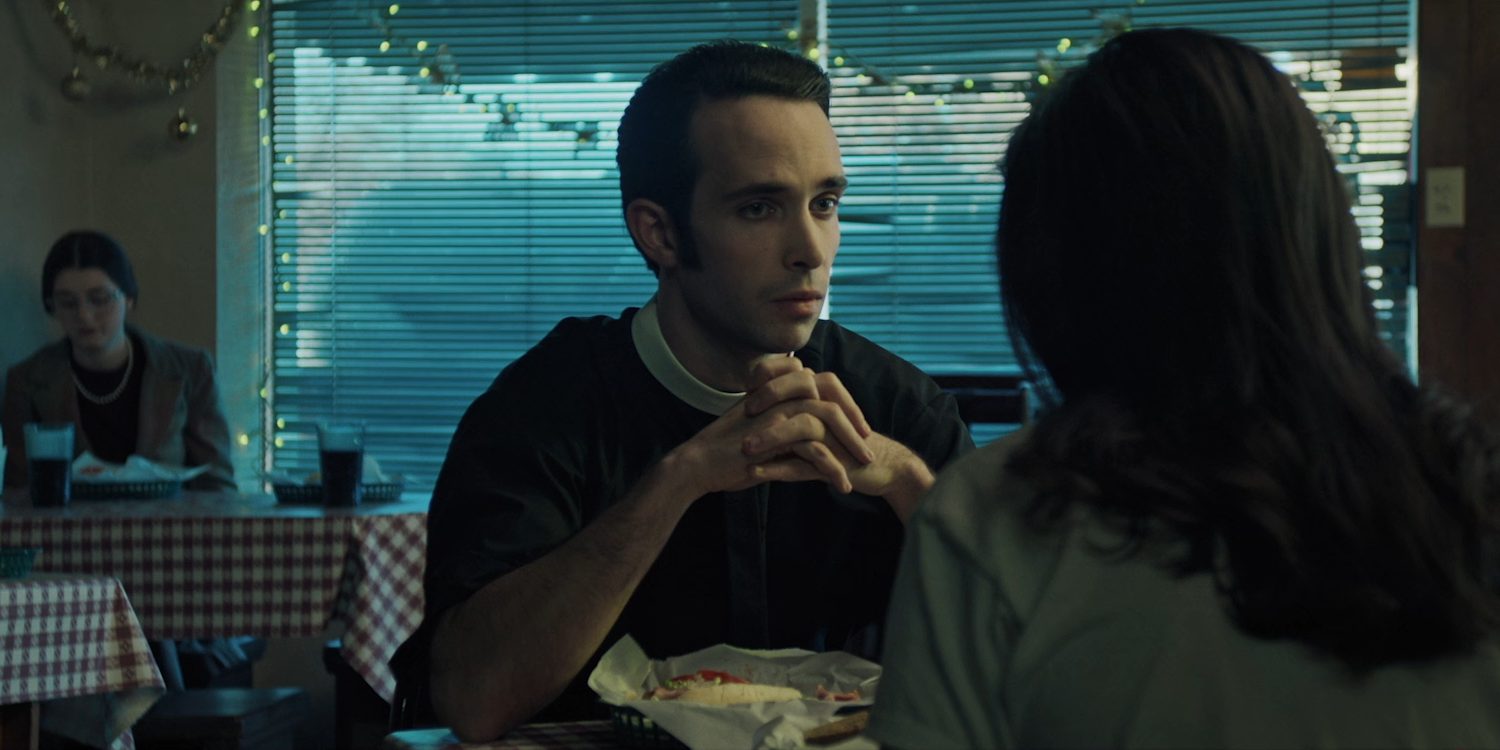
This is when Mary asks Benjamin a very difficult question about the existence of God in the mortal world. He gives her a deeply philosophical answer that changes her perception of life and her struggles. Benjamin talks about the spiritual experience and compares it to eating a sandwich. He talks about how a sandwich has various layers that are not really tasty or worth eating, but ultimately, when you eat the meat held deep within the sandwich, it is what makes the experience fulfilling and meaningful. Benjamin says that this is exactly what it means to find God in one’s life. Though there are several troubles one can face as a human being, one can always hope to find God if they have the courage to fight through them, just as one eats the tasteless parts of a sandwich to get to the meat.
This conversation helps Mary realise that she has to accept her loss and leave enough space in her own soul for happiness. This allows Mary to finally be free of her so-called possession and focus on healing herself. Unlike Agnes, who never got the emotional support that she deserved, Mary finds strength in Benjamin’s words. Mary will face her own challenges, but her situation won’t be as intense or heartbreaking as Agnes’s. Eventually, Mary will be able to overcome her grief and lead a happier life where faith acts as a positive force and not a negative force that makes her delusional.
What Happens to Agnes? Where is Donaghue?
Agnes faces intense troubles when Donaghue brings Henry to perform an exorcism. She first acts like she is calm, but then proceeds to violently bite Henry’s neck. Agnes reaches a point of no return, since her grief and trauma are way beyond her control. It is revealed by sisters Honey and Ruth that Agnes was “put away” after her behavior got increasingly violent. Despite not explicitly stating it, the narrative strongly hints that Agnes is dead. In Mary’s visions, she sees images of Agnes being nailed to a cross. This is most likely an image that she conjured up in her mind as a result of her trauma. Agnes was presumably killed by someone within the convent and may have been handed over to law enforcement for her violent behavior.
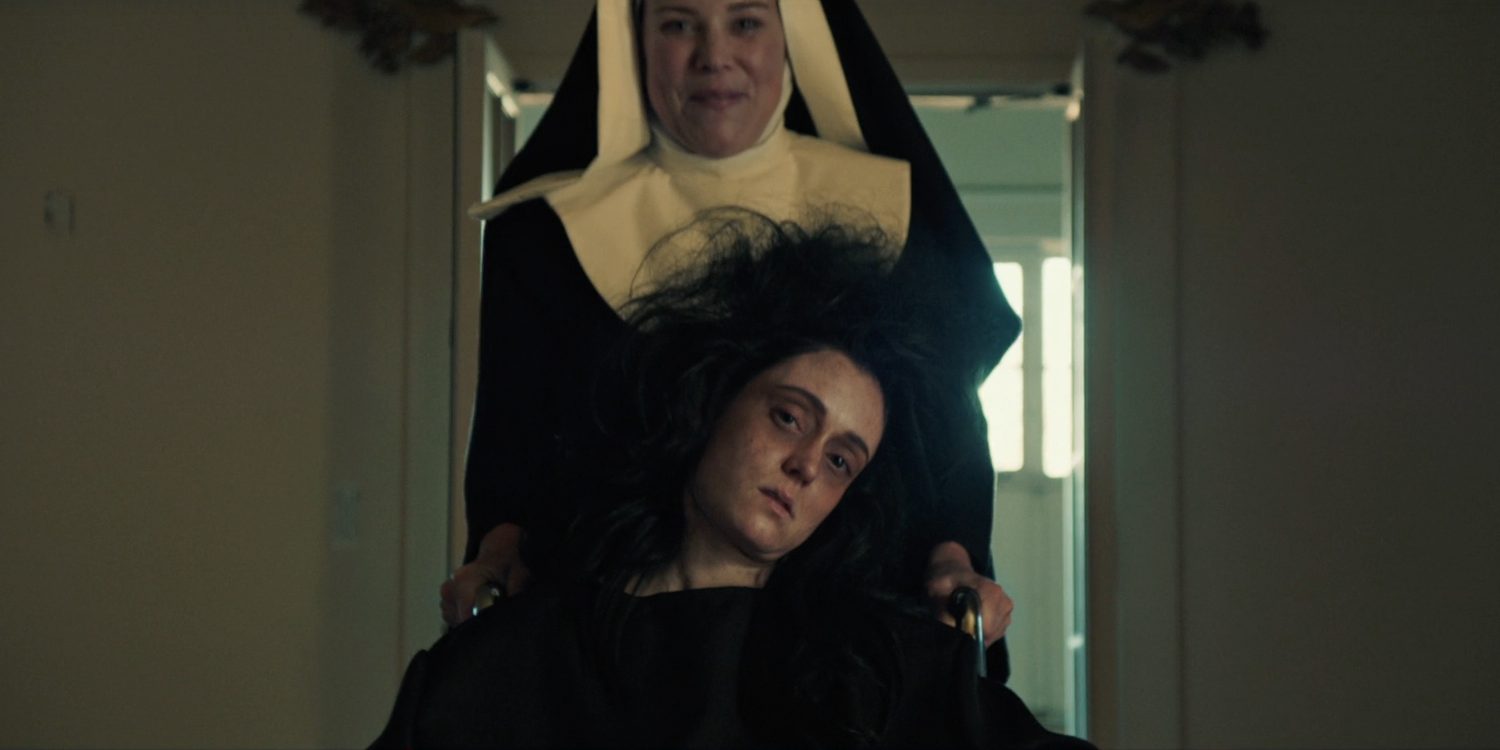
There is a possibility that she was taken to a mental health institution, but the more likely scenario is that she died under mysterious circumstances. Donaghue vanishes without leaving a trace after handling Agnes’s case. This could mean that the church sent him away to a foreign country. Earlier in the narrative, the Bishop reveals serious allegations against Donaghue. However, the nature of these allegations is unclear. It is strongly hinted that Donaghue was likely accused of sexual abuse. As a result, the church presumably sent him away to a foreign country to preserve its dignity.
Read More: Mother of Flies Ending Explained

