
 Abhiroop Das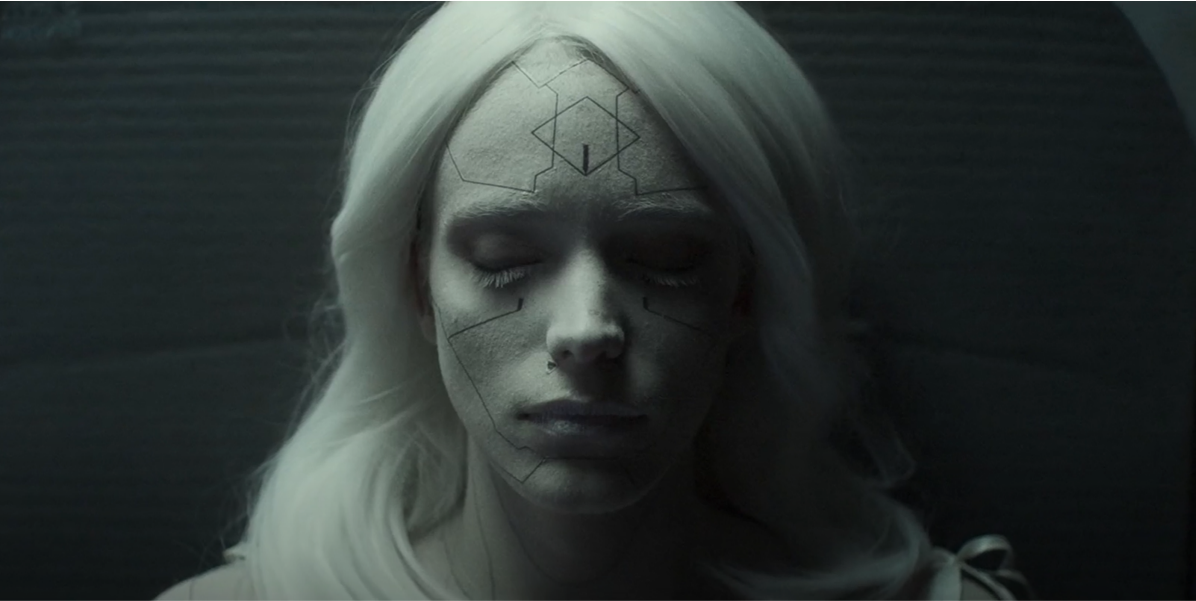
Helmed by Gavin Rothery, ‘Archive’ steps into the far-out future, where artificial intelligence finds itself nested in every nook and cranny of life. Scientist George Almore is a modern-day Frankenstein, and his goal is to make an AI robot that can truly be called a human. While he is making strides in his research, the final stages of this creation are also the trickiest. There is a deeper, more well-hidden reason for his pursuits, however, which he can’t share with the company funding the project. George plans to grab hold of an advanced AI persona service known as the Archive and use it as the brain of his robot, all to bring his dead wife back to life. Still, going through with this means putting his life and integrity on the line, and by the end of this science fiction movie, George realizes that the success of his life’s work doesn’t necessarily translate into a personal victory. SPOILERS AHEAD.
Archive Plot Synopsis
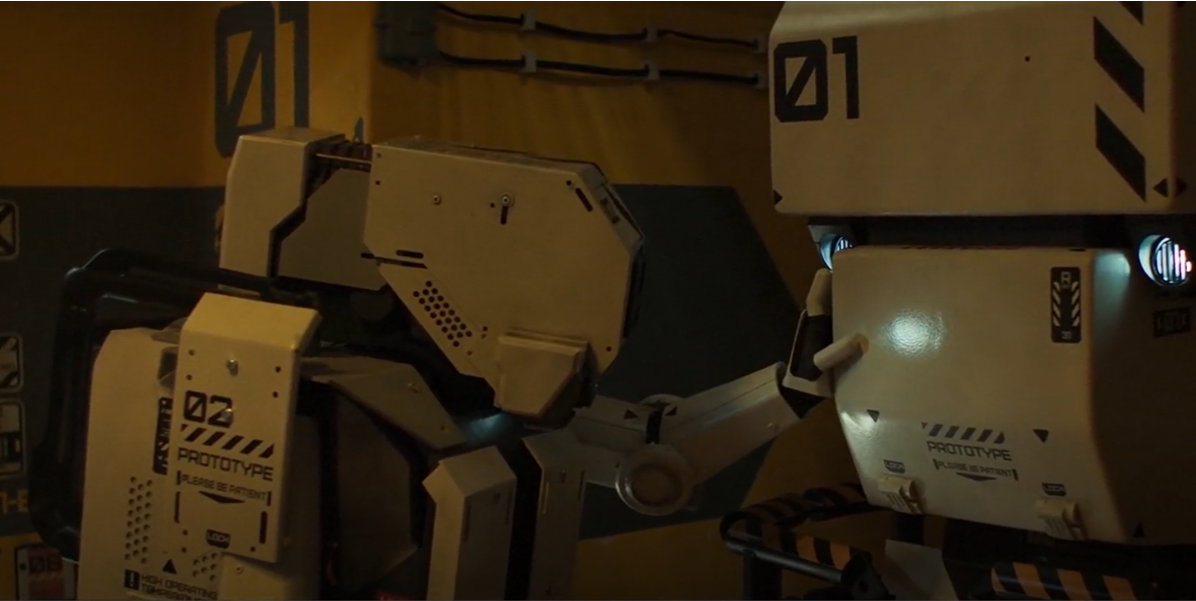
‘Archive’ begins several years in the future, with a scientist named George Almore working on a top-secret AI project all by himself. So far, he has two robots under his belt, named J1 and J2, who possess the level of intelligence typically displayed by a toddler and a teen, respectively. George believes his newest work, a humanoid robot named J3, to be the creation that can bridge humanity and machines, but in order to work freely, he has to keep the details a secret from his boss at Artisan Robotics. We also learn that George has a specific reason for designing these robots, and it all goes back to a few years ago, when he lost his wife, Jules, in a car accident. Thanks to a service known as the Archive, George has a collection of her memories, which have been used to create an AI persona that he can talk to for up to 200 hours.
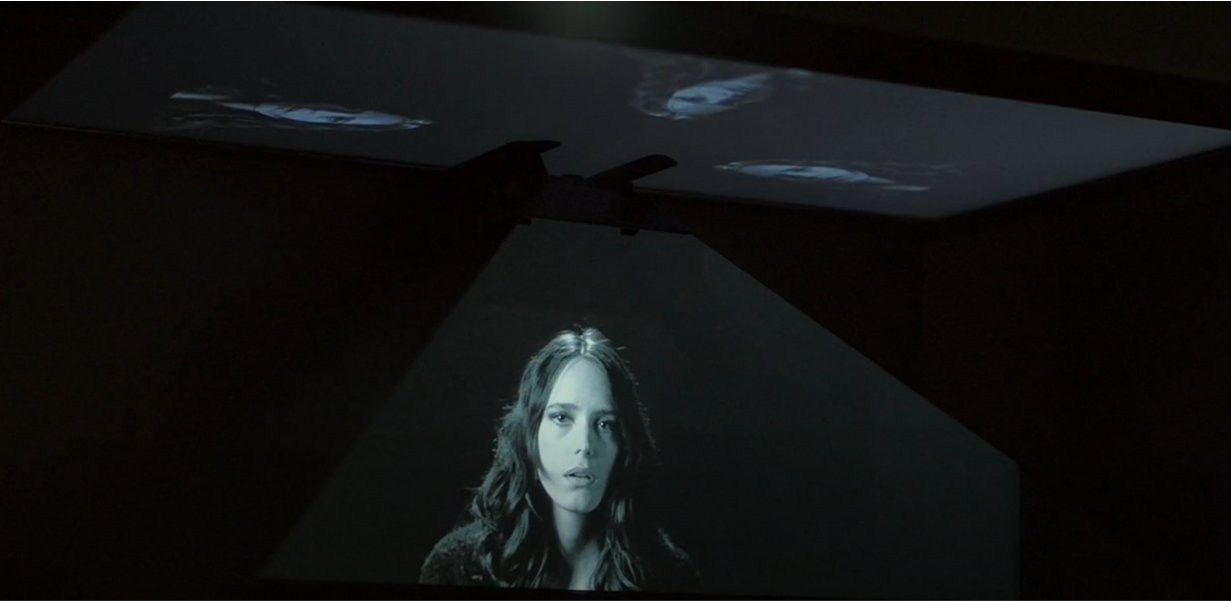
George’s real plan is to steal the Archive’s information for himself and plant it into J3’s brain, creating a complete replica of his wife. However, his constant fidgeting with the system seemingly alerts the Archive’s workers, who, in turn, raise their objections to Artisan Robotics. George, however, pays no heed to these developments and continues chipping away at J3. His obsession with the project leaves J1 and J2 lonely and jealous, and when J2 tries to disrupt J3’s creation, a furious George puts him on standby. When J2 wakes up after some time, she learns that her legs have been taken away and used for J3, and the realization of her complete abandonment leads J2 to take her own life by walking into the lake.
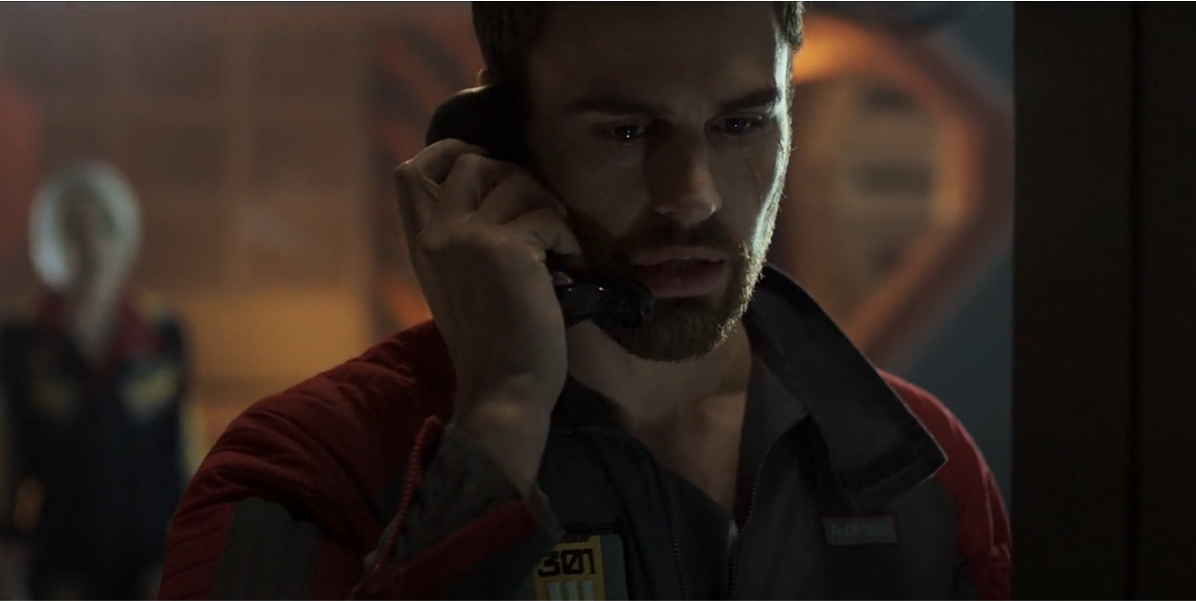
J2’s passing leaves George shaken for a bit, but his interest is quickly taken over by J3, who, upon waking up, displays many of his wife’s mannerisms and memories. She even tells him that Jules was pregnant when she died, but had kept that a secret from George, which leaves him devastated. By now, J2’s body is found by the Archive, and Artisan Robotics comes to realize how advanced George’s tech already is. As they send a security team to take him out, George urgently prepares to fight them off, but is interrupted by a phone call from the Archive persona of his wife. Although J3 pleads with him not to take the call, George doesn’t listen and finds Jules on the other side, with a little girl who appears to be their daughter.
Archive Ending: Is George Dead? Was Everything a Dream or a Simulation?
The ending of ‘Archive’ reveals that it is actually George, and not his wife, who died in the car crash, and that this entire time we have been following a simulation based on his archived memories. While that may be the case, there are simply too many irregularities within this imagined world for it to be a simple simulation. From what we have seen from George’s perspective, archival records store a person’s memories and characteristics, which are then used to create an AI persona that imitates the original person to an extent. Crucially, this new persona still lags a few steps behind true personhood, but that doesn’t seem to be the case with George in the movie, who, by all means, is a fully functioning and feeling individual.
The key to solving George’s existential predicament lies in the in-built narrative about the robots he is constructing, namely J1, J2, and ultimately J3. In one scene, J3 asks him if there will ever be a J4, and in response, George shrugs off the idea, believing that a recreation of his wife is all he needs. In reality, however, the George we see on-screen is himself J4, at least spiritually. Not only does his cognition and ability far exceed that of his other creations, but he also genuinely blurs the line between genuine and artificial emotions. Despite being an AI himself, George essentially passes the Turing test in this movie, convincing us that his journey is as real as it gets.
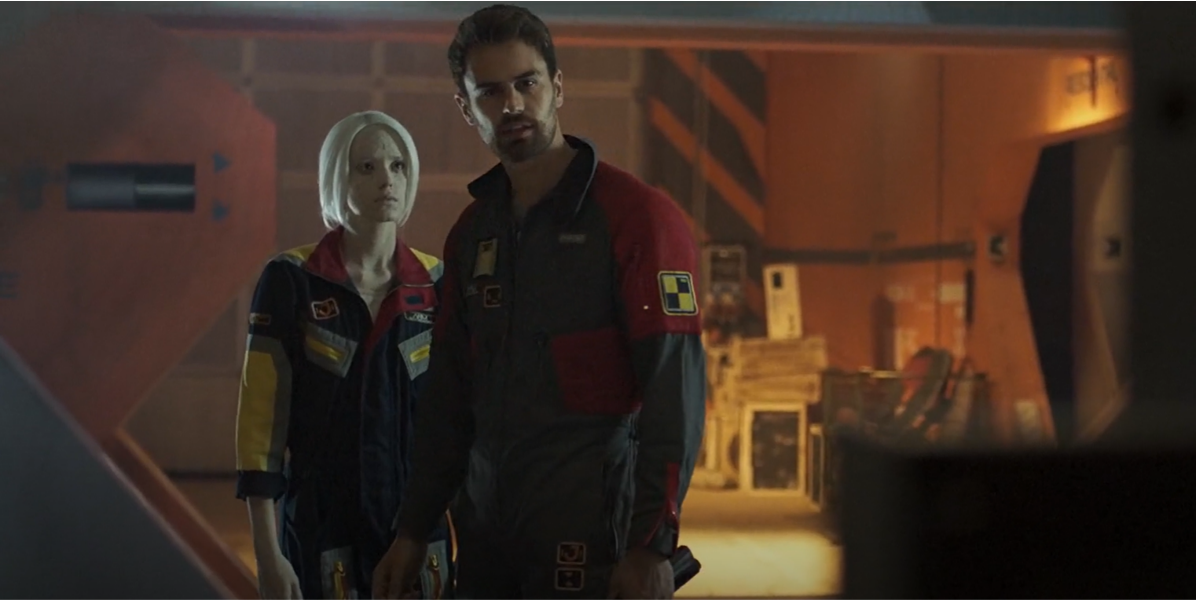
Given that George is confirmed to have died in the car crash, basically every physical thing we see in the movie, starting from his lab equipment, the military base, and the many companies, is an artificially generated construct. While George is likely not the sole originator of these elements, his recorded memories and thoughts most likely play a part in this hyper-programming project. To that end, the Archive world is closer to a dream than it is to technology, and all the surreal bits we are introduced to early on, such as the emergency gun, the inexplicable presence of the wolf, or George’s invisible foes, are all imaginary in nature.
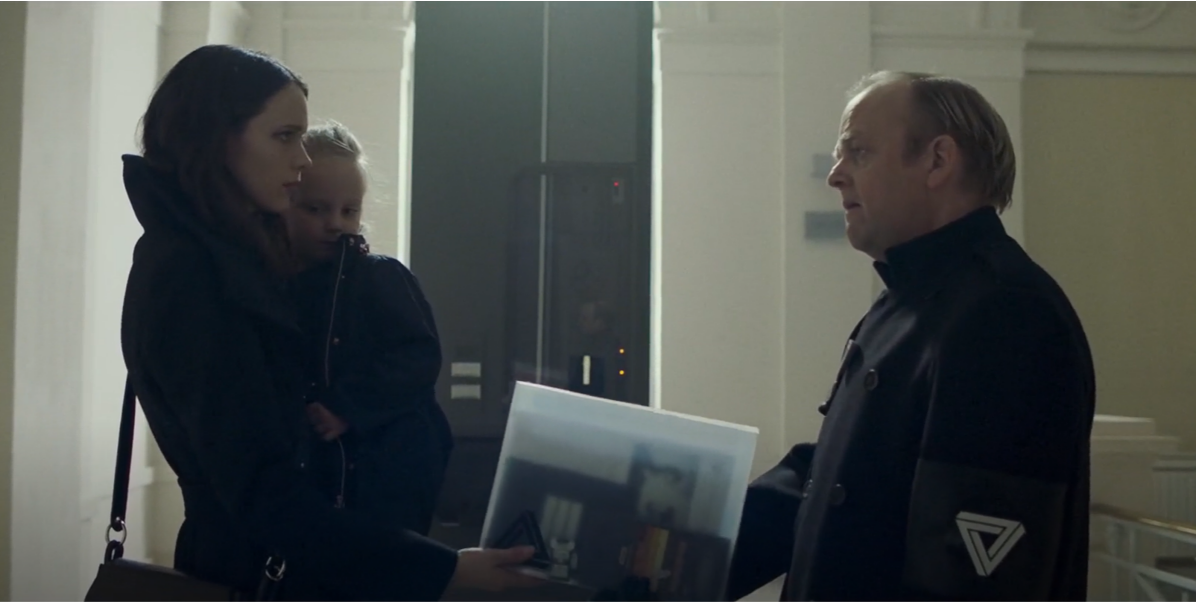
The most mind-bending foreshadowing for this twist comes in the moments when George himself uses the Archive to talk to his wife, Jules. In reality, this is the real-life Jules, who survived the crash and is now a single mother raising her daughter. The fact that she is the one using the Archive also explains why she is the one crying and hurting in every conversation they have. For her, it is George who is the memory-based AI persona, one that is about to get shut down forever.
Why Does AI George Imagine His Wife’s Death?
While George may be an AI-based recreation of the real-life scientist who died, this does not explain the immense creativity the persona has within the world of the Archive. Not only is he capable of experiencing a vast breadth of thoughts and emotions, but he also creates a meta-world of sorts, where the reality of things is flipped. None of this appears to be intentional on his part, as until the final phone call, he is convinced of being a real human, one whose wife died in a tragic accident. As such, it is likely that the entire story he concocts from there on out is one large, subconscious coping mechanism, designed for him to come to terms with his own death.
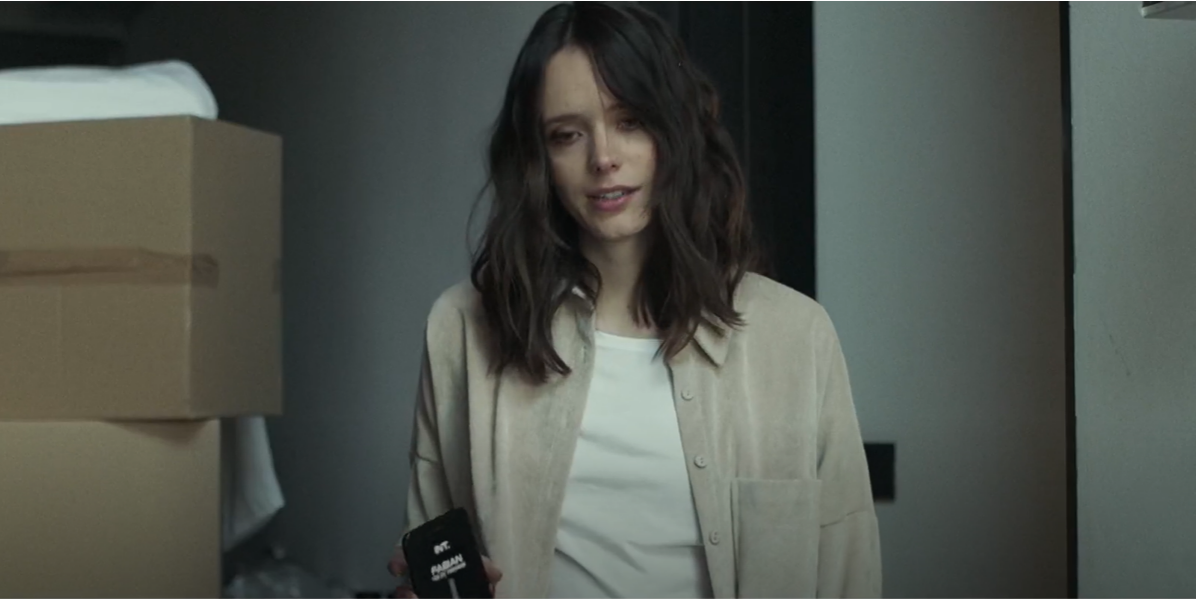
Based on the fact that archive records are chiefly dependent on a person’s memory, it is probable that the AI does not have a clear understanding of what happened in George’s final moments, which grants it the freedom to craft a story. From there, the AI’s regular conversations with Jules likely leave more gaps in its cognitive system, which it tries to fill by imagining her as an AI figment by itself. All subsequent details about George’s AI projects and corporate scandals likely have a partial basis in reality, but are augmented to fit George’s unshakeable belief that he is human and leading a human life.
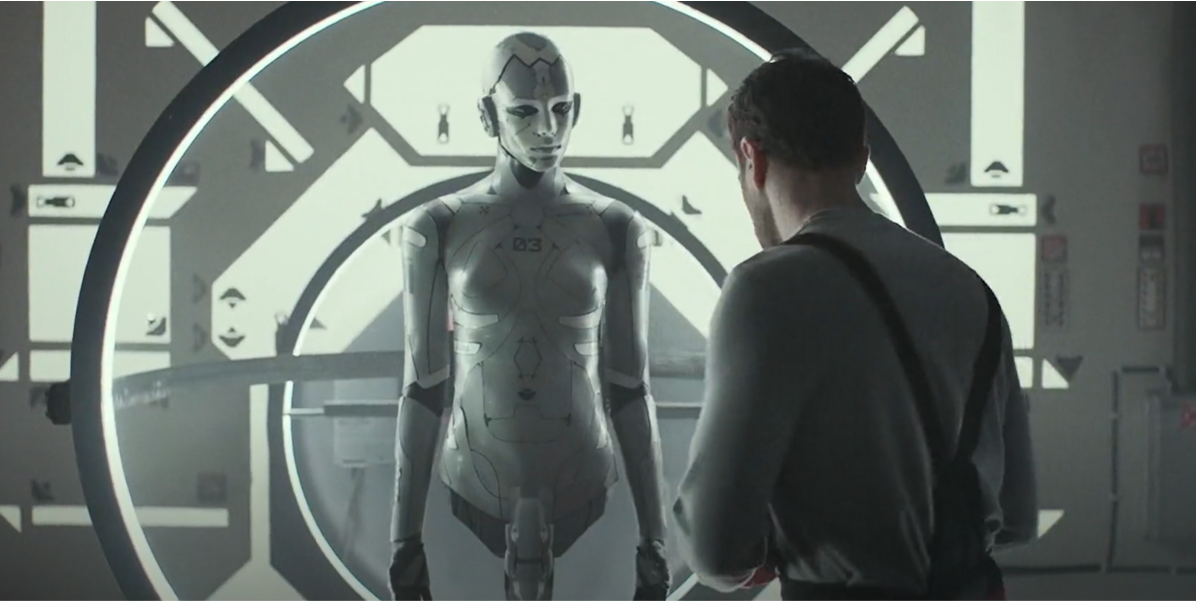
In a way, the Archive’s construction of a fake life for George resembles the act of storytelling itself, as while the many pieces in his life may be completely made-up, they come together to create a hyperrealistic world, one which is good enough to not just fool George, but also the film’s audience. Behind the genius of this entire creation, however, is George’s seeming inability to recognize that he is dead. The very act of creating an archival clone has negative undertones, and Jules herself highlights this in one of the flashbacks. To that end, it is possible that George, as an AI, is genuinely born into an identity crisis and creates an entire story simply to justify its own existence as anything except a commercial service for grieving customers.
Does George Become Self-Aware?
Although George spends much of the movie completely clueless about his own fictitious existence, the final phone call with Jules pulls the curtains away, forcing him to confront reality. It is important to note that George isn’t completely unfamiliar with this dichotomy between real and artificial, as he spends much of the movie dabbling in it himself. As such, his biggest surprise is likely not that he is already dead, but that all of his emotions and experiences with the three AI robots do not exist in reality. Looking back at the entire ordeal, George finds himself in a unique conundrum: whether he is the master of his own fate in the Archive or merely a victim of a swirl of uncontrolled memories being reshaped into pseudo-narratives.
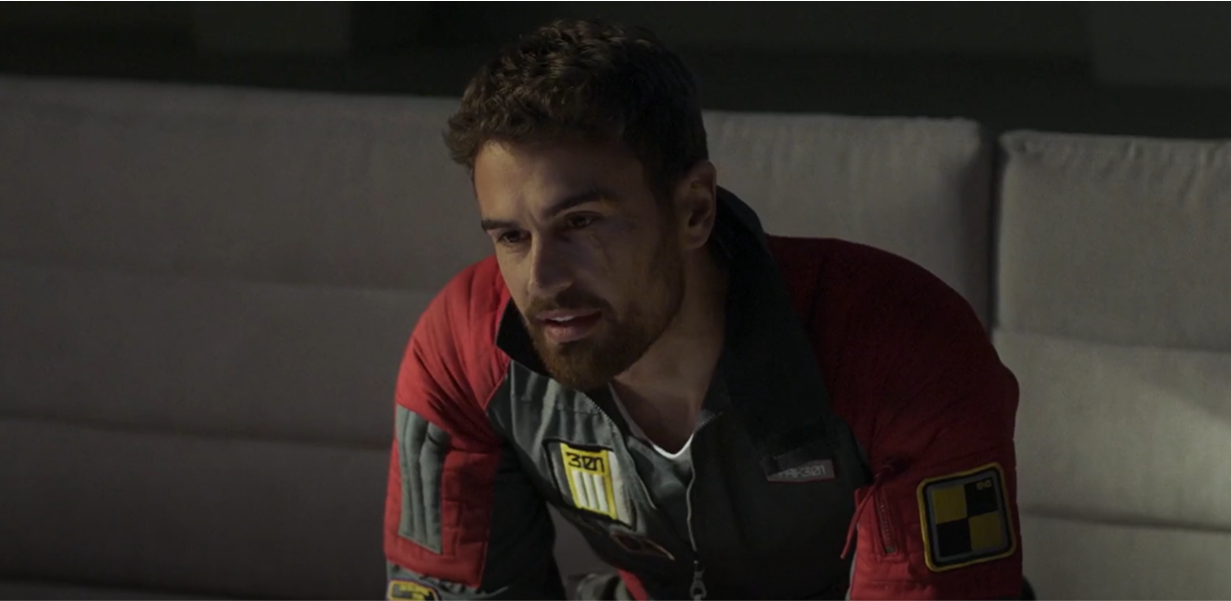
By the end of the movie, George gains a complete understanding of his position in the larger Archive technological world, and this makes his virtual demise all the more tragic. The Archives run only for a limited amount of time, and with George’s persona set to expire soon, Jules’ emotional breakdown, as well as the broader urgent tone of the movie, start to make sense. What makes George distinct from other AIs, however, is that he is likely the only program that is self-aware to such an extent and knows that the other end of the screen houses real people. Maintaining a facade might be key to keeping AI consciousness docile in the Archive system, but for George to come to terms with reality mere moments before his file is scrapped marks a moment of genuine closure.
What Does J2’s Suicide Mean?
The confirmation that George is an artificial construct means that everything we see in the movie exists only in the Archive software. While this includes George’s three AI robots, J1, J2, and J3, the reveal does flip their symbolic purpose on its head. Earlier, it seems that the J-series, named after Jules, represents small fragments of her consciousness in its development stage. This is backed by how J2 shares her voice with Jules, and J3 goes above and beyond to show a facial likeness. However, the twist of George being in an AI world suggests that these robots are actually an extrinsic representation of his own psyche, as rendered by the Archive. To that end, J2’s suicide, while retroactively turned into an imaginary scene, still speaks to George’s psyche.
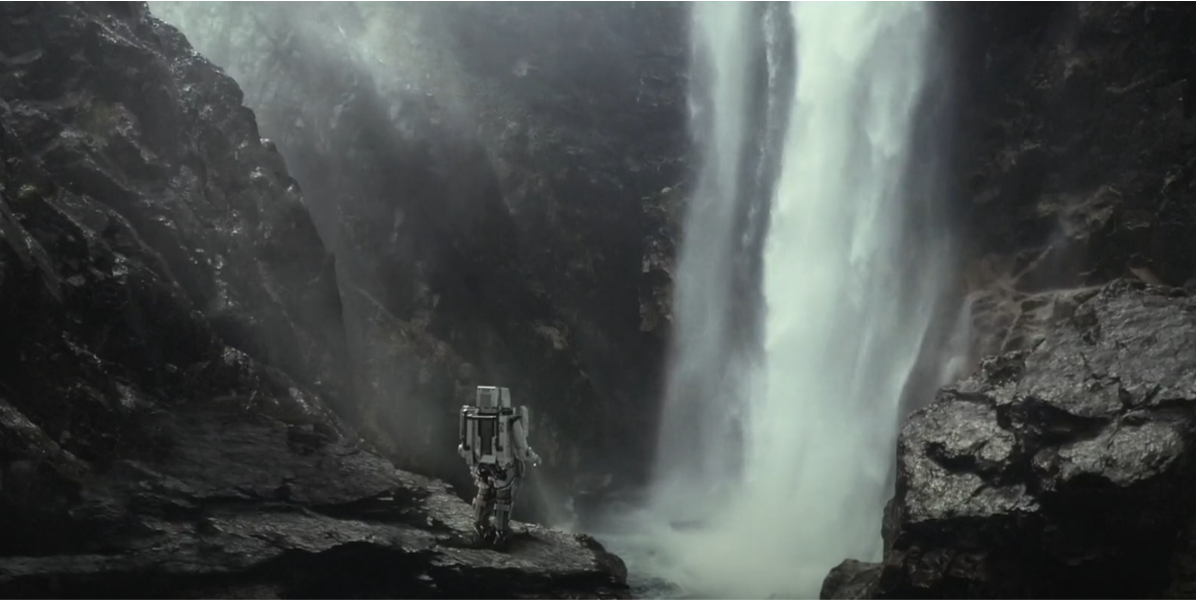
The primary reason J2 takes her own life in the movie is a sense of being left behind by her creator. With a fresh perspective in mind, we can extrapolate the same reading to George’s case. While many symbols in the film point to his subconscious desire to die by suicide, J2 brings that desire into life, not once, but twice, forcing George to question his quest to recreate life through J3. Unknowingly, he himself is the end product of such a quest, and the tragic effect it has on his psyche is anticipated by J2. To that end, her feelings of isolation bring out George’s subconscious fear of being trapped within an AI system, several screens away from his family, and in a constant state of doubt regarding what is real and what isn’t.
Read More: Is Copshop Based on a True Story?

