
 Shivangi Sinha
The death of Edmond Safra triggered intense scrutiny in Monaco, drawing international attention and generating widespread uncertainty about what had happened. Conflicting accounts and the unusual circumstances inside his residence led to persistent speculation among investigators, media outlets, and the public. Netflix’s ‘Murder in Monaco’ revisits these unresolved tensions and examines the theories that emerged over time. Among the names mentioned is Bill Browder, who previously managed Safra’s Russian business interests. The documentary makes clear that references to Browder stem from allegations raised by Ted Maher and were never supported by evidence.
Bill Browder Was Never a Suspect in Edmond Safra’s Death
Ted Maher has consistently alleged that Edmond Safra’s death was the result of broader political and financial forces rather than a personal act. Among the theories circulating at the time were claims involving powerful figures connected to Safra’s global financial dealings. One name that surfaced in speculation was Bill Browder, though these links were never substantiated. In 1996, Safra and Browder co-founded Hermitage Capital Management, which focused on investing in post-Soviet Russia. Safra served as Browder’s primary financial backer and a trusted adviser, providing capital and banking relationships. Hermitage’s work focused on acquiring stakes in Russian companies and advocating for transparency, corporate governance reforms, and shareholder protections in a market widely regarded as vulnerable to mismanagement and corruption.

As Hermitage grew more active, it became involved in disputes with Russian industrial firms. In 1999, VSMPO-AVISMA filed a civil RICO lawsuit in the US, accusing Browder and associates of illegally diverting company assets into offshore entities and later moving those funds into US bank accounts. Browder denied the allegations, and the case became part of the broader narrative surrounding high-stakes Russian business conflicts of the era. The allegations were never proven in court, and no findings of criminal wrongdoing were made against Browder. When Safra passed away in December 1999, investigators examined every plausible angle, given his immense wealth and global influence. Despite the range of theories discussed publicly, no evidence ever connected Safra’s death to political or financial conspiracies. The lawsuit was resolved in 2000, and Browder later acknowledged that Safra’s death was the loss of a close friend and mentor.
Bill Browder is a Vocal Advocate Against Corruption and Financial Crimes Today
Bill Browder began his career in international finance in the early 1990s. He entered emerging markets at a moment when post-Soviet economies were opening to foreign capital. His work soon took him to Russia, where he identified large-scale opportunities created by privatization and undervalued state assets. By 1996, he had established Hermitage Capital Management, which rapidly grew into one of the most influential foreign investment funds operating in the country. From then on, Hermitage became a dominant institutional investor that was engaged with Russian corporations while publicly challenging opaque governance, insider dealing, and state-enabled corruption. Browder’s strategy of aggressive shareholder activism and forensic financial analysis placed him at odds with powerful business and political interests.
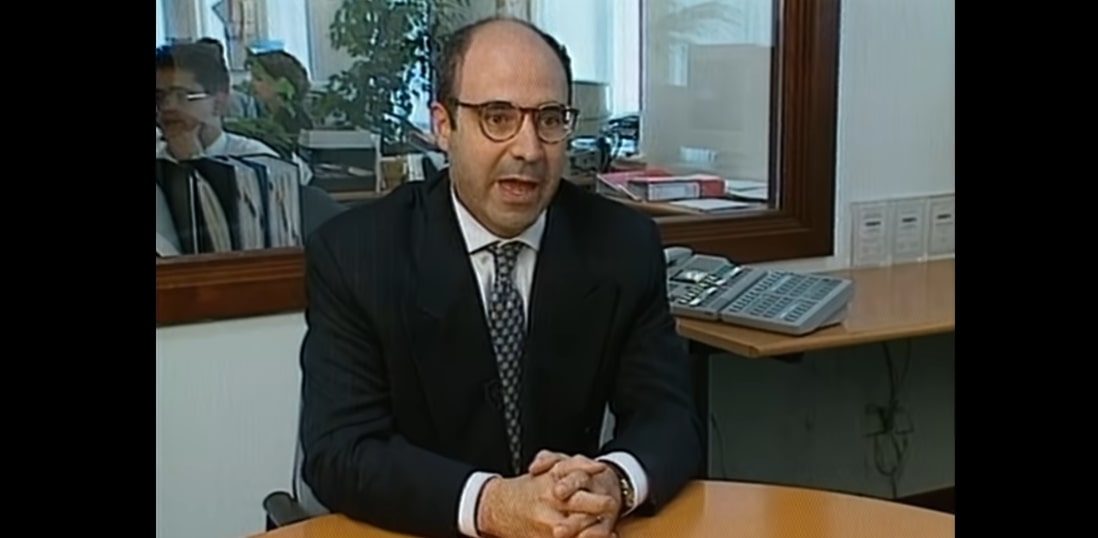
His growing visibility coincided with escalating tensions between foreign investors and Russian authorities. In November 2005, after nearly ten years of operating in Russia, Browder was denied entry at Moscow’s Sheremetyevo Airport and subsequently blacklisted as a “threat to national security.” Russian authorities did not formally specify the grounds, but the move followed his sustained campaigns against corruption inside major firms and his criticism of state-connected executives. The expulsion effectively ended Hermitage’s ability to function normally inside the country. In June 2007, Russian police raided Hermitage’s Moscow offices and those of its legal advisers, seizing corporate documents, seals, and computers. Using the confiscated materials, corrupt officials and associates fraudulently re-registered Hermitage subsidiaries and orchestrated the illegal refund of previously paid taxes.
This operation was later uncovered by Hermitage’s legal team, led by Sergei Magnitsky. Following Magnitsky’s arrest and death in custody in 2009, Browder retained Hermitage Capital Management as a corporate entity, but its role evolved away from active Russia-based investing. Browder ceased operating investment funds in Russia and redirected his work toward litigation support, sanctions advocacy, and financial crime investigations. Today, he remains the head of Hermitage Capital Management but functions primarily as an international campaigner against corruption and state-enabled financial abuse. He collaborates with regulatory bodies worldwide to track illicit assets and expose money laundering networks associated with authoritarian regimes. He is now focused on accountability, policy reform, and cross-border justice rather than traditional fund management.
Bill Browder’s Work is Continuing to be Recognised and Lauded for Its Impact
In the years following Sergei Magnitsky’s death, Browder emerged as one of the most prominent international advocates for targeted human rights sanctions. His sustained lobbying efforts in the US directly contributed to the passage of the Magnitsky Act in 2012, a landmark policy that introduced visa bans and asset freezes against individual perpetrators of human rights abuses, rather than entire states. This framework later inspired similar legislation across Europe, Canada, and other jurisdictions. Browder’s advocacy has extended into multilateral institutions, parliamentary hearings, and global policy forums, where he has testified on corruption and the misuse of Western financial systems.

His efforts have extended to public testimony before legislative bodies, including the US Senate Judiciary Committee, where he outlined the mechanics of state-enabled corruption and illicit financial flows. In recent years, he has continued this work on international platforms, addressing the UN Human Rights Council in October 2024 and speaking at major policy forums in 2025 on sanctions enforcement and Russian corruption. His advocacy is closely tied to his writing. In 2015, Browder published ‘Red Notice: A True Story of High Finance, Murder, and One Man’s Fight for Justice,’ a detailed account of his experiences in Russia and Magnitsky’s death.
He followed this with ‘Freezing Order: A True Story of Money Laundering, Murder and Surviving Vladimir Putin’s Wrath’ in 2022. Browder’s work has been recognized with numerous honors. In the 2024 King’s Birthday Honours, he was appointed Knight Commander of the Order of St Michael and St George (KCMG) for services to human rights and anti-corruption. He also received an honorary doctorate in 2024 from Colgate University and delivered commencement addresses emphasizing civic responsibility. In 2025, he headlined the Sohn Hearts & Minds Investor Conference in July and was at the International Bar Association in Toronto, Canada, in November. Collectively, his philanthropy and public work have transformed financial activism into the realm of human rights enforcement, leaving a lasting impact on international accountability mechanisms.
Related


Bill Browder is Proud of All His Three Kids
Bill Browder has been married to Elena Browder since the mid-1990s. Their marriage began during Browder’s years working in Russia, and together, they have three children and have largely kept their family life out of the public eye. Their eldest child, Joshua Browder, is a technology entrepreneur best known as the founder and CEO of DoNotPay, a legal automation platform focused on consumer rights and access to justice. His work has received international attention for applying automation to everyday legal problems.
Their daughter, Sophia Browder, drew brief public notice in 2022 when Bill Browder shared that she ranked first nationally in her GCSE results that year. She is believed to be still pursuing her education. Very little information has been made public about their youngest child. The Browders are primarily based in London, United Kingdom. Despite Bill Browder’s high-profile public role, the family maintains a low public presence. This separation between his professional advocacy and personal life has been consistent over decades and is widely understood, given the political sensitivity surrounding his work.

