
 Abhiroop Das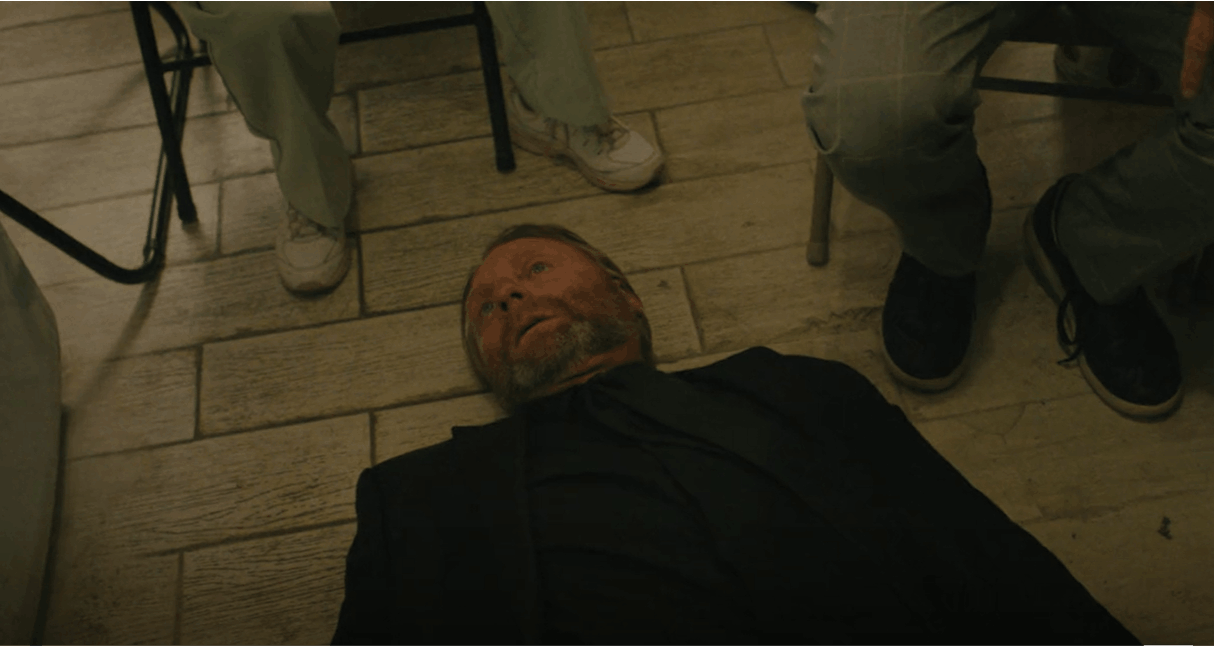
Helmed by Ben Jacobson, ‘Bunny’ encompasses everyone and everything in sight as it recreates a particularly chaotic day in New York City. Bunny’s birthday quickly turns into a horror show when he kills a man at the stairway of his tenement. However, instead of coming to a halt, things begin picking up momentum, and one by one, the entire apartment complex appears to get involved in the cover-up of this murder, regardless of intent. Given that much of the movie takes place in a single, run-down location, all the characters in this ensemble dark comedy movie end up clashing with and bouncing off each other, breaking down and rebuilding the foundations of family along the way. The dead man, as such, becomes much more than the trigger point for the plot, and instead comes out as its most potent piece of symbolism. SPOILERS AHEAD.
The Dead Man May or May Not Be Connected to Bunny’s Sexual Abuser
Although ‘Bunny’ never presents a clear answer as to who the dead man is, there are enough viable theories, both inside and outside the narrative, to point to a potential answer. The most direct suggestion comes from none other than the murderer Bunny himself, who believes this man’s name to be Calvin, the driver of the man who sexually assaulted him. Given that the movie opens with Bunny dashing back to his home after being abused, the timeline of the mysterious man’s appearance starts to make sense. However, their quick, decisive fight on the staircase also means that the man never truly had a chance to lay out his position. Moreover, the suddenness of Bunny’s action also opens up many holes in his argument, regardless of his intent.
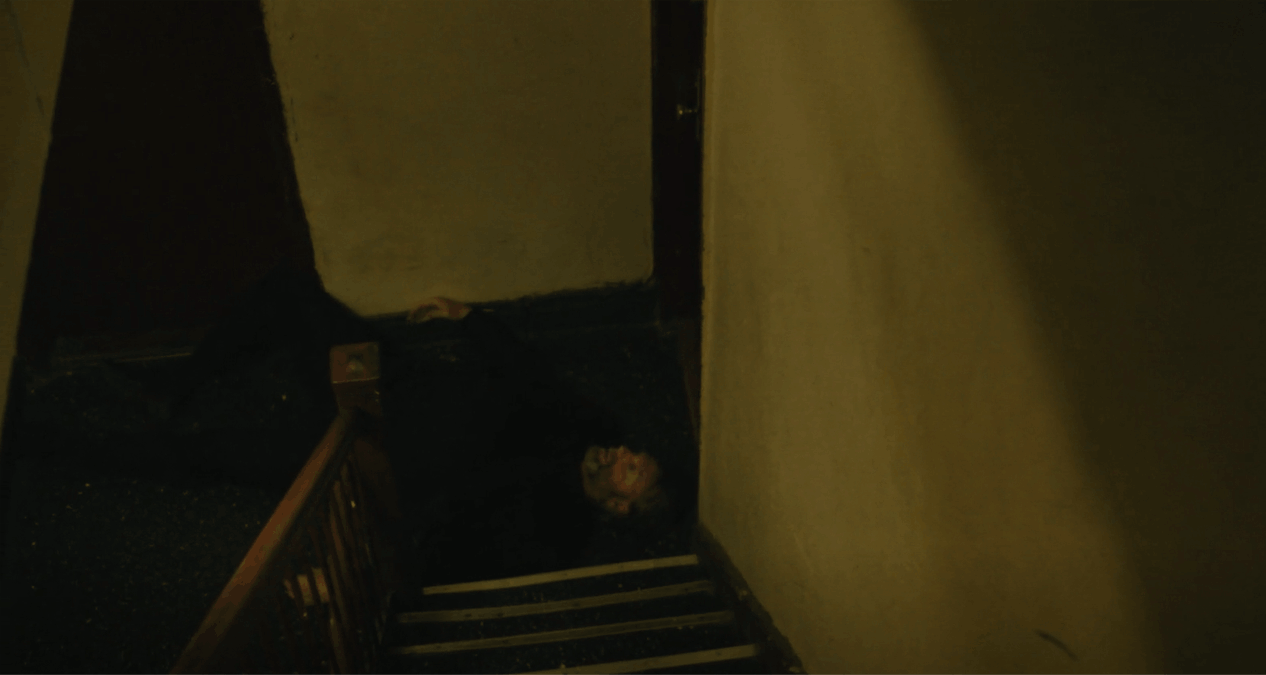
It is important to note that Bobbie’s father, Loren, makes an appearance in the movie only a few minutes before the mysterious man’s touchdown at the apartment. As such, it is entirely possible that Bunny could have interpreted Loren’s curiosity as a threat and reacted in the same violent fashion, killing an innocent man in the process. Furthermore, it doesn’t make much sense for the man to charge in with killing intent, either, given that he is bound to notice the cop car parked right outside the apartment. In the end, Bunny has no choice but to confront the fact that he made a rash decision based purely on his instincts, potentially as a trauma response to being sexually abused not long before the murder.
The Magic of the Movie is in Not Fully Revealing the Dead Man’s Identity
It is likely that the creators of ‘Bunny’ intentionally leave the dead body’s identity up in the air. If what Bunny believes is true, the police are soon to find his cap in the man’s car, which can just as easily connect the entire case to him. However, the fact that the man is framed to appear dead by erotic asphyxiation means that the police are unlikely to probe any deeper. Here, an important symbolic layer of the film is manifested into being, as the Rabbi’s grand cover-up unintentionally recreates a scenario of sexual abuse. While the heroin addicted dead man is almost certainly dead due to an overdose, this new framing suggests that he was murdered by the other man for sexual gratification.
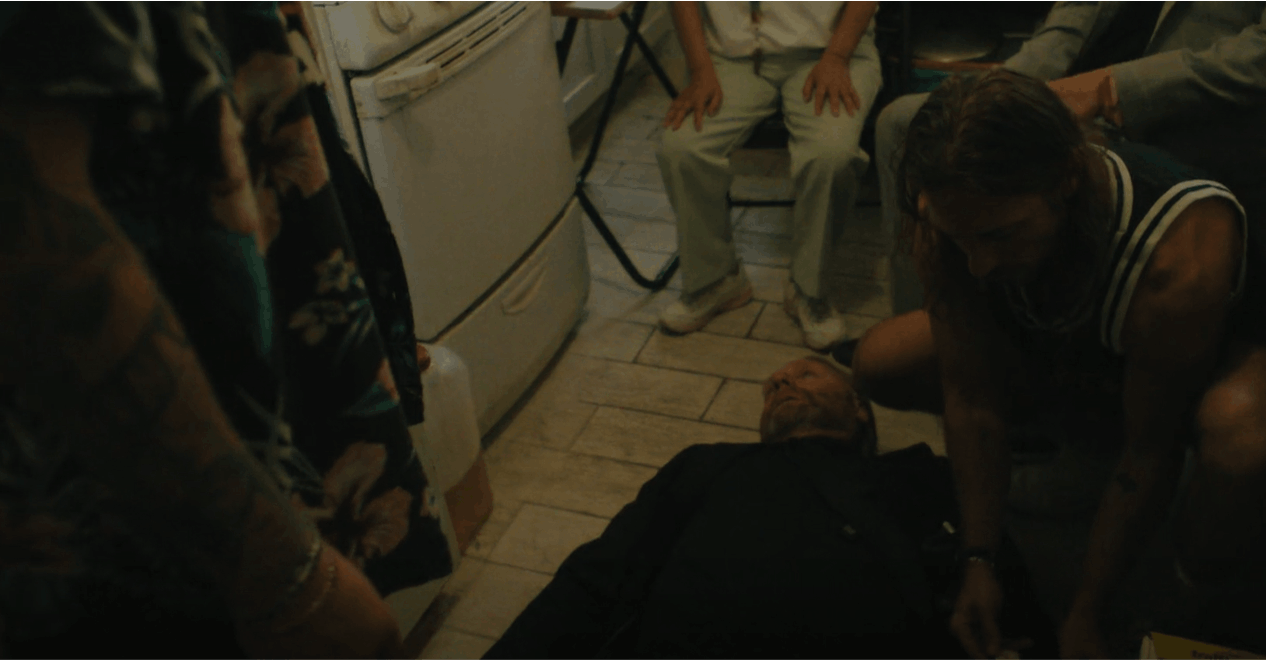
For Bunny, sexual abuse is still a sensitive subject, and his readiness to go with the fake story despite that can be interpreted as a reinforcement of the idea that he has just killed one of his abusers. However, as it stands, there is nowhere near enough context to determine whether the man is innocent or guilty, which in turn allows the story to be pushed in far more interesting directions. In a way, the movie’s emphasis on having a collage of characters for a cast speaks to how each individual has their own interiority, one that has no obligation to remain in sync with others’ lives.
Over the course of the movie, the dead man takes on many hues, with the unifying factor being his ability to bounce off other characters on a narrative level. The very fact that he has no backstory attached to him allows others to pour in their biases. For instance, a huge chunk of Bunny’s belief in the man being a “bad man” comes from Linda’s affirmation of the same, in her limited use of the language. By sticking to these arbitrary judgements, Bunny limits his thought, that is, until the very end of the movie, when he truly learns to embrace life in all of its absurdities.
Read More: Is If I Had Legs I’d Kick You a True Story? Is Linda Based on a Real Psychotherapist?

