
 Kriti Mehrotra
With Netflix’s ‘Fugue State 1986‘ (or ‘Estado de Fuga 1986’) reimagining the horrific Pozzetto Massacre, we gain a deep insight into the psyche behind why someone commits a crime. That’s because it follows not only Vietnam War Veteran Jeremias Salgado as he secretly orchestrates a deadly spree, but also his unexpected friend Camilo León as he finds himself entangled in the chaos. The dynamic between this duo is what makes the psychological crime drama work, all the while leaving the audience wondering about the actuality of the latter and his writing ambitions.
Camilo León and Jeremias Salgado Seemed to Represent Opposite Sides of the Same Coin
From the moment we first come across Camilo León on our screens, it’s evident that he has been actively chasing his dream of being a published author/writer for at least eight years. That’s why he is pursuing a graduate degree in Literature. He gets stumped when the books he needs for his thesis on novelist Robert Lewis Stevenson seem perpetually checked out from the library. The fellow student in possession of these books turns out to be Jeremias Selgado, an older male in one of the former’s classes with a passion for crimes, reading, and mass killings.
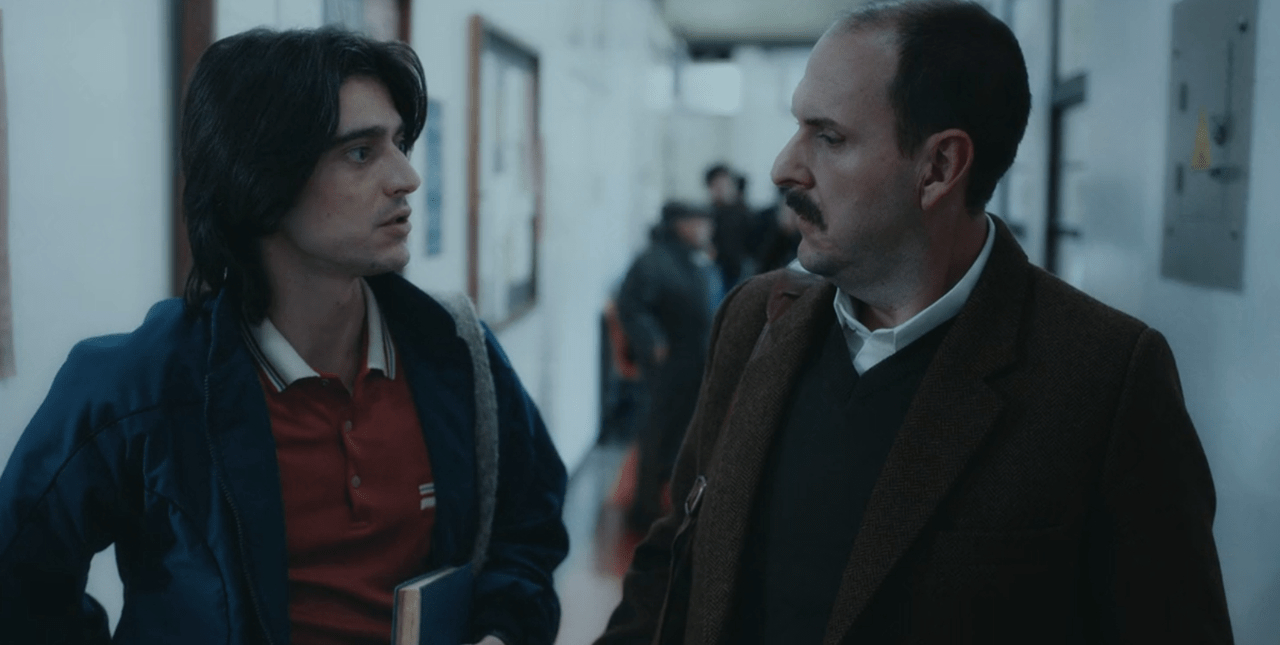
Camilo and Jeremias start discussing the aforementioned books after class, which opens the door for them to become fast friends, establish a “crime club,” and get to know one another better. They even open up about their personal issues, with the former detailing how his father had been kidnapped when he was young and is now living with severe head trauma, missing fingers, and limited motor functions. On the other hand, Jeremias reveals his own father had died by suicide in front of him when he was roughly 7 years old, before reiterating he had served in the US Army during the brutal Vietnam War.
Unbeknownst to Camilo, Jeremias subsequently begins taking advantage of his ambition, curiosity, and naivety by exposing him to some truly dark thoughts as well as situations to “train him” for an impending war. The youngster learns the reality behind his father’s kidnapping and uncovers his own dark side during the process, but while they change him in a lot of ways, he never lets his emotions control his actions. He definitely comes close to it, but his humanity and morality ultimately win. That becomes the most significant difference between him and Jeremias, who is actually partially based upon the real man behind the December 4, 1986, Pozzetto massacre — Campo Elías Delgado.
Related

Camilo León is a Fictional Character Concocted From the Ground Up
Although ‘Fugue State 1986’ is admittedly an original production inspired by the real mass killing that transpired in Bogotá, Colombia, nearly four decades ago, much of it is purely fictional. In fact, written by Alejandro Convers, Ana María Parra, Antonina Kerguelen, and Felipe Useche under the supervision of author Mario Mendoza, who indeed knew Campo Delgado in real life, the series is only anchored in two simple truths. The first is that there was a horrific massacre in the nation’s capital on December 4, 1986, and the second is that the perpetrator was attending a local university in the months leading up to it.

Therefore, every other character and plotline in the show is the creation of writers in the hopes of shedding a clear light on the killer’s possible psyche and the reason behind his heinous actions. “We knew we didn’t want to narrate (the case) from the perspective of the perpetrator of the massacre, but rather through someone who had known him: León,” Ana Parra said in an interview with Time Magazine. “And from that closeness between the two, León begins to ask the same question we all had: why does someone commit a crime of this nature?” She even reiterated that the drama “fictionalizes the four months prior to the (massacre), in which Jeremías’ life and his relationship with León is uncovered.”
Ana continued, “In real life, Campo Elías was a student at the same university where I went to and where Mario Mendoza was my literature professor… That is why the starting point of this entire fictional narrative is the fact that the killer and the witness to his life share a passion for Literature.” In other words, neither Camilo León nor any of his written works, like ‘Night Stories’, have existed in real life, but a lot of his essence has been derived from the writers’ inspirations, personal experiences, and imagination. Mario, in particular, seems to have provided a base for him, especially considering that he and Campo actually shared a bibliography for their respective final thesis projects at Javeriana University.

