
 Abhiroop Das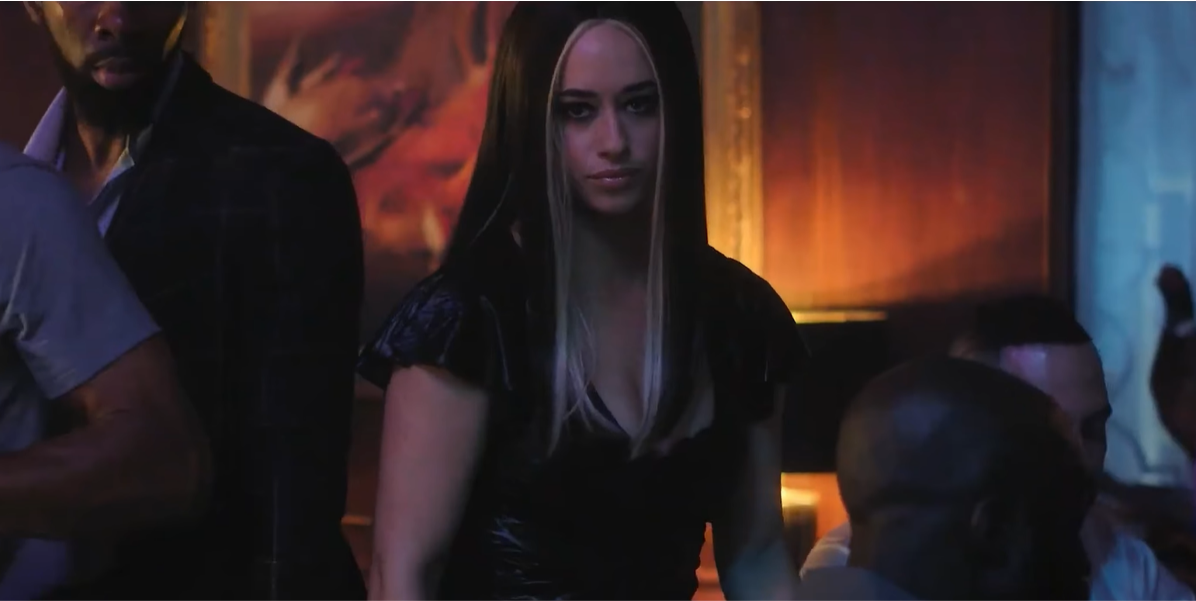
Created by Ben Watkins, Prime Video’s ‘Cross’ adapts the ‘Alex Cross’ novel series by James Patterson, traversing through the corners of the criminal underbelly of Washington, D.C., and beyond. While Alex is making significant progress in his life, personal and professional problems soon catch up, just when the department is faced with a new, even more terrifying serial murderer than the fanboy killer. Unbeknownst to the officers, this new serial murderer, Luz, doesn’t work alone but has a partner, named Donnie. Moreover, their targets are almost exclusively a network of elite sexual abusers. When a business tycoon, Lance Durand, fears for his life, a team consisting of Alex, Kayla, John, and many of the best is assembled to nip the problem in the bud. As the chase ensues, the brief glimpses of the killers tell a silent story of their own. SPOILERS AHEAD.
Luz and Donnie’s Tattoos and Scars Likely Do Not Exist Beyond the TV Show
Luz’s most distinctive features, her tattoos, are most likely show-only constructs designed by the creative team of ‘Cross’ season 2. While actor Jeanine Mason, who essays Luz in the show, shows off her intricate back tattoo numerous times on-screen, it doesn’t appear to be a permanent design etched onto her body. Her social media history also strengthens the idea that there are no prominent tattoos anywhere on her body. As such, it is probable that the designs we see are the result of temporary makeup used to channel a larger point and aesthetic choice about her character. Owing to modern makeup methods and technology, actors no longer need to rely on permanent or semi-permanent designs to achieve the desired look, as temporary tattoos allow for far more creativity with none of the potential downsides.
Unlike Luz’s tattoos, which are added to the character’s existing body, Donnie’s scar tissue on both arms represents a different spectrum of the past. To that end, it is likely that the designs are also the result of extremely impressive makeup work, explaining how specific the look of the scars is. This is also confirmed by social media posts where actor Wes Chatham, who essays the role, shows off his arms. While Chatham does appear to have a design of initials etched into his left arm, it doesn’t correlate to Luz’s tattoos in any fashion, much less the scars and burn marks that are likely painted onto the actor’s skin. Given the thematic connection that physical injuries have in the story, it makes sense for the writers to create a makeup design from scratch.
Luz’s Tattoos Speak to the Future, While Donnie’s Scars Are Reminders of His Past
While Luz features a number of tattoos, the one that often takes the spotlight is the large tattoo on her back, which travels through the spine and extends to the shoulder blades. Despite its expansive and detailed design, the exact nature of the drawing remains elusive, and it is possibly a mix of two or more ideas. One design it particularly draws a strong parallel to is that of the cherubim, who are traditionally large-winged angelic creatures in Abrahamic mythologies. While this possibly explains the Christian imagery traditionally associated with winged creatures and ordinance, it also reconnects the tattoo to Luz’s inherent drive for justice. To that end, the designs also correlate to an incomplete Mandala, signalling the inherently cyclical nature of her path of action.

Unlike Luz, who flaunts her tattoos as a sign of her growth, Donnie’s scar tissues on both arms are often hidden under a layer of clothing. The first time we prominently see them is in the final moments of episode 3, and it isn’t immediately clear whether his skin is burnt or injured. Based on all the visual and thematic cues we see, it is likely that Donnie received these injuries as a child, since the first thing he does on-screen is set a group of sexual abusers on fire. To that end, the sharp lines and varying shades of the original scar tissue tell a story of their own. Together, Luz and Donnie represent the two opposite means of expression, and while both rely on violence to an extent, the differences between the two come out through the finer details.
Read More: Is If I Had Legs I’d Kick You a True Story? Is Linda Based on a Real Psychotherapist?

