
 Abhiroop Das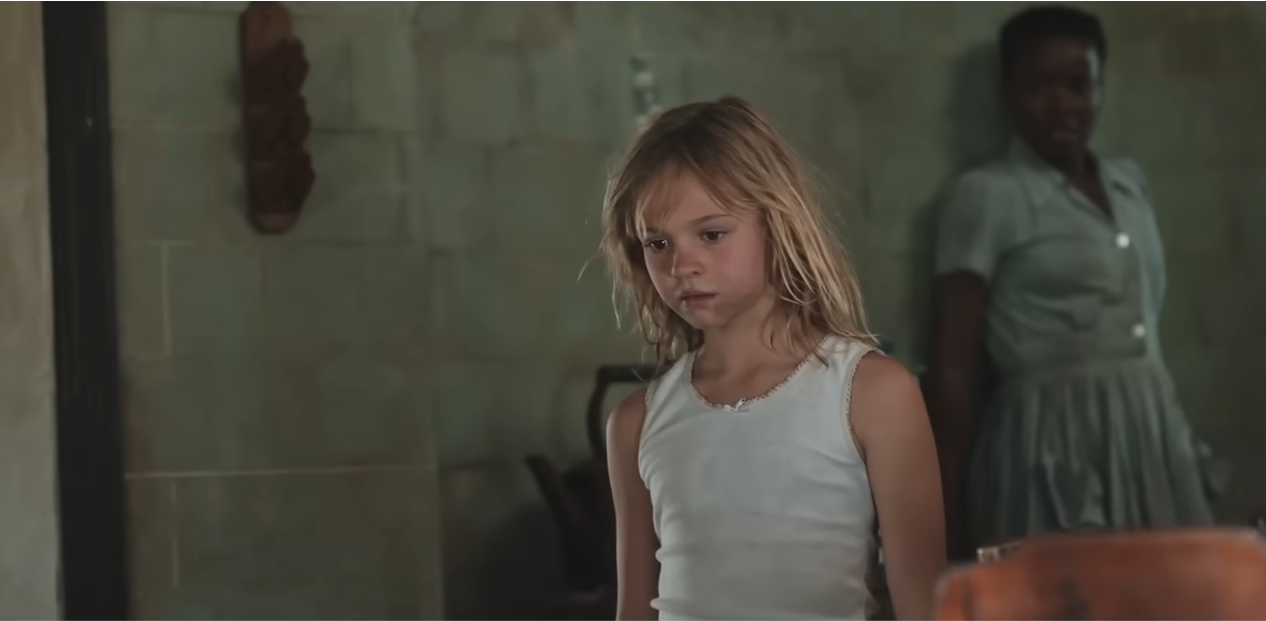
Helmed by Embeth Davidtz, ‘Don’t Let’s Go to the Dogs Tonight’ tells the story of Alexandra “Bobo” Fuller, whose close-knit family life at a Rhodesian farmhouse has a sharp confrontation with reality in the early 80s. Surrounded by racial tensions and violent episodes, Bobo, less than 10 years of age, tries to find comfort in her family, comprising her parents, Nicola and Tim Fuller, and her sister, Vanessa. However, this is easier said than done, as each member of the family is impacted by the Bush War both physically and mentally. To that end, Bobo often finds herself navigating different corners of history and sociological discourse all by herself, with her traumatic childhood constantly shaping her path. In essence, the historical drama movie snapshots a world at war through the eyes of a child, evoking a series of uniquely rendered images.
Don’t Let’s Go to the Dogs Tonight Adapts Alexandra Fuller’s Eponymous Memoir
‘Don’t Let’s Go to the Dogs Tonight’ is based on a 2001 memoir of the same name by writer Alexandra Fuller, in which she details her life growing up in a white settler family in Rhodesia. While the memoir traces several years of her childhood, the movie focuses on a single year in her life. Even within that timespan, writer-director Embeth Davidtz reshaped several parts of the story, especially the ending. It appears that some of the events in the memoir are also condensed and readjusted in the film version of the story, which is largely centered around the Fuller family’s exit from Rhodesia. As such, while Alexandra’s lived experiences serve as the base layer of the narrative, it is still defined by a number of fictionalized augmentations made by the film’s creative team.
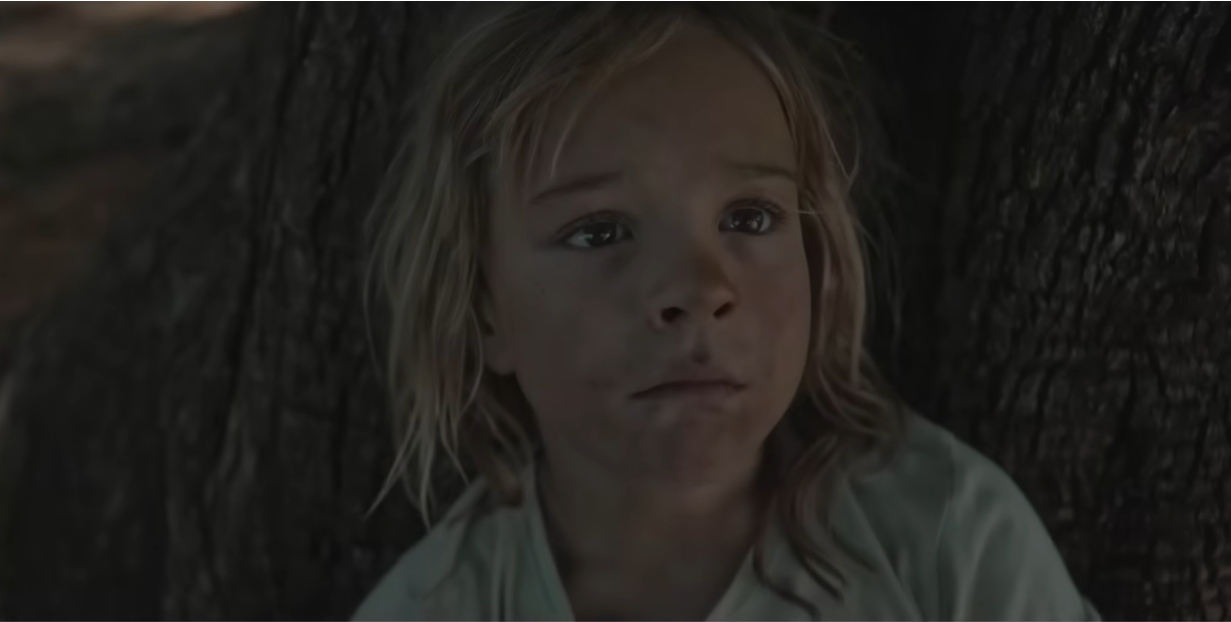
Alexandra Fuller was born to Nicola and Tim Fuller in England in 1969, but her family moved to southern Africa not long after, in 1972, settling in Rhodesia. The independent, white-ruled state would later go on to become the state of Zimbabwe in 1980, and much of the memoir is spent mapping that transition through the eyes of the Fullers. By the time the family settled at a farmhouse near the town of Karoi, Rhodesia was already several years into the Bush War, a guerrilla conflict between the white minority government led by Ian Smith and Black nationalist movements seeking sovereignty and majority rule. The contrast and eventual intermingling of rising political tensions and Alexandra’s daily life at the farm is what defines the memoir’s first half.
Alexandra’s Time in Rhodesia Was Marked by Personal and Sociological Conflict
Around 1976, Alexandra’s parents joined the British South African Police reservists, which meant that Tim Fuller would often head out on multi-day expeditions and patrols around the region to locate and fight terrorist groups. Similarly, Nicola worked at the police station in Umtali city, where her job was to keep track of alarm signals and alert authorities of potential attacks on white families. Alexandra often joined her mother in these journeys, and these up-close and personal experiences with racial tensions and prejudices largely shaped her understanding of life in general. Throughout the memoir, Alexandra also makes note of her mother’s alcohol addiction and how that gradually led to some distance in their relationship.

Perhaps the most heartbreaking incident detailed in the memoir is the passing away of Alexandra’s younger sister, Olivia. While the movie adapts the event in fragments, the memoir delves much deeper. In January of 1978, the family was at home for the Christmas holidays when Olivia tragically drowned in the farm’s duck pond, leaving an irreparable hole in the family. Prior to Alexandra’s birth, the Fullers had lost a son, Adrian, to meningitis while the family was in England. During their time in Africa, the family lost a third child, named Richard, who was stillborn. The death of her siblings had a significant impact on Alexandra’s psyche, and her memoir is dedicated to them.
By the late 1970s, the Rhodesian Bush War had intensified, with guerrilla activity expanding into farming regions. As per government reports, more than 2.5 million anti-personnel landmines were laid out throughout Rhodesia’s borders as defensive measures, but the number of violent incidents continued to rise. In 1979, negotiations in London led to the Lancaster House Agreement, following which the country temporarily returned to British control and fresh elections were held the following year. On 18 April 1980, Robert Mugabe became the first Prime Minister of Zimbabwe, leading to an international recognition of Zimbabwe’s independence. By the mid 1980s, Alexandra Fuller had left Africa with her family, but the manner in which this departure is presented in the movie version of ‘Don’t Let’s Go to the Dogs Tonight’ is somewhat fictionalized.
Embeth Davidtz’s Take on the Memoir Blends in Her Personal Experiences
When adapting Alexandra’s memoir to the screen, Embeth Davidtz also drew inspiration from her own past, which included memories of witnessing racial prejudice and violence in South Africa. In an interview with IndieWire, she explained, “I moved to South Africa when I was eight. Bobo reminds me of arriving at South Africa, being in a poor family with an alcoholic parent in a country that was so racist.” To that end, Davidtz’s emotional connection to Alexandra’s book paved the way for a sensitive adaptation, but the process was not without its challenges.
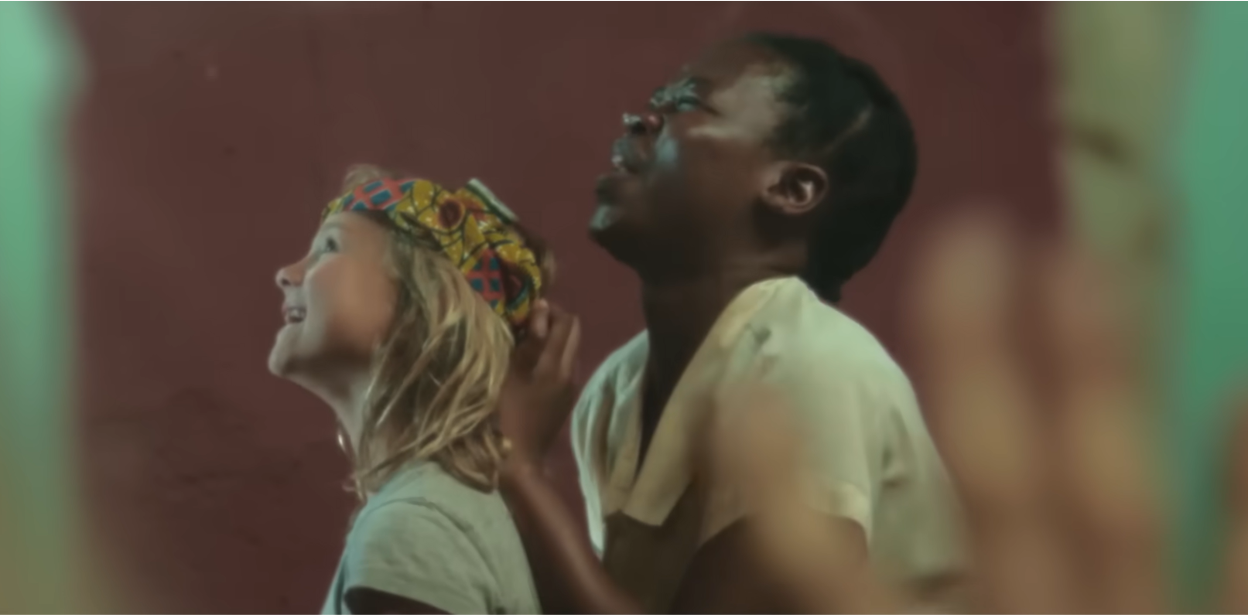
Davidtz first began by drafting the entire memoir as a screenplay, capturing Bobo’s life in snapshots over the years. “Then I gave it to Alexandra,” she told IndieWire, before adding, “I adore her writing, but she went completely off on a tangent. And so I said, Alexandra, I love you. But I’m going to take it. And she’s like, Go for it.” In the end, Davidtz chose to focalize her adaptation by centering it around a child’s perspective, weaving sociopolitical commentary into the movie as organically as possible. In the process, she also added a number of creative details, especially when it came to Alexandra’s nanny, who is reimagined as the character, Sarah. Davidtz also changed the ending into something more symbolic in nature, parting ways from Alexandra’s autobiographical account.
Read More: Is Lifetime’s Toni Braxton’s Breathe Again Based on a True Story?

