
 Aahana Swrup
Directed by Marco Petry, the German comedy film ‘Eat Pray Bark’ presents a story centered around dogs and their owners. Ursula Brandmeier, a state minister staring down a re-election campaign, makes a faux pas on live television, which threatens to cost her her entire career. Somehow, the only way to salvage her reputation is to adopt a dog and appeal to all the dog lovers she had offended with her insensitive statements. However, there’s one big problem. Ursula hates dogs and can’t imagine ever willingly being a pet owner.
As a result, after adopting a shelter dog named Brenda, the politician enrolls in a training program in the Tyrolean mountains with the legendary dog trainer, Nodon. As she arrives at the location, there are four other eccentric dog owners, all desperate to connect with and train their unruly canines. Despite the story’s outlandish premise, the film charts an engaging tale, grounded in the universal relatability of the relationship between a dog and their owner.
Eat Pray Bark is a Fictional Story With No Direct Basis in Reality
‘Eat Pray Bark’ is a feel-good movie where five different dog owners work through their own complications on a highly famous, Celtic dog training retreat. The eccentric troupe of characters is made up of a controversial politician, a loner police officer, a chaotic young woman, a literature professor, and his husband. While these characters and their unique storylines are entertaining and at times relatable, they remain enclosed within the fictional confines of the story. The film itself, penned by director Marco Petry and his co-writers, Jane Ainscough and Hortense Ullrich, is a work of fiction.

Seemingly, the title is a subtle reference to another film, the 2010 rom-com ‘Eat, Pray, Love,’ a film about self-discovery and actualization. In contrast, ‘Eat Pray Bark’ is also a story about self-discovery, but one that puts the characters’ identities as pet owners at the forefront. The film follows similar genre conventions, where a disaster compels the protagonist to make a big change in her life. This brings her to the scenic Tyrolean mountains, where a Celtic dog trainer guides her and four other dog owners through an unconventional training program.
As the lessons continue, Nodon helps the pet owners realize that they’re the ones really in need of training about how to connect with their four-legged companions and make them a seamless part of their lives. Although Nodon’s philosophy and beliefs find some basis in the reality of being a dog-owner, his direct approach as a dog-trainer remains devoid of any real-life counterpart. Given the comedic nature of the film, Nodon’s training program presents an exaggerated and unorthodox approach to dog training. In real life, there are no identical training programs in the Tyrolean mountains. Ultimately, the film’s premise and its narratives find no direct counterparts in reality.
Eat Pray Bark Focuses on the Relationship Between Dogs and Their Human Companions
Even though ‘Eat Pray Bark’ charts a fictitious story, the film offers some realistic elements that help the audience resonate with the overarching narratives. Between Ursula and the four other dog owners, each character comes with their own baggage. Likewise, their relationship with their pets is also distinct and diverse in nature. Nonetheless, all these unique dynamics retain some level of realism behind them. For instance, Ursula’s own reluctance to get along with her dog, Brenda, showcases her inability to open up to the people in her life in meaningful ways. Similarly, Babs showcases an emotional volatility that impacts her relationship with her dog, Eat Pray Bark Treston.
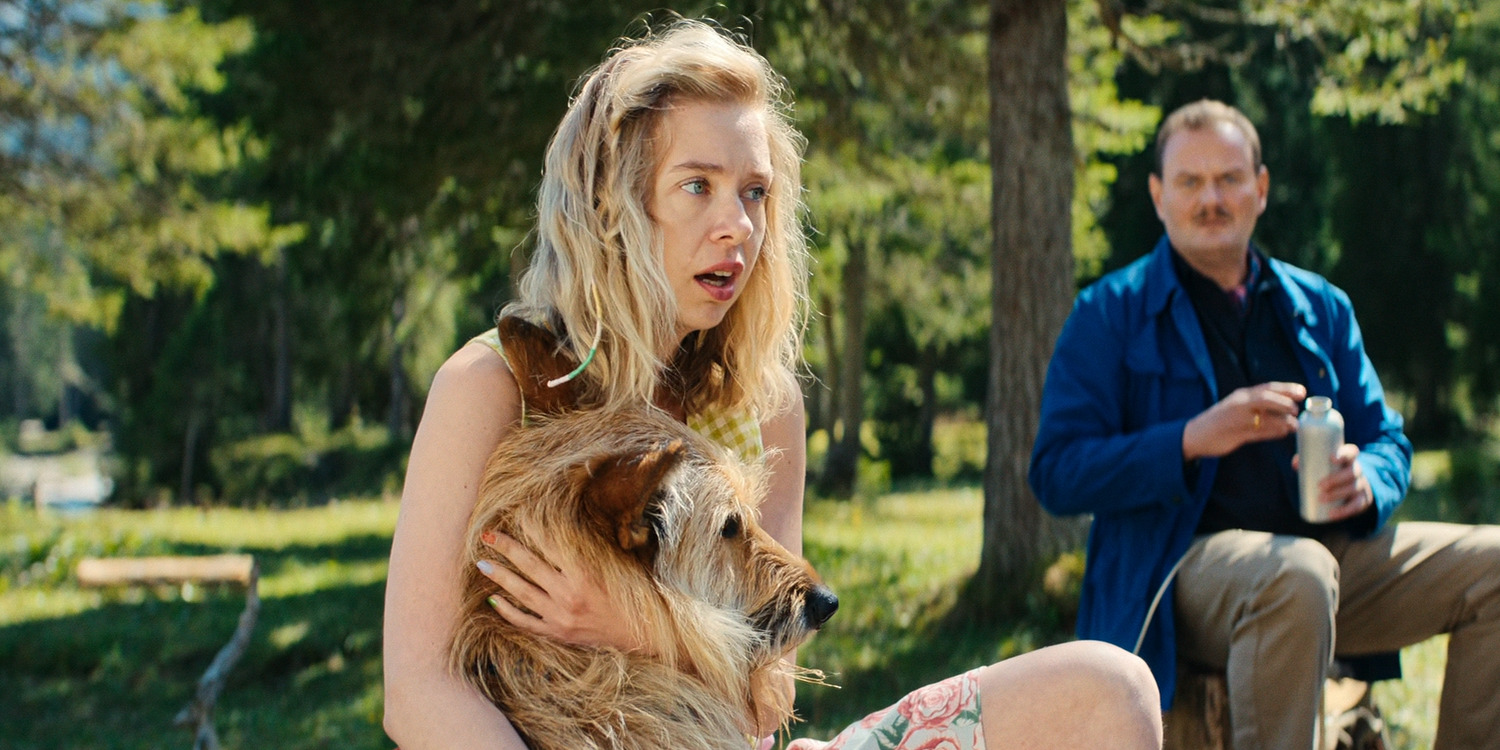
Although these characters and their inner lives are works of fiction, they highlight important aspects of pet ownership. The film focuses on the human effort required in forming a bond between a dog and its owner. In doing so, it underlines the significance of emotional maturity and availability in one’s journey as a pet owner. Thus, despite its humorous approach, the story manages to provide deeply relatable and realistic insight into the dynamics between an animal and its human companion. Furthermore, it also calls attention to the potential for community and friendships between dog lovers. Ultimately, this allows the narrative to maintain a grounding thematic identity.
Read More: Where Was Eat Pray Bark Filmed?

