
 Aahana Swrup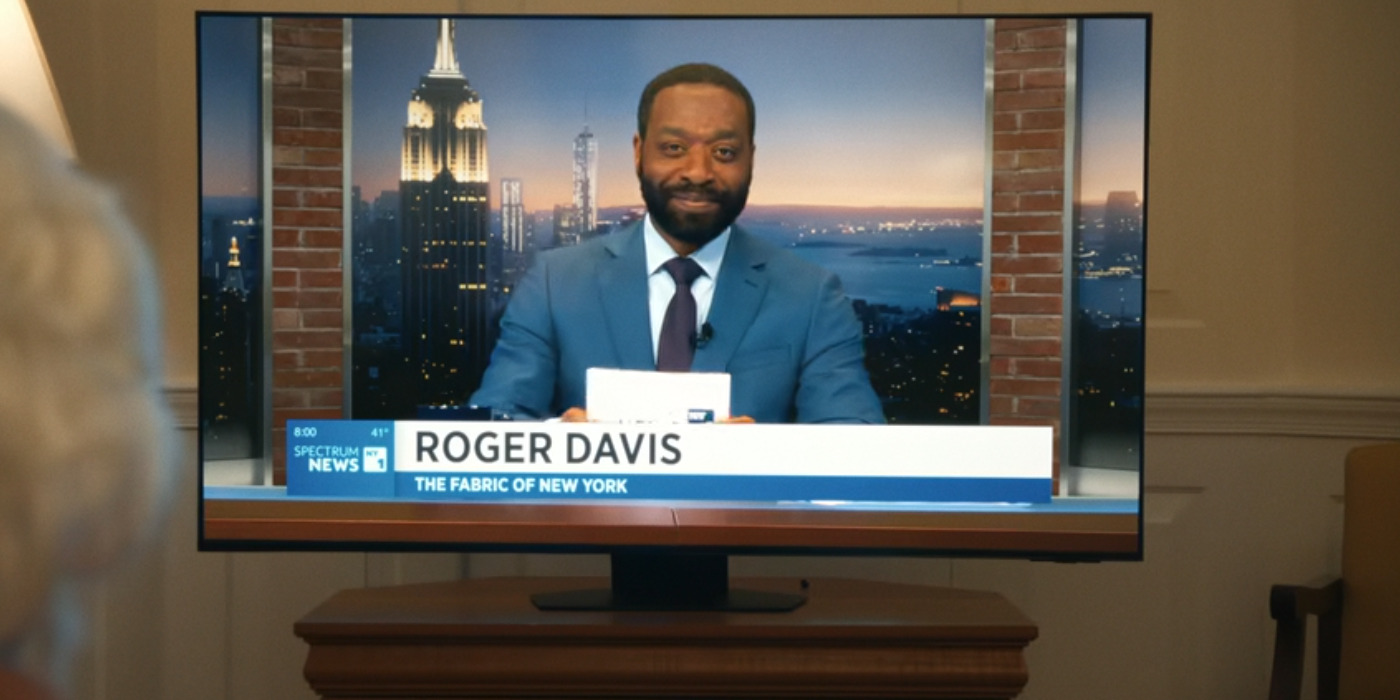
In ‘Eleanor the Great,’ the friendship between the titular nonagenarian and a college student becomes the emotional center of the narrative. Eleanor Morgenstein, a woman in her 90s, is finding a new start in New York following the death of her best friend, Bessie. One wrong turn ends up taking her to a support group for Holocaust survivors, where she meets Nina. Over the course of a series of misguided decisions, Eleanor ends up agreeing to become the subject of the aspiring journalist’s project, which involves getting interviewed and sharing her story as a Holocaust survivor. However, the protagonist isn’t actually someone who survived the Nazi rule in her youth. In reality, she has been sharing Bessie’s story, disguising it as her own. Therefore, when Nina’s father, acclaimed journalist Roger Davis, showcases an interest in bringing Eleanor’s story to the limelight on his news segment Fabric of New York, things promise to unravel in excruciating ways.
Fabric of New York is a Fictional Element in Eleanor the Great
Although ‘Eleanor the Great’ finds a substantial basis in reality, many of the storytelling tools in the film are actually works of fiction. This extends to the instrumental Fabric of New York, a news segment that comes into play later in the storyline. In real life, there are no identically titled news segments on segments that cover daily news in New York. In the film, Eleanor is a big fan of Roger Davis, a news anchor who hosts segments of the Fabric of New York. Later, once the woman moves to the Big Apple herself, she inadvertently ends up befriending the journalist’s daughter, Nina Davis. The revelation of the young woman’s connection to Eleanor’s favorite news anchor arrives as a pleasant coincidence. However, it also opens up the possibility for Eleanor’s fraudulent story to break out into mainstream media. As a result, Fabric of New York becomes a complicated source of conflict in Eleanor’s narrative.

On the other hand, it also retains a significant impact on Nina’s personal life as her father’s workaholic tendencies, especially in the wake of her mother’s death, become a point of estrangement between the father-daughter duo. However, much like other elements in the film, the news segment also inevitably becomes a narrative tool to highlight the film’s thematic focus on the concept of grief in the face of lost love. As the plot progresses, Roger Davis ends up employing his airtime on Fabric of New York to launch a new story exploring the reality and psychology of grief. As a result, after imposing a daunting shadow on the storyline, the Fabric of New York becomes a place for important, empathetic, and socially relevant conversations. Consequently, the on-screen news segment ends up depicting an idealized version of the news circuit, underlining the good that can be achieved through it. Still, ultimately, the news segment, much like the overarching narrative revolving around Roger Davis and Eleanor’s near-brush with the local news, remains a work of fiction.
Read More: Why Did Eleanor Lie About Being a Holocaust Survivor?

