
 Aahana Swrup
Directed by Scarlett Johansson, ‘Eleanor the Great’ is a sentimental drama film that explores the nature of grief and loss through the narrative of a complex protagonist. The titular character, Eleanor Morgenstein, is a woman in her 90s who has recently lost her closest companion, her best friend, Bessie. In the aftermath, the nonagenarian makes the bold decision to move from her Floridian home to New York City to stay with her daughter. In the city, Eleanor finds herself accidentally becoming a part of a Jewish support group for survivors of the Holocaust. Furthermore, she somehow ends up sharing Bessie’s life story, about being a Holocaust survivor, as her own.
In the process, she befriends a young journalism student, Nina, who has also recently suffered a personal loss in her life. Despite their striking differences, the two fall into an easy friendship that inevitably gets challenged under the weight of Eleanor’s secret. The protagonist’s narrative and its overarching story remain rooted in the historical tragedy and its long-standing impact on survivors and their loved ones. For the same reason, Eleanor’s eclectic correlation to the same is bound to attract some intrigue from the fans.
The Screenwriter’s Real-Life Grandmother Loosely Inspired Eleanor Morgenstein’s Story
‘Eleanor the Great’ finds a fascinating origin in real life. The story, penned by first-time screenwriter Tory Kamen, is largely inspired by the writer’s grandmother, Elinore Kamen. Yet, the film isn’t a biographical account of the latter’s life. In fact, the central defining aspect of Eleanor’s on-screen narrative is a work of fiction, devoid of any direct connections to Kamen’s grandmother. While Elinore served as the primary inspiration for much of the characterization of the film’s protagonist, the former never actually pretended to be a Holocaust survivor. Over the course of the press tour for the project, Kamen has consistently cleared up this major distinction, sharing that her Jewish grandmother would never have lied about something of this variety.
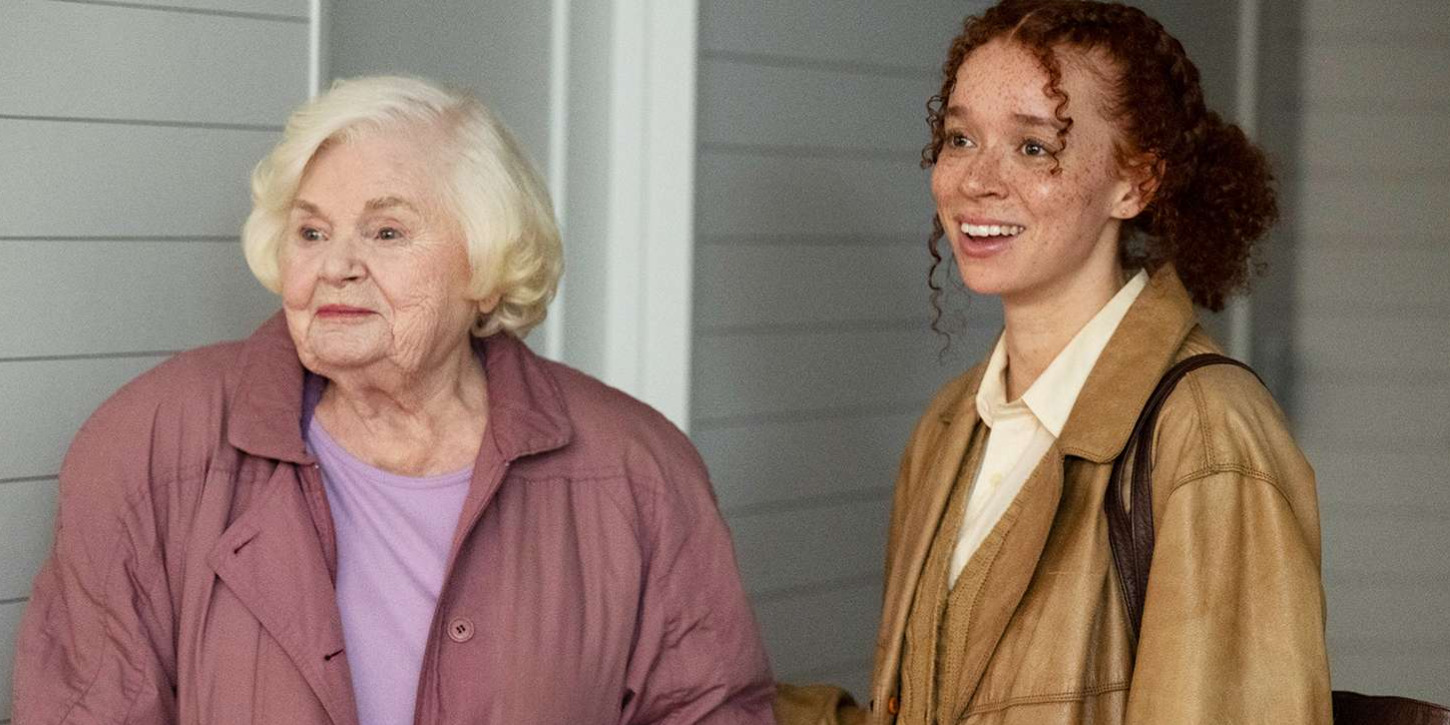
That aspect of Eleanor’s characterisation and storytelling stems from a place of pure fictionalization. However, most of everything else about the character is a reflection of the time Kamen spent with Elinore in real life. The real Elinore, much like the film’s protagonist, made a cross-country move from Florida to New York at the age of 95. During this life-changing move, she found it difficult to form meaningful connections and friendships. Unfortunately, the woman passed away during the early days of the COVID-19 pandemic. As a result, Elinore’s real-life experiences with struggling to find community in her 90s became a foundational crux that inspired the creation of Eleanor’s character.
In a conversation with Script Magazine, the screenwriter spoke about her relationship with her grandma during those days and the impact it had on the project. Kamen said, “We (Kamen and Elinore) would end up Skyping for hours, talking about aging and connection and feeling like a novelty. She found that people were really only interested in hearing what she had to say when she was talking about the past. What do you do when it feels like nobody cares about you, present tense, and what happens when you feel invisible? What lengths would you go to in order to change that? That was really the jumping-off point. That was a years-long conversation that I had with my grandma, and a lot of that is in the script.” Thus, despite sporting a significant divergence from her off-screen counterpart, Eleanor’s character remains deeply rooted in reality.
Eleanor the Great Revolves Around the Holocaust, and Its Impact on the Jewish Identity
One of the most notable aspects of ‘Eleanor the Great’ stems from its identity as a story centering around the Holocaust tragedy. In the film, Eleanor is grieving the loss of her best friend, Bessie. Somewhere along the line, she ends up down a misguided path wherein she starts sharing her friend’s life story as a Holocaust survivor as if it were her own. Even though Eleanor isn’t driven by any nefarious or mean-spirited motives, her actions remain close to unforgivable. Yet, at its core, Eleanor’s narrative strives to delve into a specific aspect of Jewish identity and experiences as the generational impact of the historical genocide influences them. For this facet of the film, screenwriter Tory Kamen had a different but connected source of inspiration.
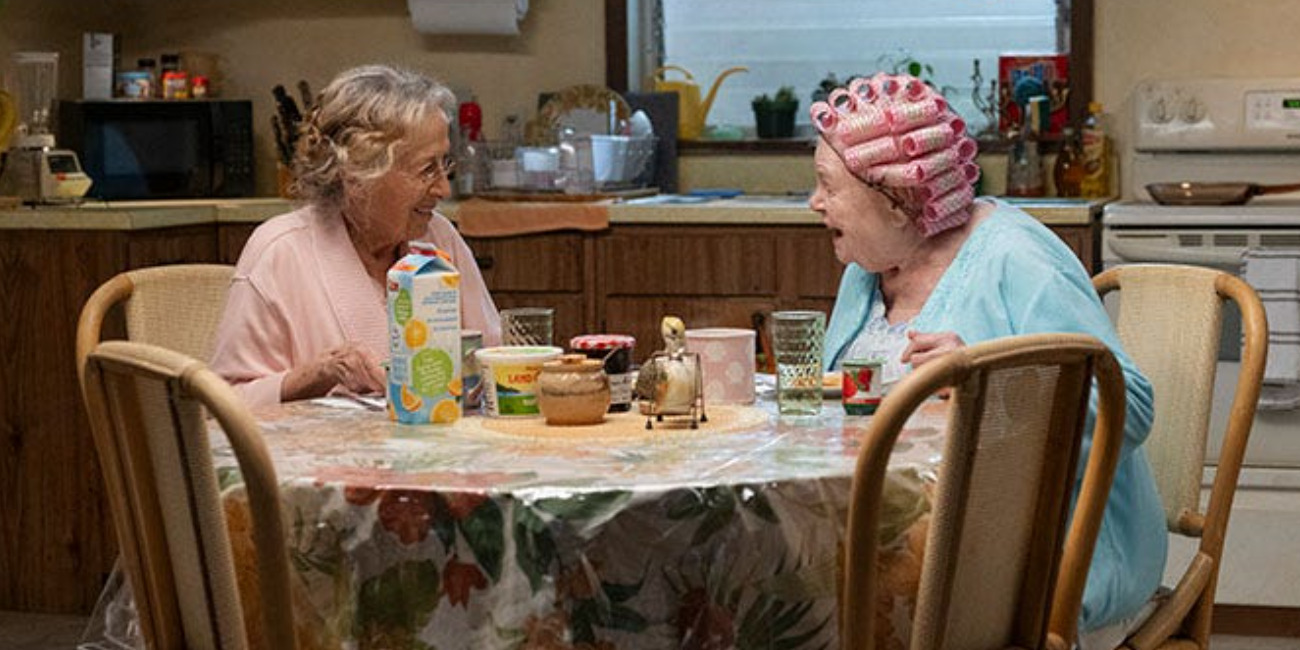
The real-life Elinore Kamen had a best friend named Bessie, who was an actual Holocaust survivor. In the film, the latter finds her own on-screen counterpart in Rita Zohar’s character. Additionally, Scarlett Johansson, who makes her feature film directorial debut with the project, also found the story to be a way of honoring her own Jewish heritage. In a conversation with Deadline, the actress spoke about the same and said, “The Jewish identity piece of this story is something that I felt I could confidently execute because it’s in my DNA. I grew up identifying as a Jewish kid growing up in New York. I had a grandmother who was not like Eleanor in some ways, but also kind of impossible and amazing — a very strong character; a very strong Jewish woman. And I think hopefully when you see the film, the authenticity of that comes through.”
Actress June Squibb Influenced the Characterization of Eleanor Morgenstein
Off-the-bat, when Tory Kamen first started working on “Eleanor the Great,’ she had one specific actress in mind for the role. Even though the novice screenwriter wasn’t expecting to have a definitive say in who portrays the character, she always imagined June Squibb in the role. Fortunately enough, the actress, known for her work in ‘Nebraska’ and ‘Thelma,’ ended up being attached to the project. Eventually, after Scarlett Johansson came on board as the director, certain changes were made to the script, specifically Eleanor’s characterization.
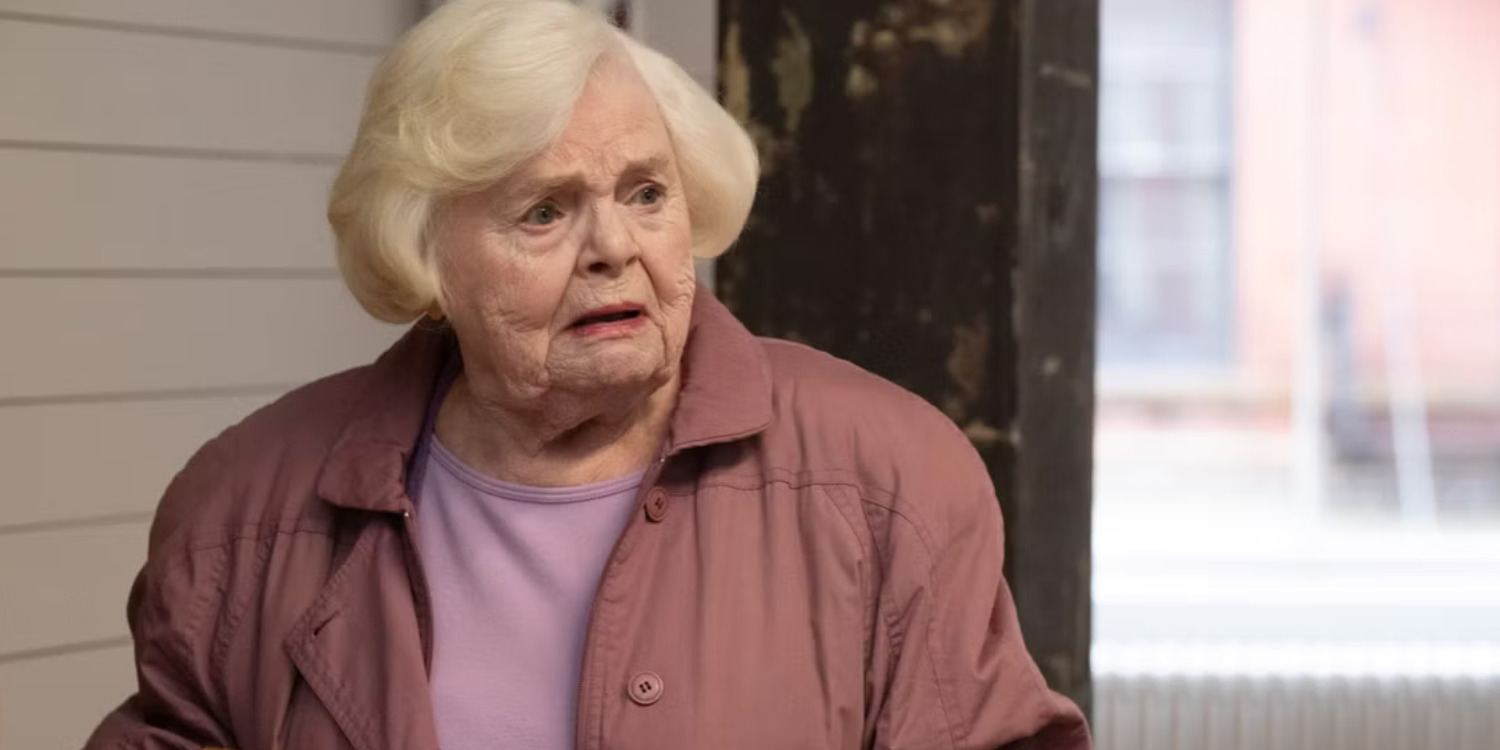
Earlier, Kamen had based most of Eleanor’s character, including her backstory, on her grandmother, Elinore. Therefore, the protagonist was originally supposed to have grown up in the Bronx in a Jewish family. Nonetheless, later, it was decided that it would be best to modify Eleanor’s character more in accordance with Squibb’s real life. Squibb converted to Judaism in 1953 after her first marriage. Even though her then-husband’s family wasn’t expecting her to convert, the actress found it meaningful to do so. Years later, even after that marriage ended and Squibb got remarried to her non-Jewish spouse, Charles Kakatsakis, the actress remained committed to the faith. This aspect of Squibb’s life ends up getting mirrored in Eleanor’s narrative, creating another facet of realistic connection for the character.
Read More: Is Fox’s Memory of a Killer Based on a True Story?

