
 Diksha Sundriyal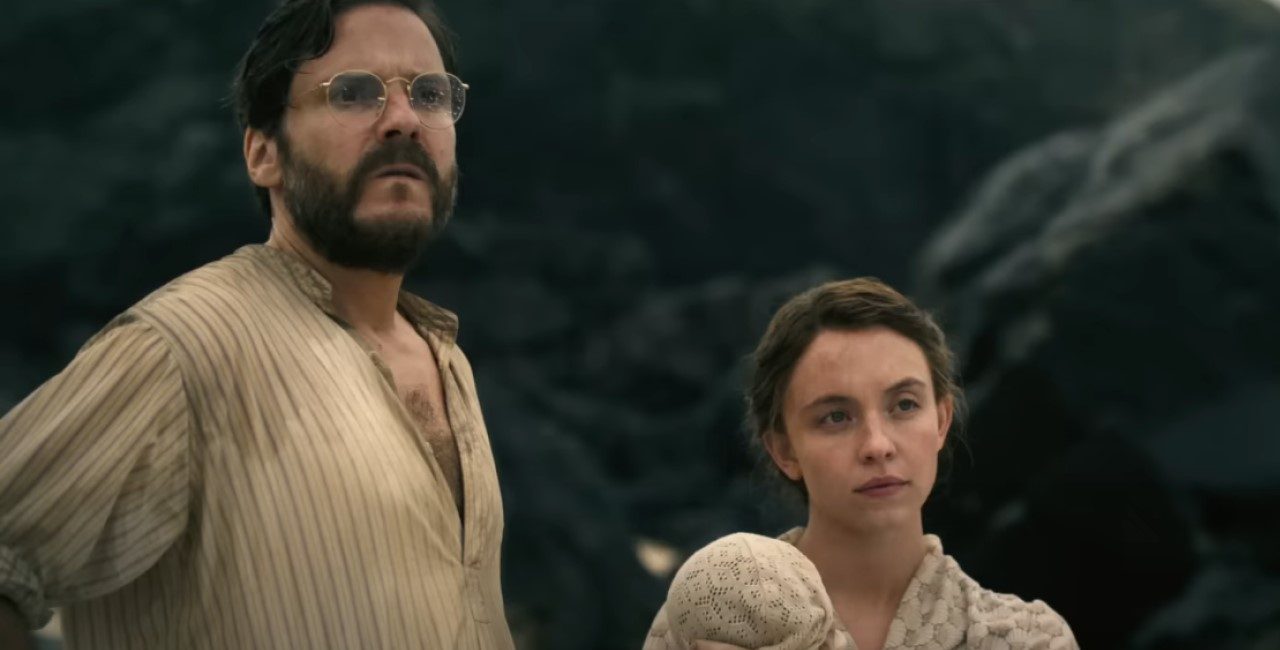
Directed by Ron Howard, ‘Eden’ follows the story of a group of settlers who try to build a home for themselves on a remote island in Galapagos. One of them is a couple, named Heinz and Margret Wittmer, who come to the island with Harry, Heinz’s son from his first marriage. Their only goal is to build a place where they can start over and live the rest of their life in peace. However, the arrival of a mysterious woman named Eloise, AKA the Baroness, stirs up trouble, which affects the Wittmers and Friedrich Ritter and Dore Strauch, who came to the island before them. After many twists and turns, the film concludes on a surprising note, mirroring the events that befell the real-life Wittmers. SPOILERS AHEAD.
The Wittmers Wanted to Build Their Utopia in Floreana
Heinz Wittmer and Margret, his second wife, had been living in Cologne, Germany, when they heard about the adventures of Dr. Friedrich Ritter on Floreana, an island off the coast of Ecuador, in the newspaper. Ritter and his partner and former patient, Dore Strauch, had left for the island in 1929, and the newspapers had been reporting the updates on their lifestyle since then. Heinz, who had served in the First World War, was still processing the trauma of fighting in the trenches when it started to feel like the country was barrelling towards yet another conflict. The Nazi powers were on the rise, and Heinz, being an official in the Weimar Republic, feared that when the tides turned, he would find his head on the chopping block.
At the same time, Harry, his son from his first marriage, suffered from health issues, which could be healed by a more tropical climate. So, when Heinz and Margret read about Floreana, they thought it would be a perfect place to start over. The Wittmers landed on the island in 1932. At the time, Margret was five months pregnant, and her son Rolf became the first child to be born on the island. The family set camp near a spring, having received 50 acres of land from the Ecuadorian government. They called their place Olympus and set about making it habitable. Their combined skills in farming, construction, and carpentry, among other things, served them well.
Heinz had also brought a gun, with which they would hunt for food. At the same time, they also had to be aware of the wild animals around them. They had to keep a watch on their garden to save their crops from being eaten or destroyed. Reportedly, the incident shown in the film, where Margret gives birth to her child while fending off wild animals, happened in real life. While they had removed themselves from German society, they weren’t completely cut off. A barrel was put up by the coast in which the Wittmers could put their letters, which would then be picked up by any passing vessels.
Related


The Wittmers Were the Only Ones to Survive the Galapagos Affair
Initially, the Wittmers and their neighbours, Ritter and Dore, lived in peace, staying in their corners of the island. But the arrival of Eloise Bosquet de Wagner Wehrhorn, a self-proclaimed Baroness with the idea of building a luxury hotel in Floreana, upset this delicate balance. She stirred trouble with both couples, creating a sense of paranoia that made everyone distrust each other. By the end, the Baroness and one of her lovers, Robert, mysteriously vanished, while her other lover, Rudolph, tried to escape to the mainland, only to be stranded on another island and dying. According to the Wittmers, Eloise and Robert told them that they were sailing off to Tahiti on an incoming yacht that belonged to their friends.
However, there was no report of any boat entering that area around that day, which raised suspicion about what truly happened to them. Dore Strauch believed that the Wittmers were somehow involved in the disappearance, especially after she saw the Baroness’ tablecloth in their home. Reportedly, Ritter wrote a letter to the authorities expressing suspicion toward the Wittmers, though no evidence was found against the couple. Later, Ritter died, and Strauch left the island. Back in Germany, she wrote a book called ‘Satan Came to Eden: A Survivor’s Account of the Galapagos Affair,’ detailing her account of what happened on the island, particularly focusing on the events surrounding the Baroness. Margret refuted Ritter and Strauch’s claims in her own memoir, ‘Floreana: A Woman’s Pilgrimage to the Galapagos,’ which was published in 1959.
Their conflicting accounts have led to several theories about what truly happened on the island, but they don’t give any concrete, fact-backed answers. With the Baroness gone, Ritter dead, and Strauch back in Germany, the Wittmers were the only ones left on Floreana. Harry died a few years later in a boating accident, while Heinz passed away in 1963 due to an unknown cause. Margret continued living on the island with her other children, Rolf and Floreanita Ingeborg. She built a hotel on the island in the early 1960s, which remains operational to this day. She passed away in her mid-90s in 2000. Her legacy lives on through her children, the hotel, and the Wittmer name, which remains prominent and holds influence on the island.

