
 Abhiroop Das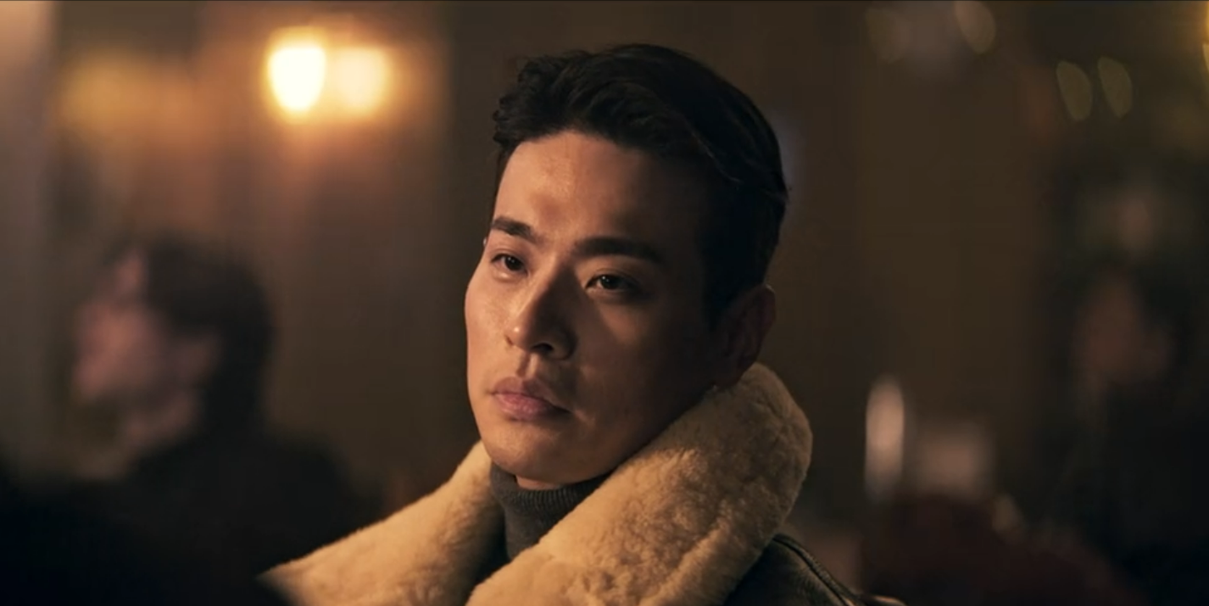
Written and directed by Ryoo Seung-wan, Netflix’s ‘Humint’ pits two top-rung intelligence officers against each other, despite, or perhaps precisely due to, their having a shared goal. Manager Zo, a South Korean officer, is tasked with going to Vladivostok on the hunt for a drug and sex trafficking ring, while Park Geon, a North Korean officer, is sent there for a similar cause. Their trajectories intersect when it comes to Chae Seon-hwa, who is connected to both people in mysterious ways. As the two struggle to decide whether to team up or face off, a much larger mystery brews in the background, ultimately forcing them to confront their demons together. In doing so, this Korean spy thriller movie is based on the field of intelligence and espionage, all the while tackling a humanitarian crisis.
Humint’s Story is Loosely Drawn by the Sex Trafficking Crisis at the North Korean Border
‘Humint’ is a work of fiction penned by Ryoo Seung-wan, who is also the director of the film. In a conversation with Star News, Seung-wan revealed that the idea for a story centered around sex trafficking on the Vladivostok border has been stewing in his mind since the making of ‘Berlin.’ Reading real-life news about the topic left him equally shocked and angry, leading him to want to portray it on screen. However, when going into production, he was also sensitive enough not to film with an exploitative gaze and relayed that message to his entire crew. Instead, he deemed it necessary to shine a light on how an entire system has been constructed to perpetrate these crimes across borders.

What Seung-wan draws attention to through a fictional story is likely informed by the real human trafficking crisis in North Korea. Since the Korean War of 1953, an estimated 30,000 North Koreans have defected to other nations, most commonly through the China–North Korea border. Reportedly, many such illegal crossings are made through brokerage or smuggling networks, but the process often carries the threat of trafficking and exploitation. A 2019 report by Korea Future Initiative found that approximately 60% of North Korean refugees are trafficked in some capacity. Out of that number, 50% are forced into sex work, while around 30% are pressured into marriage, with 15% being forced to partake in cybersex.
In ‘Humint,’ the narrative is largely centered around North Korean and South Korean intelligence independently looking into a Russian smuggling and trafficking ring. While this entire plot comes from the mind of the creative team, real-life details about North Korean defection to Russia might have loosely informed the story. As per the US State Department, the Russian government did not report screening North Korean workers for signs of trafficking in 2025, and reports have brought attention to the poor working conditions that these workers often have to endure in such circumstances. In the movie, these concerns are largely addressed by South Korea’s National Intelligence Service (NIS) and North Korea’s Ministry of State Security. While both these intelligence agencies are based on real-life, what we see on screen is an entirely fictionalized version.
Humint Refers to a Real-Life Discipline Known as Human Intelligence
The word “Humint” in the movie specifically refers to Human intelligence (HUMINT), an intelligence gathering method that uses human communication and resources. The most commonly understood forms of HUMINT include espionage and interrogation, and the movie gives us a glimpse into both of these techniques. While there might not be a direct real-life precedent for the South Korean government rescuing survivors from sex trafficking rings, the movie might have drawn partial references from the works of NGOs and non-profit organizations.

One example is Liberty in North Korea, which is a non-profit devoted to rescuing North Korean refugees hiding in China and relocating them to other countries. Similarly, the Durihana North Korea Mission helps defectors escape both North Korea and China, often by paying the fees required for illegal border crossings. While these two organizations operate in distinctly different ways from how national agencies are depicted in the film, it is possible that director Seung-wan was loosely inspired by the idea of rescuing trafficking survivors.
Park Geon is a Fictional North Korean Officer Conceived For the World of Humint
Just as the larger story of ‘Humint’ has been crafted from scratch, Officer Park Geon is also a fictional creation of writer Ryoo Seung-wan. Depicted as a high-level agent in North Korea’s Ministry of State Security, Park appears to be loosely modeled after the general archetype of a skilled agent, as popularized in films and television. While it is likely that the writing team researched North Korea’s intelligence systems and operating methods, none of that is translated directly to the screen. Instead, what we are offered is a deeply human rendition of a person working from within the system to protect the person he loves the most.

In his interview with Star News, Seung-wan noted that the element of melodrama is purposefully added into this spy storyline, specifically through Park’s character. The director initially considered actor Zo In-sung (who plays Zo) for the role, given their other collaborations where In-sung essays a similar character style. However, Seung-wan decided that the character of Zo fit him better, and accordingly found actor Park Jung-min to be a perfect fit for the role of Park Geon. Reportedly, Jung-min was also surprised by the dramatic high points in Park’s story, which is what makes him stand out on screen. While there might not be a real-life influence behind his writing, the character comes to life because of his emotional realism.
Read More: Humint Ending Explained: Is Park Geon Dead? What Did He Whisper to Zo?

