
 Diksha Sundriyal
Directed by Mary Bronstein, ‘If I Had Legs I’d Kick You’ is a psychological dark comedy drama film that follows the story of a woman named Linda who is stretched thin by the pressure of caring for her young daughter by herself. Over the course of the film, we see Linda getting tested to her limits, and while she tries to make things work, everything keeps slipping out of her hands until eventually, she unravels completely. The film presents a complicated portrayal of motherhood, and Rose Byrne’s performance adds another layer of realism to the story. SPOILERS AHEAD.
If I Had Legs I’d Kick You Borrows from Mary Bornstein’s Real Experiences
‘If I Had Legs I’d Kick You’ is a fictional story that follows the increasingly hectic few days in the life of the protagonist, Linda. Major aspects of her story, particularly the way she unravels into chaos and how she reacts to it, are entirely made up by Mary Bronstein, but she did draw from her own experience as a caregiver to a young daughter undergoing treatment to craft Linda’s character and her journey. The writer-director revealed that the idea to write the story came to her while she was in a Linda-like situation. Her seven-year-old daughter had been very sick and had to be moved from New York to San Diego for her treatment. For this, Bronstein had to travel with her daughter, while her husband, writer Ronald Bronstein, stayed back.

Similarly, Linda’s job as a therapist also mirrors Bronstein’s work as a therapist after she took a break from directing and turned towards other endeavors. The mother and daughter received a hospital-subsidized hotel room, which put them in close quarters with each other for eight months. Bronstein said, “I was displaced and under so much stress, and I just started unraveling. I kept treating it like it was temporary, even though it kept going on and on. I had no space of my own. At night, when my daughter would go to sleep, I would go into the bathroom and hang out on the bathroom floor because it was the only place I could turn a light on.” In an effort to cope, Bronstein started writing, which helped her gain perspective.
At the same time, it also allowed her to delve deeper into what being a mother actually means and what choices mothers have if they can’t deal with the challenges in front of them. She noted how mothers are not allowed to fail or to accept that they cannot or don’t want to do something, or, god forbid, if they need a break from their children. She also saw the process of becoming a mother as a breaking down of one’s own personality. “You go from being a fully formed human being with a favourite band, your own personal style and opinions, to someone’s mother. That is the identity that you embody fully to the point that questioning it feels like betraying your love for your baby,” she added.
Rose Byrne Enriched the Character With Her Performance
After Bronstein was done writing the script, she realised she wanted a specific kind of actor to pull off Linda’s role. It had to be someone who can handle rage and resignation, humor and sadness with the same deftness. This is when Rose Byrne’s name came into the picture, and the writer-director already knew that she was the one for it. She noted that the actress has a way of infusing her dramatic performances with humor, and that’s what was needed to work with Linda’s role. When Byrne read the script, she immediately knew she needed to do it because she liked it so much.
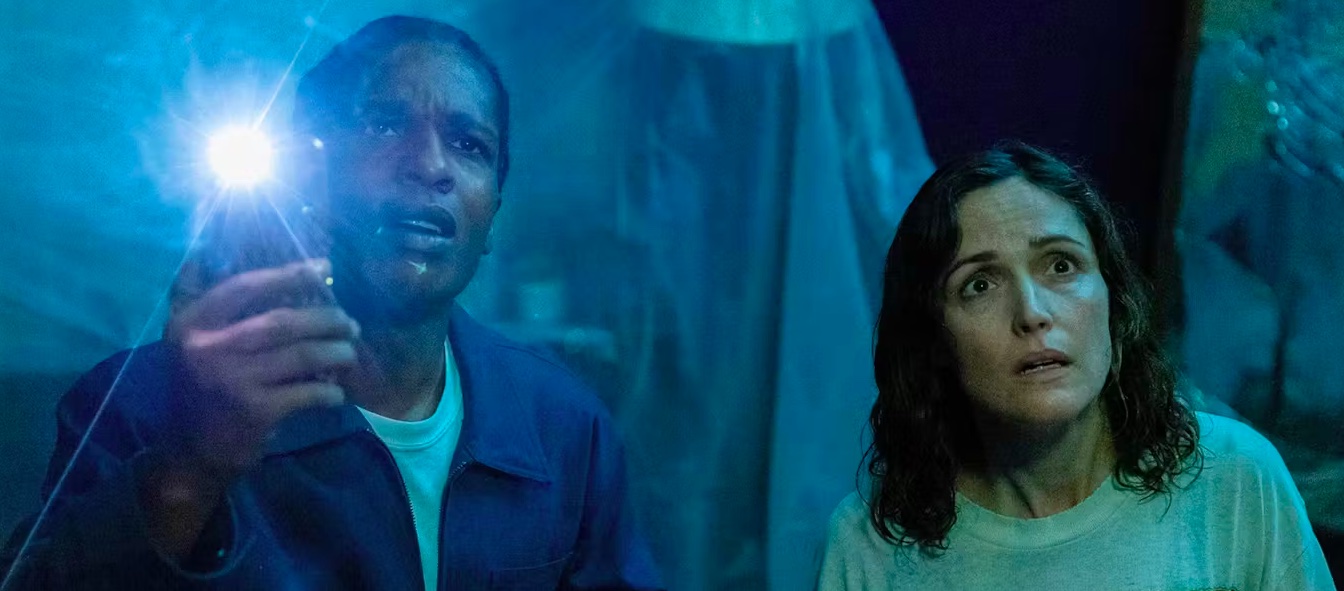
In her prep for the role, one of the things that Byrne leaned on was creating an extensive backstory for the character, to know who she was before she was consumed by the task of being a mother, and that became her whole identity. Bronstein was also intent on presenting the whole story from Linda’s point of view, which is why she decided not to show her daughter’s face. She believed that for the audience to empathize with Linda, they had to be completely in her mind. Changing points of view or showing things from her daughter’s perspective would have shown her from another’s perspective, which could have allowed the viewers to be more sympathetic with the other characters.
“We are never seeing her from someone else’s eyes. We’re in her reality, and she’s in hell,” Bronstein stated. At the same time, this also added to the fact that she couldn’t really see her daughter for who she was. Linda always saw through the lens of her illness, and that’s what presented to the audience as well. Above all, Bronstein wanted humor in the story. She wanted the audience to either laugh or cry with Linda, seeing the two reactions as a way to release one’s emotions. The director also prepared herself for a divisive reaction to the movie, but most of all, she hoped that some, if not all, people would be able to see themselves in Linda, connect to her struggles, and maybe learn from the character’s mistakes, even if it’s all fictional.
Read More: Is Eleanor the Great a True Story? Is Eleanor Morgenstein Based on a Real Person?

