
 Kriti Mehrotra
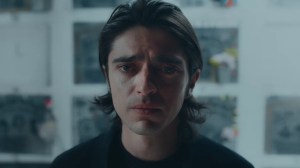
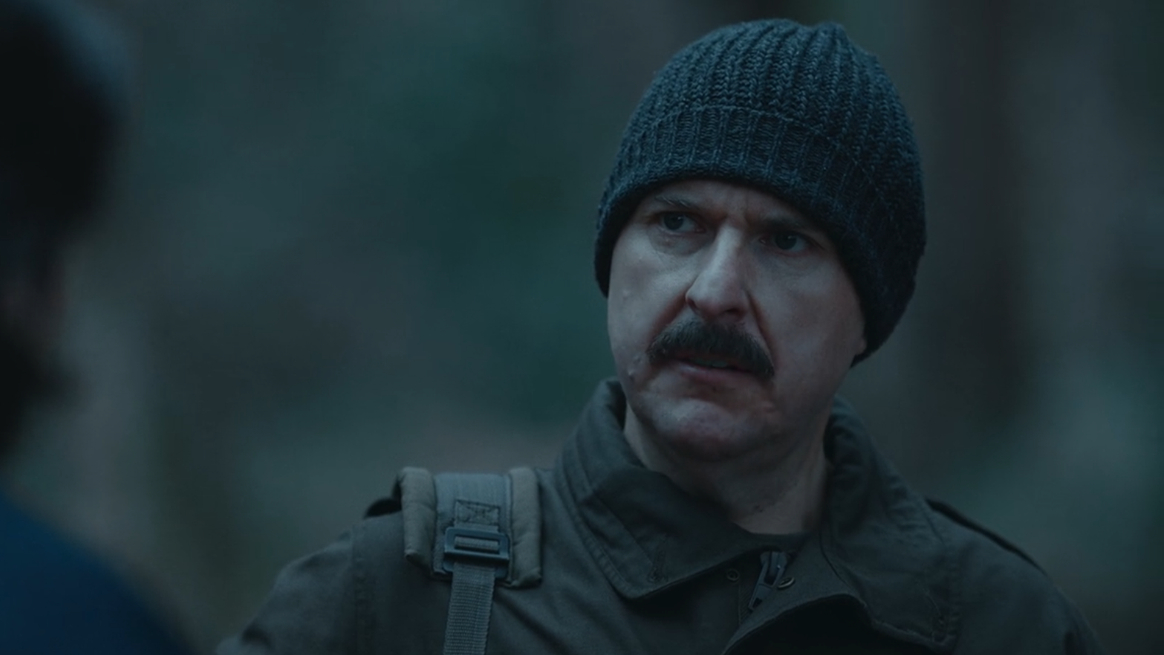
Directed by Carlos Moreno and Claudia Pedraza, Netflix’s ‘Fugue State 1986‘ (originally titled ‘Estado de Fuga 1986’) is a Colombian psychological crime drama series unlike any other. That’s because it explores a fictionalized account of the December 4, 1986, mass massacre at the Pozzetto restaurant – renamed in the show as San Marzino Italian – in Bogotá, Colombia. The incident reportedly was and remains the deadliest shooting orchestrated by a single individual in the nation’s history, who has been identified in the production as Jeremías Salgado.
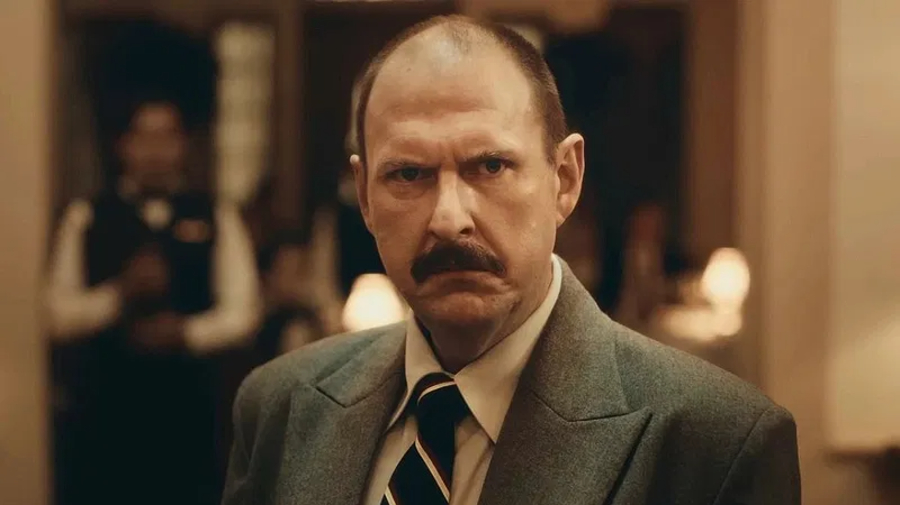
Jeremías Salgado is a Partially Fictionalized Version of Campo Elías Delgado
With Jeremías Salgado as the lead antagonist in the reimagination of the horrific Pozzetto encounter in ‘Fugue State 1986,’ he is indeed partly inspired by the real man behind the offense. In other words, while he may not be exactly like Campo Elías Delgado, he does represent a significant portion of the latter’s alleged essence as well as possible psychological profile. After all, the series is written by Ana María Parra under the supervision of author Mario Mendoza Zambrano, both of whom have an unexpected connection to the mass murderer.
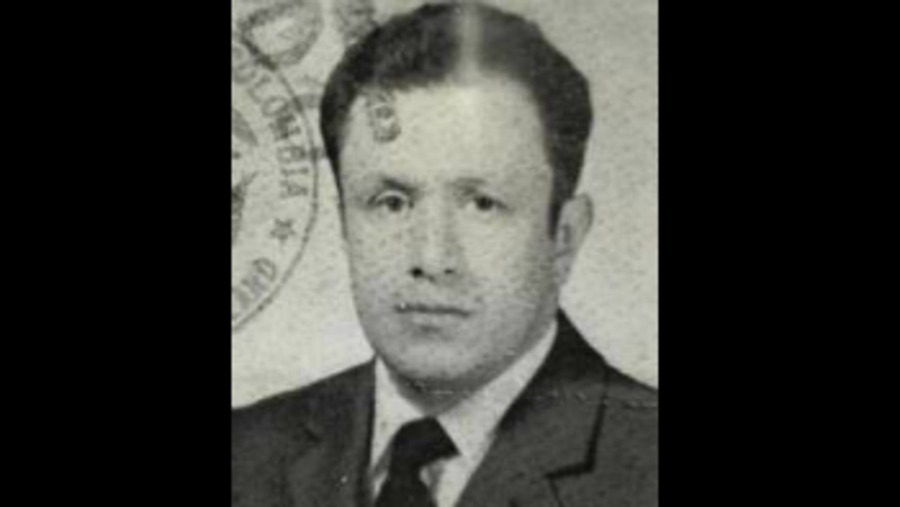
According to the duo’s own accounts, they attended the same college where Campo was a student in the months leading up to the massacre, with Mario even having known him in real life. The two men not only studied at Bogotá University, but they also shared bibliography for their respective thesis projects, which Mario believes has given him an insight into his psyche. As for Ana, she enrolled at the institution years later, and this time around, Mario was actually her literature professor, which we believe played a role in their approach to the show.
Campo Elías Delgado’s Standing as a Vietnam War Veteran is a Disputed Claim
It was reportedly on May 14, 1934, that Campo Elías Delgado Morales was born to Venezuelan natives Rita Elisa Morales and Campo Elías Delgado Sr. as the younger of two children. His place of birth was Durania in Norte de Santander, Colombia, based on most of his official documents, but his passport specified he was born in the small town of Chinácota in the same province. A clarification on this discrepancy has never been provided due to a lack of resources at the time and the passage of time; however, it has since been alleged that he primarily grew up in other areas.
According to records, the family relocated to Bucaramanga in the hopes of a better life when Campo was 5 years old, unaware that everything would turn upside down merely 2 years later. That’s when his father reportedly died by suicide in front of his eyes, which not only traumatized him for life but also left him with resentment towards his mother because he blamed her for his passing. Therefore, as soon as he graduated from the Provincial School of Pamplona, he decided to break off contact with his remaining family, enrolled at the College of Santander, and then enlisted in the Navy. He reportedly trained in a medical capacity during his military stint, after which he chose to move to Argentina to build a new life for himself.
It was there that Campo allegedly tied the knot and welcomed at least one son into the world, only to ultimately leave everything behind to settle down in the US. According to some records, he subsequently served in the US Army from August 1975 to August 1978, meaning he began his active service four months after the conclusion of the Vietnam War. His claim of having been deployed there as an Electronics Engineer working alongside a parachute squadron in the Air Force during the tail end of the conflict is thus largely disputed. Fellow soldiers have also since confirmed seeing him stationed in the Panama Canal Zone in 1975 and then at the Army’s Medical Center in Texas until his honorable discharge as a Sergeant First Class in 1978.
Campo Elías Delgado Took a Total of 29 Lives Over 7 Hours in 1986
After Campo returned to civilian life, he reportedly spent some time in New York City, where he was unfortunately shot right in the chest during an altercation with a mugger. He managed to make a full recovery over time, but the incident, as well as his two failed marriages in Argentina and then in the US, led him to move back to his homeland in the 1980s. As depicted in the show, he resided with his mother, all the while taking graduate classes at Bogotá University/Pontifical Javierian University and giving private English lessons to make ends meet. According to records, Campo had trouble connecting with others or making friends in the years to follow, so he lived in isolation and resentment until December 4, 1986, rolled around.
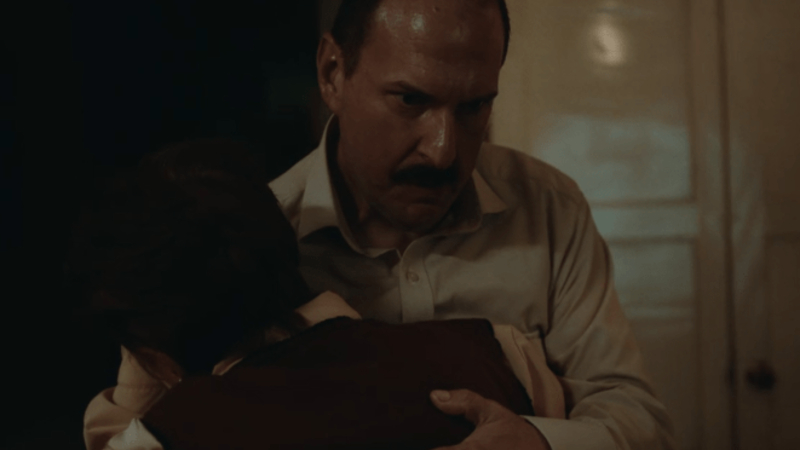
It was roughly 2 pm on that fateful afternoon when the 52-year-old army veteran entered an apartment he had grown rather accustomed to in the La Alhambra neighborhood. Its residents were his former 15-year-old student, Claudia Rincón, and her mother, Nora Becerra de Rincón, both of whom he eventually stabbed multiple times before fleeing the scene. He subsequently returned to his apartment building in the Chapinero neighborhood, where he fatally stabbed his mother, wrapped her in a blanket, doused it in gasoline, and then set the house on fire. Campo reportedly rushed downstairs in the minutes to follow with the .32 caliber weapon and ammunition he had purchased the day before, after emptying as well as closing his bank account.
His next targets were his downstairs neighbors, whom he shot to death before going on to open fire on another neighbor as well as the residents of the floor below – in total, he shot five women. It was then that he dropped in on some acquaintances prior to heading to his frequently visited Pozzetto Pizzeria, where he arrived at 7:15 pm after dropping his hunting knife along the way. As per records, he ordered his usual dinner but uncharacteristically paired it with alcohol, following which he ate in silence, paid with a big tip, and continued drinking until 9:15 pm. That’s when he took out his gun, shouted he was robbing everyone, and then proceeded to open fire on all adults one by one – he shot them twice in the head at point-blank range. He did accidentally kill a 6-year-old girl, too, when his weapon misfired, but apart from her, he targeted 31 others, 18 of whom passed away.
Related

Campo Elías Delgado’s Remains Have Never Been Recovered
Campo was in the middle of his massacre when law enforcement officials arrived at the scene, and they immediately surrounded the area to contain the threat to the best of their abilities. However, everything changed 10 minutes later as they went from defense to offense, engaging in a shootout and enabling several patrons to escape right from the front entrance of the establishment. The shootout lasted for approximately a minute, that is, until the danger the 52-year-old posed had been neutralized – he had died inside the pizzeria from a bullet wound to the temple. The widespread belief for decades has been that Campo died by suicide, yet authorities have seemingly maintained he was killed by a police officer while he was reloading his weapon.
However, it’s imperative to note that a lot of the evidence from this spree killing has either gotten lost over the years or is inaccessible, which leaves a lot of aspects unclear. The primary one is of Campo’s motive, especially because while many hypothesize he broke down after years of alleged depression and paranoia, others think his actions were deliberate. He could have had PTSD from the losses he faced in his childhood and his years in the military, but he did reportedly have an obsession with mass murders and mysteries, too. Therefore, his motive remains elusive. The question of what happened to Campo’s remains also persists, because they had allegedly been retrieved by someone in the days after the massacre and have since not been tracked down.

