
 Diksha Sundriyal
Starring Rose Byrne, ‘If I Had Legs I’d Kick You’ follows the downward spiral of a woman named Linda, as she crumbles under the pressure of caring for her daughter while trying to go through other challenges of life. The film charts the story of her deteriorating psyche, and director Mary Bronstein makes it more intimate by using close-up shots of Byrne to put the audience face-to-face with the character. Curiously, while Linda’s daughter remains an integral part of her story, we never actually see her or find out her name. This was an informed choice made by Bronstein. SPOILERS AHEAD.
The Absence of the Daughter’s Face Increases the Focus on Linda
Mary Bronstein came up with the idea of ‘If I Had Legs I’d Kick You’ from her own experience of caring for an ailing daughter. Through Linda, she wanted to present her own story, while also making other mothers like her feel seen. To do that, she needed to make Linda the center of the story, and with so many moving parts in the film, she had to center the character by making her the only one that the audience follows and roots for till the end. However, she knew it could be tricky to make the audience feel for the protagonist, especially as she makes one seemingly wrong choice after another. She knew that there could be some people in the audience who might not approve of Linda’s choices, and this sentiment would be strengthened by the presence of her daughter.

Bronstein knew that the moment the audience looked at Linda’s child, they would sympathise with her and see Linda, who is struggling to care for her daughter, in a more antagonistic light. This is a natural reaction for human beings, as a helpless and ailing child is bound to influence the thought process of the viewers. At the same time, mothers are seen in a much harsher light. They are expected to be natural caregivers, so when they start to question their role or struggle against it, people see them as an anomaly. They are labelled bad mothers and seen outside of being a normal, fallible human trying to survive in their own way. Linda would be seen in the same way, and the director did not want that.
The purpose of the film is to tell the story of Linda’s struggles and how she tries to cope with a series of events that keep making things worse for her. For this, the audience needed to find themselves in Linda’s shoes. They needed to be able to empathise with, if not support her. So, to turn the entire spotlight on her, Bronstein found it best to keep the child out of the frame. We hear the daughter’s voice, but we never actually see her or even know her name. This creates a disconnect between her and the audience, giving more space to Linda and her perspective, and keeping the audience focused entirely on her. This, however, is just one layer of the narrative.
The Revelation of the Daughter’s Face Holds an Emotional Punch for the Protagonist
Because ‘If I Had Legs I’d Kick You’ takes place from Linda’s perspective, everything we see is what she sees and how she sees it. The story picks up at a point where she is already stretched too thin. She is trying to keep it together, but with her husband away at sea for the next few weeks, and a giant hole in her house that makes her and her daughter move to a motel, pulls at her and creates such biting tension that it feels she will break any minute. With all this going on in her head, Linda has started to withdraw into herself. The things outside and around her have become a haze that she is not exactly looking at. This holds true for her daughter as well.
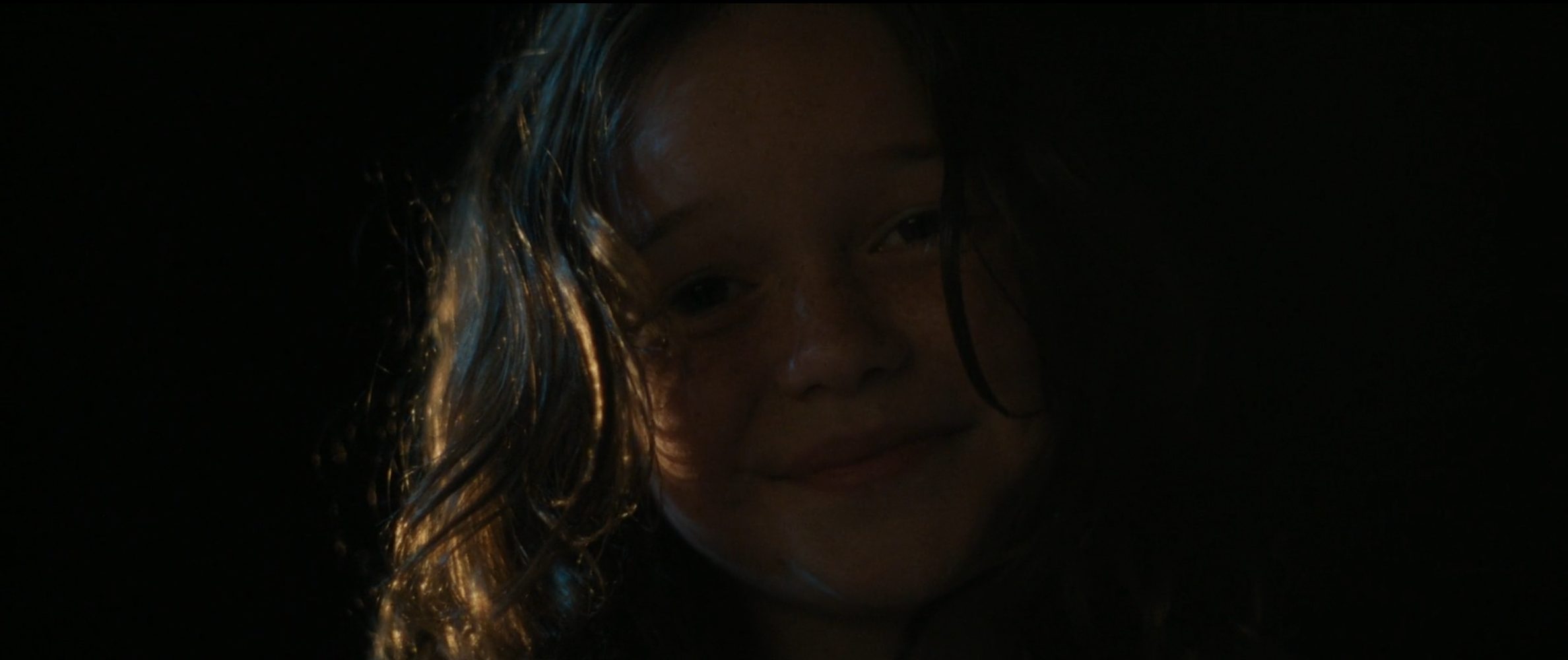
Mary Bronstein explained that the idea was to show that “Linda literally can’t see the daughter in an existential sense.” For her, her daughter is “something that’s put upon her, an obligation, a thing she has to do, the thing that’s getting in the way of her life, a thing that she wants to avoid.” So, as the character tries to keep her daughter out of her mind, the child also gets out of sight. So, just as Linda can’t see her daughter for the child that she is, the audience can’t see her either. Her face is eventually seen at the end of the film. This is when Linda actually looks at her daughter, with no barriers between them. And sure enough, when she and the audience see her, they see the little girl who is also suffering in her own way, and that’s when the empathy hits the character as well as the viewers following her.
Bronstein revealed that the idea of using the child and her appearance, or lack thereof, as such a potent plot device was partly inspired by Eraserhead. “What influenced me with that movie is the baby—the way the baby is this weird, ugly, little creature guy. Is it? Or is it just because that’s how [Jack Nance] is seeing it?” she explained. In the same vein, with the close-ups of Byrne as Linda, she wanted the audience to actually see her, while highlighting the isolation she endures because she is not feeling seen by others. The writer-director wanted the viewers to get so close to her that they feel they are in her head and experience her tiredness, her isolation, and her increasing sense of doom that consumes her so much that it makes her run into the ocean in an effort to escape it.
Read More: Is If I Had Legs I’d Kick You a True Story? Is Linda Based on a Real Psychotherapist?

