
 Abhiroop Das
Developed by Catalina Aguilar Mastretta, Netflix’s ‘Lovesick‘, also known as ‘Mal de amores,’ centers around a complicated love triangle that evolves over the span of a decade. This period also happens to be a particularly volatile one, with the dawn of the Mexican Revolution prompting many to take sides and navigate a wholly new political reality. For Emilia Sauri, a talented medical student, these anxieties entirely manifest through her relationship with Daniel Cuenca, her childhood best friend turned lover. However, Daniel also happens to be one of the most vocal revolutionaries in the town of Puebla, and with each uprising increasing the distance between these two characters, the Mexican series seemingly takes turns switching genres, from romance to history, before arriving at a synthesis. In doing so, this unique love story carves out its own space within a larger historical context.
Lovesick is Based on a Classic Mexican Historical Romance Novel by Ángeles Mastretta
‘Lovesick’ is an adaptation of Mexican author Ángeles Mastretta’s novel of the same name, which itself is a fictionalized depiction of the Mexican Revolution through the eyes of a character named Emilia. The Mexican Revolution, which began on November 20, 1910, and is generally considered to have ended a decade later in 1920, marked a period of political upheaval and reformation that ultimately reshaped the nation. Mastretta’s novel places Emilia within this historical context to trace the social realities of that time using romance as a lens. The Netflix adaptation is directed by Mastretta’s daughter, Catalina Aguilar Mastretta, who also co-wrote the screenplay alongside Daniela Gómez and Fernanda Eguiarte.
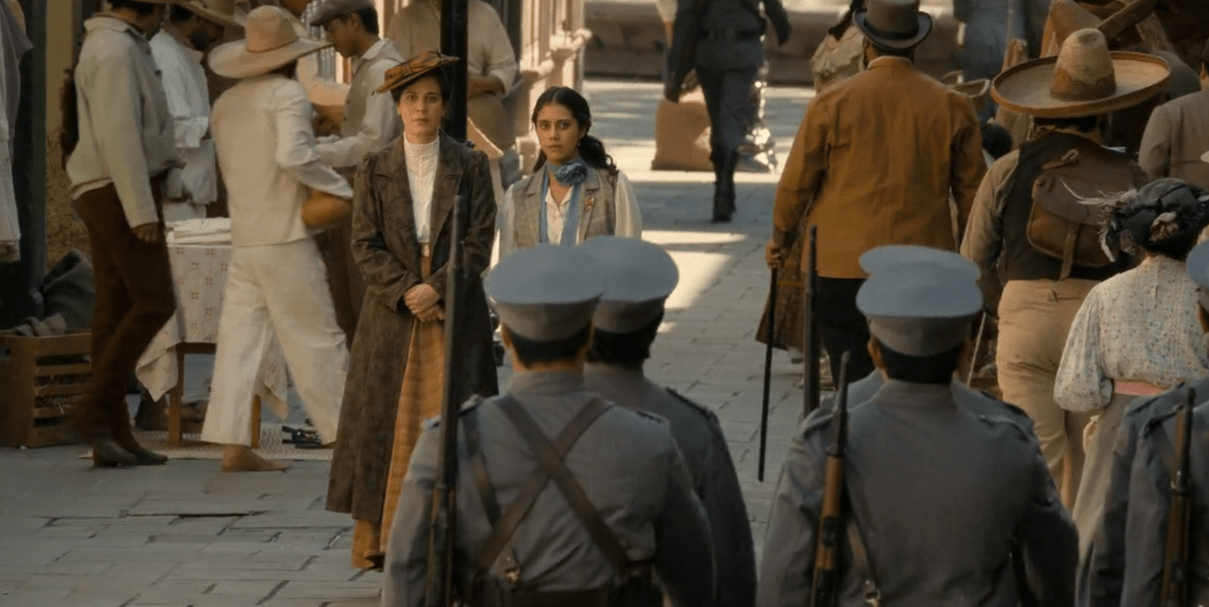
While the plot of ‘Lovesick’ may be fictional, one detail about the character of Emilia comes from Ángeles’ personal life. In a conversation with Nexos, she revealed that one of her eight great-grandmothers was called Deifilia Sauri, which is where Emilia’s surname comes from. However, that is also where the parallels effectively end. The sociopolitical themes of the novel evolve alongside the romance aspects, with Mastretta spending four years writing the story and researching everyday life in the 1910s. She read extensively about how people studied medicine, what medicines and herbs were used, and even where people might have bought their shirts. With this attention to detail shaping the fictional world, Mastretta allows her fictional characters and their story arcs to take over.
The Mexican Revolution Reshaped the Sociopolitical Structure of Mexico Over a Decade
What keeps the story of ‘Lovesick’ constantly connected to reality is how it reimagines and covers the Mexican Revolution from its very inception. While not all the characters are actively involved in political activities, their lives are nonetheless shaped by the defining turns in history. In real life, the revolution initially began in opposition to Porfirio Díaz, who had ruled Mexico for decades. His government drew criticism for its suppression of dissent and for causing severe economic and land inequalities. During the 1910 election, Francisco I. Madero emerged as his primary opponent, and after the results of the election were disputed, Madero called for an uprising. Though he eventually came to power following Díaz’s resignation in 1911, the revolution didn’t end there, as several revolutionary groups continued protesting for their own demands.
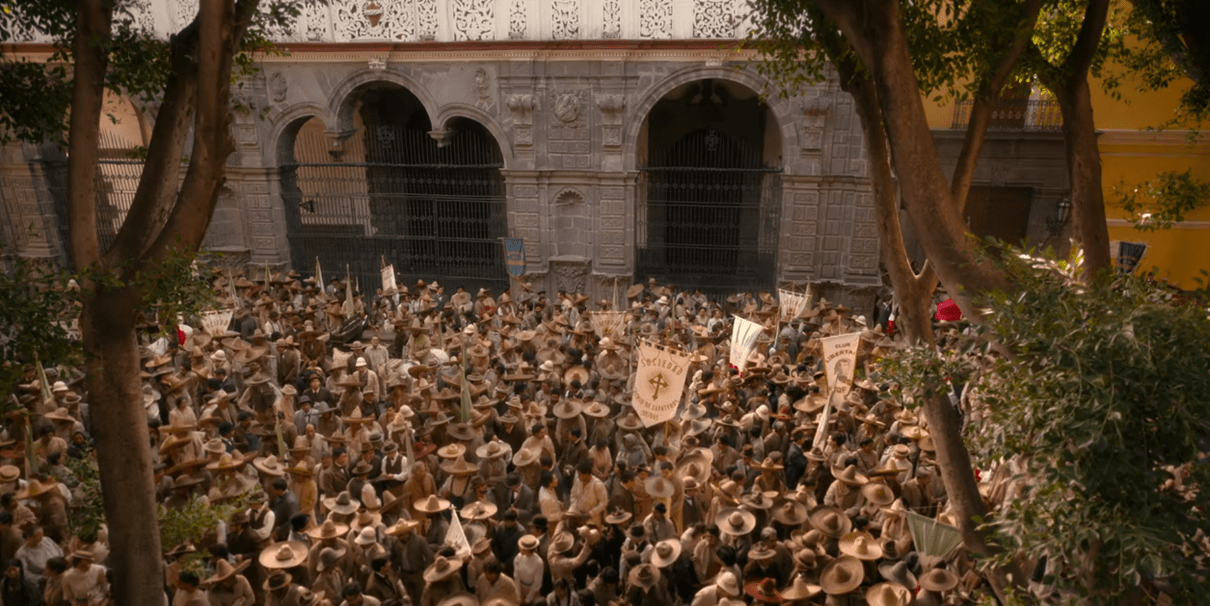
In February 1913, Madero was overthrown in a military coup led by Victoriano Huerta and was killed shortly afterward, prompting a new phase of armed resistance. Opposition to Huerta drew together some of the most well-known figures from the revolution, including Venustiano Carranza, Álvaro Obregón, Pancho Villa, and Emiliano Zapata. Following the defeat of Huerta’s government in 1914, the alliance grew increasingly fractured over competing goals, eventually splitting into two main groups: the Constitutionalists, who sought a constitutional government, and the Conventionists, who pushed for more radical land and social reforms. The Constitutionalists ultimately prevailed, leading to the creation of the Constitution of Mexico in 1917. A state of political turmoil nonetheless persisted for some years, and the revolution came to an end when Obregón assumed the presidency in December 1920.
Lovesick Has Been Conceptualized as the Coming-of-Age Story of Mexico
While the Mexican Revolution has been the subject of many retellings, both in novels and TV series, for director Catalina Aguilar Mastretta, the series’ focus is on something subtler. During her interview with Nexos, she explained that her goal was to shed light on the dichotomy between private and public life during the revolution. She was particularly fascinated by how ordinary life could continue in the backdrop of sweeping social changes, and the effect that would have on a person, both consciously and subconsciously. Catalina also drew parallels between the story’s setting and her own life, especially in light of the contemporaneous political climate, questioning how a person might navigate such turbulent times while feeling a sense of social responsibility.
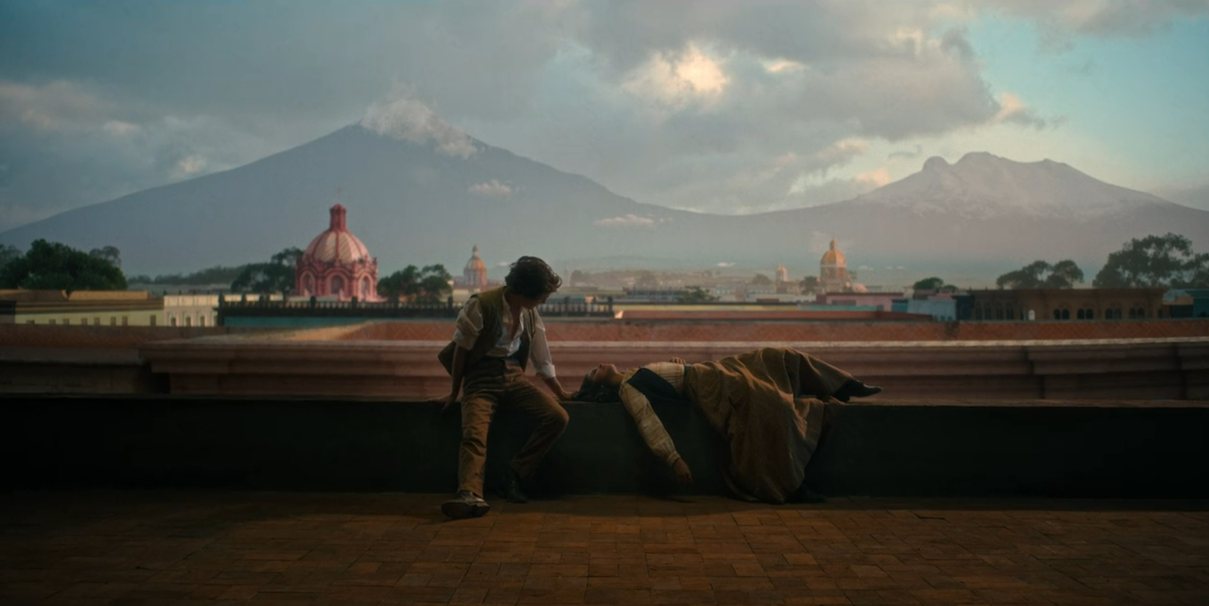
For Catalina, ‘Lovesick’ is about the coming of age of Mexico just as much as it is about Emilia Sauri. When crafting a dramatized interpretation of this iconic historical period, Catalina and her creative team often sought new ways to incorporate the full geography of the revolution. While conversing with Nexos, she pointed out that the revolution took very different shapes in Northern and Southern Mexico, as well as in rural and urban settings. Connecting all of these threads is Emilia’s love story, and while it may be a fictional construct, it culminates in a striking commentary on human psychology and relationships, both in the original novel and in its Netflix adaptation.
Read More: Lovesick Season 1 Ending Explained: Does Emilia End Up With Daniel or Zavalza?

