
 Saagar Kote
Directed by Sitisiri Mongkolsiri, Netflix’s ‘The Red Line’ or ‘Sen Tai Sai Luang’ is a Thai crime thriller drama that focuses on the struggles of three women against the perpetrators of a deadly scam in Thailand. After a devastating call center scam wipes out her family’s savings, Orn, a former marketer turned housewife, faces a harsh reality. She hopes to recover her money and also expose those behind the scam that cost her dearly. She comes across Fai, a physical therapist who suffered the loss of her life savings and aspirations due to a similar fraudulent scheme, and Wawwow, an online seller whose grandmother was scammed out of her life savings.
These women realize they may have all been scammed by the same group of scammers and team up to take revenge. They take the help of a brilliant hacker named OJ to pursue Aood, the ruthless call center gang leader behind all the deception. What follows is a game of cat and mouse where the hunted become the hunters. The narrative intricately delves into important social themes, while also being an engaging story of justice.
The Red Line Poignantly Sheds Light on the Troubling Phenomenon of Call Center Scams
Written by Tinnapat Banyatpiyapoj and Kongdej Jaturanrasamee, ‘The Red Line’ mainly focuses on how innocent people can potentially fall prey to scams by total strangers. In the fictional story, the group of scammers, led by Aood, dress up as cops and call their targets through audio and video to push them into a scenario where they lose their money. Due to the severity of the situation, the victims don’t have time to assess it and instead believe the deceptive callers’ lies. Orn, Fai, and Wawwow’s stories in the movie represent the fights of several such individuals in real life who have been deceived by unknown individuals. In an era of technological growth and increasing cyber scams, the movie is a relevant commentary on how people are vulnerable in the most unexpected moments.
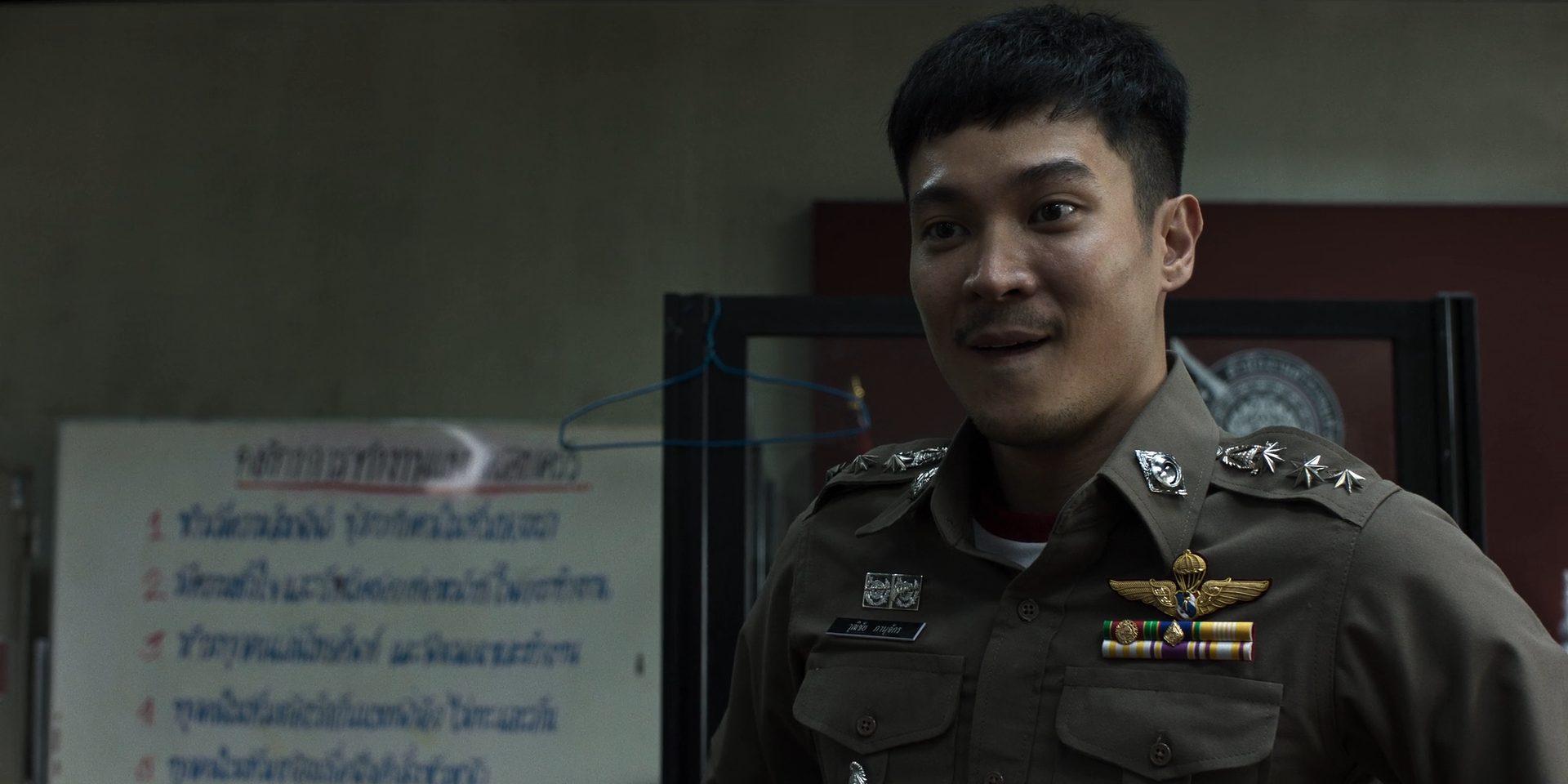
The grounded nature of the movie also contributes to the story’s realism and offers a perspective on the victims’ struggles. The movie is narrated from the victims’ point of view, making it a meaningful commentary on the journey people take to seek justice. According to a 2025 report, the International Anti-Scam and Human Trafficking Syndicate Command Centre (IAC), led by Thatchai Pitaneelaboot of the Royal Thai Police, launched a 3-month operation called “no way out” to dismantle call center scam networks, especially those operating in Cambodia. The initiative involves multiple agencies and targets gangs believed to be exploiting Thai citizens, with alleged illicit funds potentially being used for arms procurement and activities threatening national security.
The ordeal that the characters in the narrative go through is set in a troubling social reality that makes them appear realistic. Thai citizens are regularly targeted by such scams, making the movie more relevant in the country’s context. Call center frauds and cyber scams have also been the subject of popular shows like Netflix’s ‘Jamtara: Sabka Number Ayega,’ an Indian crime drama series, and the BBC documentary series ‘Scam Interceptors.’ While the narrative is set in Thailand, the issues it discusses are not restricted to the country alone, as they affect individuals across the globe and have victims in many countries.
The Red Line Portrays a Desperate Quest for Justice and Revenge in an Unfair World
Orn, Fai, and Wawwow are the core of the narrative, and their character arcs add grit to the story. The movie, through the experiences of the three women, portrays how justice can be a complicated concept and how revenge can be a tiring process in the absence of legal and police support. Orn, Fai, and Wawwow are forced to act on their own and enlist a hacker to target the people who scammed them. In reality, there could be several such individuals who may lack the support needed to pursue justice. The film is also a commentary on female liberation, as it examines how Orn, Fai, and Wawwow stand with each other in moments of need. Justice is not a simple idea, and when it comes to issues like call center scams, it raises multiple new angles in how justice is perceived.

On one hand, the scammed women hope to recover what they lost, but on the other, they also wish to dismantle the criminal syndicate responsible for their situation. The movie also comments on the cost of civilians pursuing justice through illegal means. While Orn, Fai, and Wawwow set out to take back what belongs to them, they also become part of a dangerous game where they move beyond the limits of law to achieve revenge. These morally complex ideas and the characters’ struggles make the movie more relevant.
Read More: Is Bad Influencer a True Story?

