
 Abhiroop Das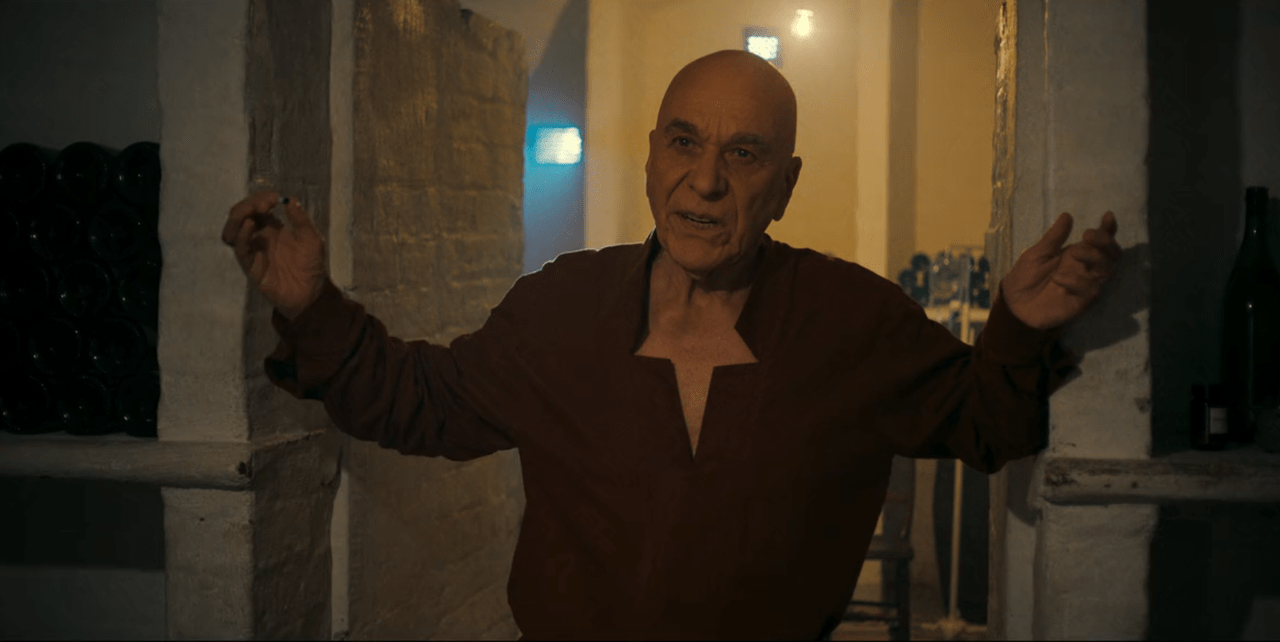
Helmed by Nimer Rashed and Isher Sahota, ‘Run Away‘ is a Netflix thriller series that chronicles Simon Greene’s quest to find his missing daughter, Paige, after the inexplicable murder of her boyfriend, Aaron Corval. With waves of suspicion and paranoia surrounding him from every corner, Simon has no option but to rely on help from strangers, who may or may not have the key to the mystery. It is here that his story interacts with two other ongoing narratives: that of Ash and Dee Dee, a serial killing duo, and Elena Ravenscroft, the private investigator tailing them through their murders. What Simon doesn’t know, however, is that all three of these disparate threads are connected, with a mysterious cult, named The Shining Truth, at the heart of it all. As the cult’s sinister secrets come to light in this adaptation of Harlan Coben’s eponymous book, both Paige’s disappearance and Aaron’s murder unveil their own layers.
The Shining Truth is an Invented Cult Born Out of Harlan Coben’s Creative Interests
The Beacon of The Shining Truth, better known as The Shining Truth, is a fictional cult created by Harlan Coben for his book, ‘Run Away.’ From there, it was adapted to television by writers Tom Farrelly, Amanda Duke, and Daniel Brocklehurst. The original idea for The Shining Truth emerged during the writing stages of the novel, inspired by Harlan Coben’s fascination with cults. This interest coincided with two of his other writing ambitions, that of integrating the rising trend of genealogy websites with a child’s struggles with drug addiction. As such, the final storyline allowed him to build up the cult as an antagonistic faction, binding together many elements despite operating from the shadows.

Coben spoke to Tudum about why he chose to center the plot around a cult, explaining that “There’s a certain fascination with that kind of brain manipulation, if you will, and that sort of obsession, believing what’s not necessarily so.” Thus, with The Shining Truth, he was able to bring in a number of unconventional plotlines, as well as an element of chaos into the larger narrative structure. The fact that these plot threads were also spread out, only occasionally interacting with each other until the end, was also intentional on Coben’s part. “What could they (Simon and his family) have to do with a cult that’s way in the outskirts of society?” he added, highlighting one of the story’s major intrigues.
The Shining Truth Likely Draws From Cult Archetypes Rather Than Real-Life Analogues
While Coben likely wasn’t inspired by any one real-life cult in particular, The Shining Truth does exhibit many characteristics associated with authoritarian cults. To that end, it is possible that the writing team drew partial inspiration from a variety of cults, whether existing or dissolved, with a history of sexual exploitation, as is the case with The Shining Truth. However, given that Coben was more interested in exploring the collective psychology of cult systems, it is more likely that he took existing cults as a reference point and later added his own inventions into the mix. The finished product, albeit imaginary, then became a vessel for his input on real-life subjects, ranging from sexual violence to separation from family.

As The Shining Truth is introduced as a secret, but seemingly all-powerful entity in the world of ‘Run Away,’ the crew decided to reflect that idea in its presentation. As such, Thornbridge Hall, located in the Bakewell area of the Derbyshire Dales district in England, served as the primary filming location for the cult’s base of operations. The entire estate was likely redressed for the show, with specifically crafted camps, watchtowers, and spiritual decorations perfectly capturing The Shining Truth’s vibe and aesthetics. While Thornbridge Hall contributes to The Shining Truth’s visual identity, both the cult and its on-screen location are wholly intended to be fictional.
Read More: Is Netflix’s Run Away Based on a True Story?

