
 Abhiroop Das
Written and helmed by Jalmari Helander, ‘Sisu: Road to Revenge’ expands on the world introduced in ‘Sisu,’ where Aatami Korpi is mythologized as the immortal man. After losing his family to the Red Army in World War II, Aatami turns into a vigilante figure, taking on multiple soldiers at once and coming out as the only survivor. However, in this Finnish action thriller movie, he is pitted against someone who may as well be his arch-nemesis: the very officer who killed his wife and children. Driven by rage, but also his desire to dismantle and rebuild his family home somewhere safer, Aatami makes a long passage to the heart of a war-torn territory, determined for it not to be his last time on the road. SPOILERS AHEAD.
Sisu Road to Revenge Plot Synopsis
‘Sisu: Road to Revenge’ takes place some time after the events of ‘Sisu’, returning to the daily life of Aatami Korpi. It is 1946, Finland has just ceded the region of Karelia to the Soviets, which forced hundreds of thousands of people to move out. Motivated to return to his home one last time, Aatami takes off with his pet dog in a truck. Elsewhere, a KGB official arranges for the release of a prisoner named Yeagor Draganov, a former officer who killed Aatami’s family years ago. Given the Finnish hero’s reputation as the one-man killer, the KGB tasks Yeagor with killing him in return for his freedom and some prize money, and he agrees. In Karelia, Aatami begins disassembling his wooden house, collecting pictures of his family, and putting every log into his truck, all in the hopes of rebuilding a home in safer regions.
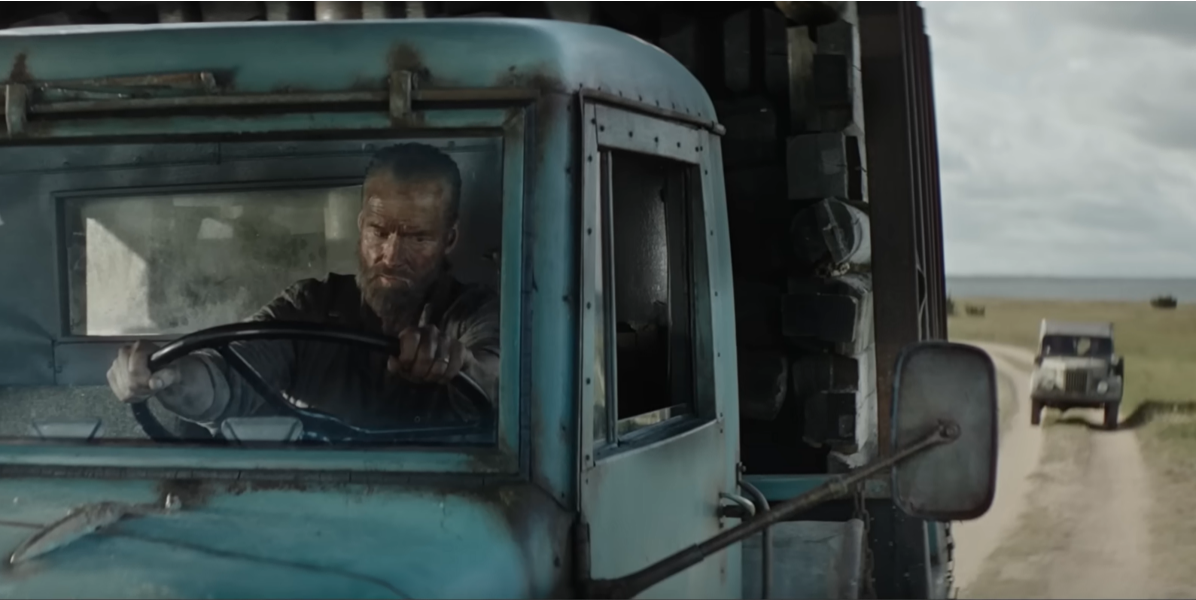
On his way back to the Finnish border, Aatami is ambushed by Yeagor and his soldiers, who hope to trap and burn him inside his truck. However, Aatami manages to outsmart them, ramming his truck through soldiers and cars alike to escape. With his first strategy down, Yeagor calls in a bike squad, which almost manages to climb up the truck and kill Aatami, only for him to leap in and out of the vehicle, swiftly dispatching the bikers one by one. When Yeagor lights the logs on fire, Aatami rushes the truck into the woods, which puts the fire out and restarts the chase. This time, Yeagor goes all out and summons two fighter jets, which lock their aim on the truck and open fire. Although Aatami manages to use his surroundings to escape briefly, he soon realizes that he needs a better plan.
After taking down two fighter jets by himself, Aatami is left with no choice but to crash his truck into the sea. Though he almost drowns, Aatami survives by holding onto a log as it drifts up. Then, before more pilots can reach the scene, he escapes by preparing a makeshift raft out of the logs he finds, which leads him to a nearby marsh. There, by pure luck, he encounters a run-down tank, which he drives forward by firing explosives one at a time. Though his strategy is almost effective and nearly breaks through Yeagor’s ground defenses, the plan fails at the last minute when the tank explodes and ejects Aatami. Before Yeagor can kill him, however, the KGB orders him to chain and torture the man instead, all to bring him to Siberia via a long train ride. The Finnish fighter is not one to rest, however, and begins a rampage the moment he is freed, one wagon at a time.
Sisu Road to Revenge Ending: Does Aatami Return to Finland? Does He Build His Home?
At the end of ‘Sisu: Road to Revenge,’ Aatami gives Yeagor and his Red Army squad their most crushing defeat yet, and returns to Finland alive and in one piece. Though for a moment it seems that his injuries are simply too severe for him to survive the night, the immortal man proves us wrong once again. Steering the train all by himself, he makes it to the Finnish border, only to be greeted by a line of armed soldiers. Given that his train car is distinctly Soviet, it is natural for the Finnish soldiers to be on edge, but that changes when Aatami shows them his badge, revealing himself to be one of the nation’s most decorated soldiers of the past. As it has always been the case with the ‘Sisu’ series, Aatami is a uniquely taciturn figure, and this scene, too, conveys its powers entirely without words.
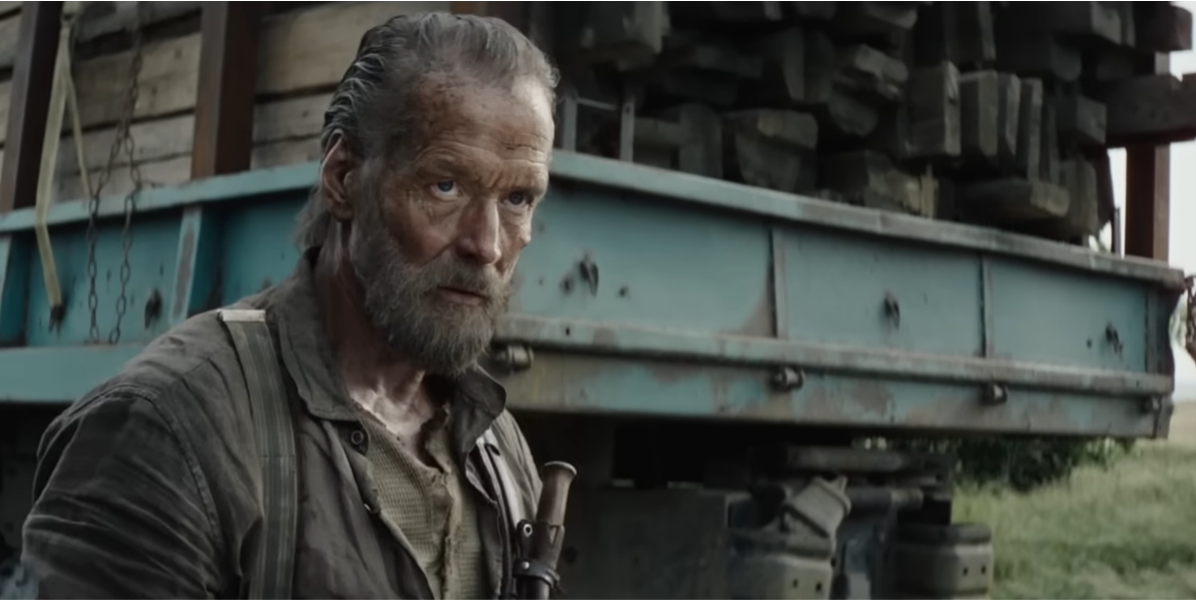
Aatami is not the only one to make it back to Finland after going through hell, as he is accompanied by his dog, as well as his collection of logs. The last we see of either of them is when the tank crashes, as in that moment, Aatami volunteers himself for the safety of his dog. It can be surmised that after his final fight, he went back to retrieve his cherished companion, as well as the logs, which are the whole point of this road mission. Where he has had to struggle to carry the logs from his original home back to Finland, the ending turns this transfer into yet another symbol of his heroic victory, as the train wagons themselves become carriers. The symbolism of the train quite literally going against its usual course is also relevant here, as it reiterates the kind of man Aatami is, embodying the titular “sisu” or an unshakeable form of grit.
With his logs intact, Aatami makes his way back to his home in Finland, which is where the story fully reunites with its prequel. The mission from hereon out is to rebuild a house with the same wood, and while this can be interpreted as Aatami holding on to his past life, that isn’t quite the case. Notably, the house he starts building has a different design from the get-go, and even involves the repurposing of many of the logs he carries. As the logs themselves have survived burning, sinking, exploding, and perhaps several other elements, they, too, embody a spirit of resilience that only Aatami has displayed so far. Thus, a house built with these specific logs doubles as a monument to his undying spirit, with the additional layer of his memory of his family now being baked into his daily life.
Who are the Men at the End? Why is Aatami Smiling?
Although the movie ends with Aatami’s triumph over the Soviets, the final scene still brings its fair share of surprises. Particularly, it features a group of men wielding axes, hammers, and maces, all trudging their way to Aatami’s half-unfinished home. Alerted by their sight, he grabs an axe himself, fully expecting this to be more attackers targeting either him or his resources. That, however, is far from the truth, as these people, some of whom are even children, turn out to be locals who simply want to help. It is a testament to the movie’s complete indulgence of darkness and violence that this harmless scene is also warped beyond recognition, in that we, just like Aatami, fail to see this as anything but a threat to his life. However, the moment reality sets in for him, the old man is left with nothing but a tearful smile, which makes for the final shot of the movie.
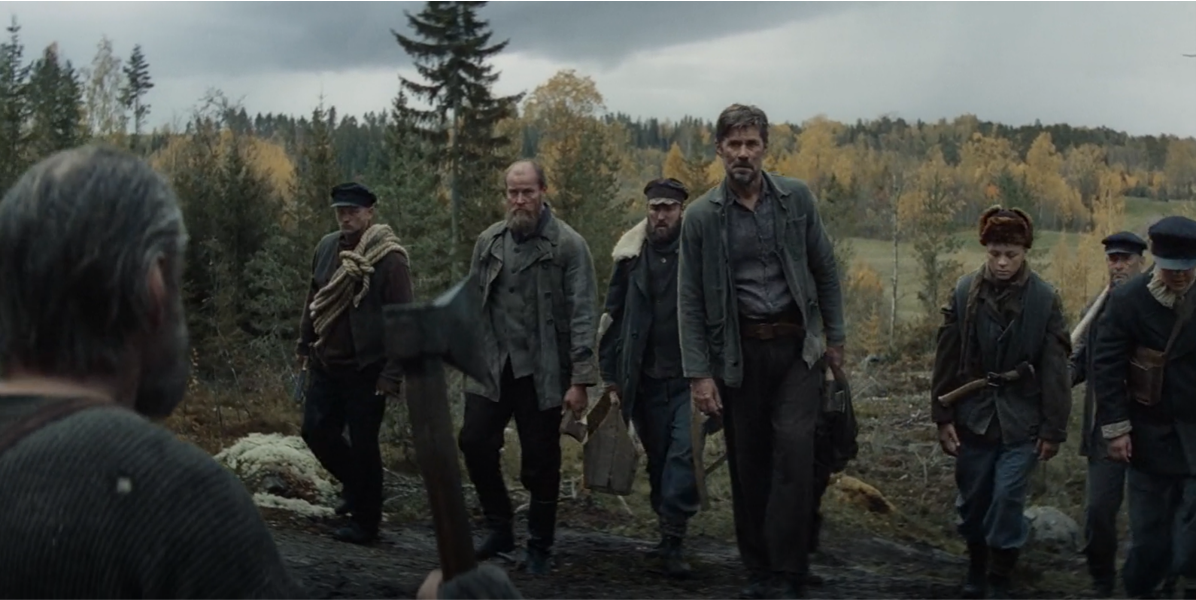
Throughout ‘Sisu’ and ‘Sisu: Road to Revenge,’ virtually every man that Aatami meets ultimately challenges him to a fight. In almost all of these cases, Aatami wins, but the psychological toll of it all cannot be undermined either. This also registers as a pattern for the audience, which is what makes the final subversion of expectations as hard-hitting as it is. While it can explain why Aatami breaks into tears, the real reason he smiles is not just because the locals are non-violent, but because they are compassionate. This is arguably the first time in forever that he has felt the affection of a fellow human, one without any sense of judgment, and it allows Aatami to let loose and reminisce about the warmth that once defined his life.
The movie’s final scene, as such, reaffirms Aatami’s belief that there is still good in humanity, as even in the face of adversity, some manage to find light and spread it further. Just as Aatami’s tears and smiles make for a powerful set of expressions, the expressions of the locals he meets with are just as important. Notably, one of the men simply nods while smiling back, as if there is a psychic connection between the two. While he may not have led a life even half as violent as Aatami’s, this villager likely shares the suffering that our protagonist has gone through, and that pours out of his eyes. This wordless exchange serves as the beating heart of the movie, as it tells Aatami on every level that he is not alone, not physically, psychologically, or even in his means of expression. The people all rally together to make the house of his dreams a reality, reminding Aatami that it is not just wood that makes a home, but an entire community.
Is Yeagor Dead or Alive? Why Did He Kill His Handlers?
The defeat of the red army comes with Yeagor’s death, which makes for arguably the darkest, but simultaneously also the most comic death in the movie series. After nearly defeating Aatami several times, he makes the fatal mistake of not taking those myths of immortality seriously. In the end, even when Yeagor manages to disconnect the wagons, Aatami does the unthinkable and launches a missile straight into the wagon, barely escaping from harm’s way himself. Yeagor’s death is not immediate, however, as what begins now is an elaborate game of cat-and-mouse chase, as the missile spontaneously lights up and then calms down, ramming itself deeper into the wagon with each cycle. Just when it seems that it stopped a few inches away from Yeagor, it makes its final push, crushing his face before exploding. As the entire wagon is blown into smithereens, it is safe to say that Yeagor is killed by Finland’s most legendary fighter.
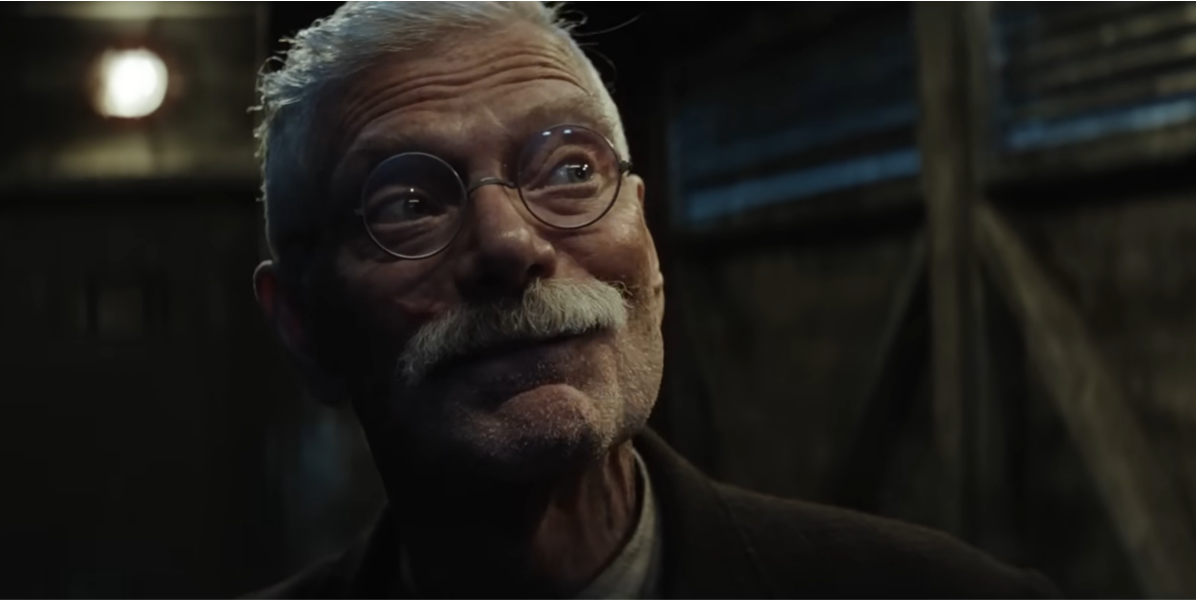
Notably, ‘Sisu: Road to Revenge’ is no stranger to outlandish sequences, especially when it comes to life and death. Given that metric, the fact that we never see Yeagor’s body before the train explodes is telling. Although it is true that he is locked between carriages in the wagon, there is a chance for him to escape through any of the windows and possibly even survive. As such, there is a chance that the explosion shot carries a secret in of itself, hiding the officer’s escape in plain sight. This also adds to the movie’s title, in which the “revenge” can be Aatami’s, just as well as it can be Yeagor’s. It is a known legend that Aatami has killed at least a hundred Soviet soldiers, and with this movie adding to the pile, Yeagor might be more desperate to exact vengeance than ever before. However, where he still falls short is in correctly estimating just how far Aatami can go once the chips are down.
While the plot rests on the idea that Yeagor is fighting for his own freedom and reward, his final interaction with the KGB puts things into doubt. Although they have the money in hand, it is subtly implied that they may have never intended to give it to him in the first place. It should be noted that Yeagor had been a prisoner for quite some time due to his crimes, which makes it unlikely for the government to keep him around. In that case, his decision to steal the money and escape also speaks to the side of him that has been hidden for so long. He didn’t brutally kill Aatami’s family to preserve bullets, but rather for his own self-interests. Fittingly, his death at the hands of a missile brings Aatami’s revenge story full circle, pouring more meaning into his journey to and from his original home. The fact that he settles back in Finland makes it unlikely that the Soviets will ever bother him ever again, which means that the old man can rest easy, at least for now.

