
 Aahana Swrup
Created by Sotiris Nikias, the crime thriller show ‘Steal’ delves into the world of high-profile financial theft, which makes a target out of a mundane office worker. The story revolves around Zara Dunne, who works as a trade processor at Lochmill Capital, a pension investment fund. Consequently, when a team of armed robbers targets the firm, she finds herself directly in the line of fire, forced to facilitate a 4 billion pound transaction.
In the aftermath, as the authorities investigate the matter, she becomes a prime suspect for DCI Rhys Covac, who believes she may have pre-existing ties to the elusive robbers. Nonetheless, the detective soon realizes something infinitely more menacing is afoot when the department and the MI5 insert themselves into the investigation in clear attempts to sabotage his success. As a result, the detective must team up with the targeted worker, who seems to know more than she lets on. Despite all its thrilling plot twists and captivating action, the Prime Video show retains a sense of realism through its grounded roots in the socio-political realities of the finance world and its darker corners.
Steal Charts a Fictional Narrative That Explores the Reality of Corruption in Finance
‘Steal’ employs a realistic premise of a tech-forward robbery, which entrenches the narrative of its protagonist in danger and conspiracy. However, the central crime in itself bears no direct resemblance to any real-life financial crimes that have unfolded in real life. As a result, the show itself remains constricted within the fictional confines of its world-building as penned by creator Sotiris Nikias and his team of screenwriters, including Poppy Cogan and Shyam Popat. For the most part, any and all semblance of realism and authenticity is derived from the grounded nature of the genre and how it shapes the narrative of the series. For instance, a significant thematic aspect of the story stems from its moralistic and legal exploration of financial crimes as they vary on an individualistic to corporate and governmental basis.

In the show, the protagonist, Zara Dunne, is an ordinary office worker who makes a decent living but still remains on the lower rungs of the ambitious social ladder. Her world turns upside down when she decides to dip her toes in some legally dubious dealings. However, as the plot progresses, her circumstances directly pave the path for the narrative to delve into deeper topics of wealth inequality and the class divide’s influence on the dwindling morality of the finance world. One of the prominent plot points in the story stems from the role of tax havens in society and how they open up the doors for tax evasion and wealth hoarding for the 1% while the masses struggle under the weight of an unfair system.
This instrumental storyline highlights the off-screen reality of tax havens. In real life, tax havens have become a standard part of international banking. According to reports, the quarterly statistics from the Bank of International Settlements assessed that half of all international banking assets and liabilities have gone through offshore financial centres since as far back as the 1980s. Additionally, the global financial hub London has significant connections to the development of tax havens, which also becomes a point of conversation in ‘Steal.’ As a result, the show becomes a high-strung, thrilling mystery that harbors a prevalent social commentary at its nucleus.
Zara Dunne is a Fictional Character With Relatable and Realistic Attributes
Much like the fictional world that she inhabits, Zara Dunne is also a work of fiction. Created by Sotiris Nikias and his team specifically for the narrative, the character has no real-life counterparts outside the series. Yet, despite her fictional origins, she manages to instill a sense of realism through relatable characterization and thematic storytelling. In exploring the nature of financial corruption in society, ‘Steal’ inevitably ends up delving into the nuances of morality. Zara’s character becomes a prime case study in the same way as she’s put through the wringer, pushed to make dubious choices as a jaded part of an unfair system. Consequently, the protagonist exudes a level of realism through the messy and complicated realities of her life.
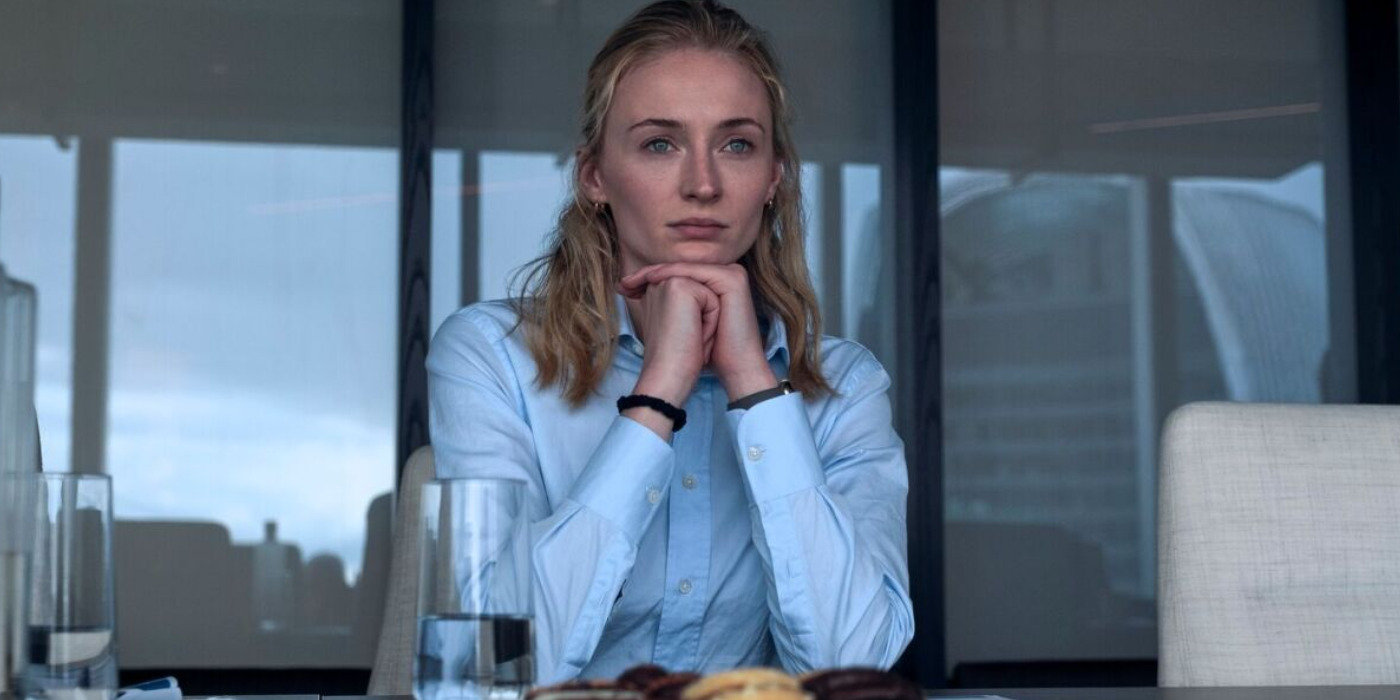
In a conversation with Yahoo UK, actress Sophie Turner, who embodies the role of Zara, spoke about the moral and political heart of the show. She shared, “I just find this story such a great exploration into what makes good people do bad things, and how far can we push people in terms of how little money they make before something big happens? Before the cost of living crisis causes something like this to happen, you know?” This universally relatable premise is most effectively explored through Zara’s character, which allows the protagonist to occupy a nuanced role in the narrative. Thus, this becomes her most prominent source of realism. Yet, the character ultimately remains confined to the fictionalized premises of the series.
Read More: Steal Ending Explained: Who is Behind the Robbery?

