
 Aahana Swrup
‘Strung’ is a psychological thriller film directed by Malcolm D. Lee that revolves around an outsider’s foray into a family where something foul seems to be afoot. When Laila is offered the job as a full-time, live-in music tutor for young Zuri, she thinks she has landed her dream job. The pay is amazing, the accommodations are included, and the possibilities of progressing her musical career through the wealthy family’s connections are promising.
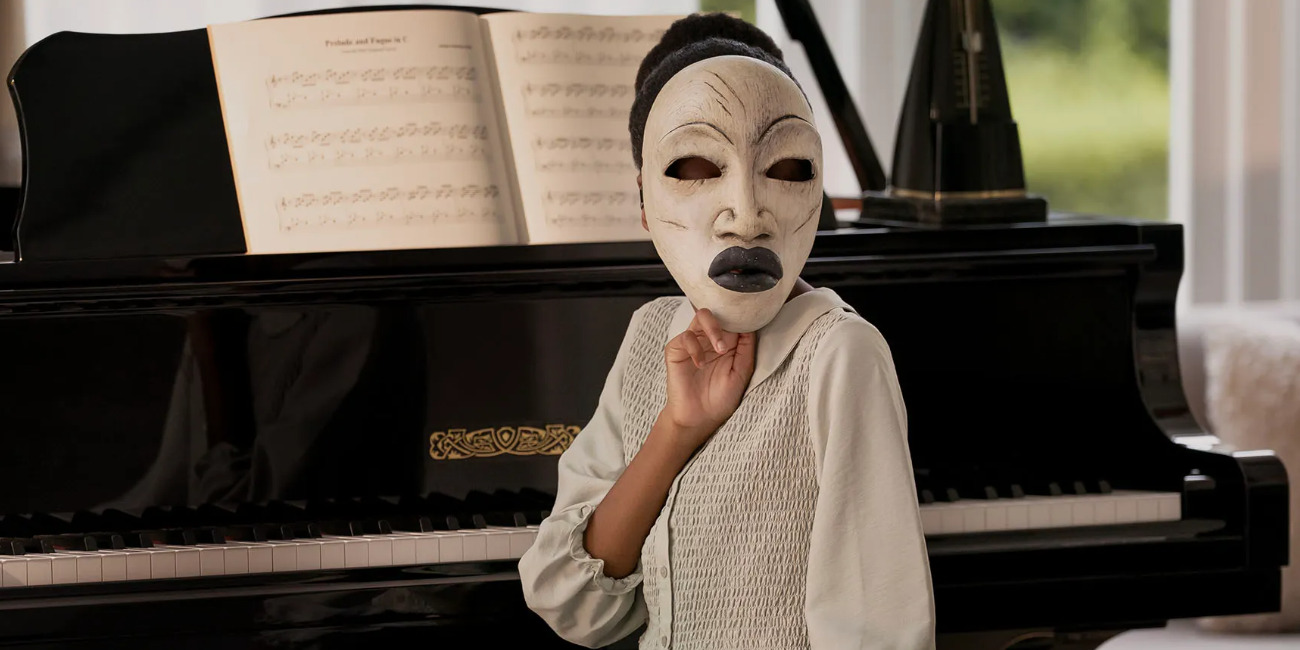
However, it isn’t long before the violinist begins to realize something sinister is brewing in the luxurious halls of the hollowed household. Between Zuri’s attachment to a cryptic mask, her mother’s distaste for the tutor, and Laila’s own complicated past with the father, the whole situation seems to be hurtling toward a great disaster. The film’s focus on fleshed-out characterization and interpersonal dynamics makes the narrative feel more authentic and, consequently, more relatable.
Strung is a Fictional Story About Ambition and Greed
‘Strung’ charts a thrilling narrative of wealth, fame, and their encounter with crime. The story itself draws no inspiration from reality and remains a work of fiction credited to the creativity of screenwriters Matt Mixon and Alan B. McElroy. The characters and their storylines are entirely fictitious, retaining no direct counterparts in reality. Thus, with no connection to real criminality, the film instead relies on its thematic identity to cultivate a sense of realism and familiarity. The story circles around Laila, an aspiring violinist who gets hired as a private tutor for a filthy rich family. However, over the course of her employment, she begins to realize that her young ward, Zuri, might not be the only one hiding behind a deceiving mask.
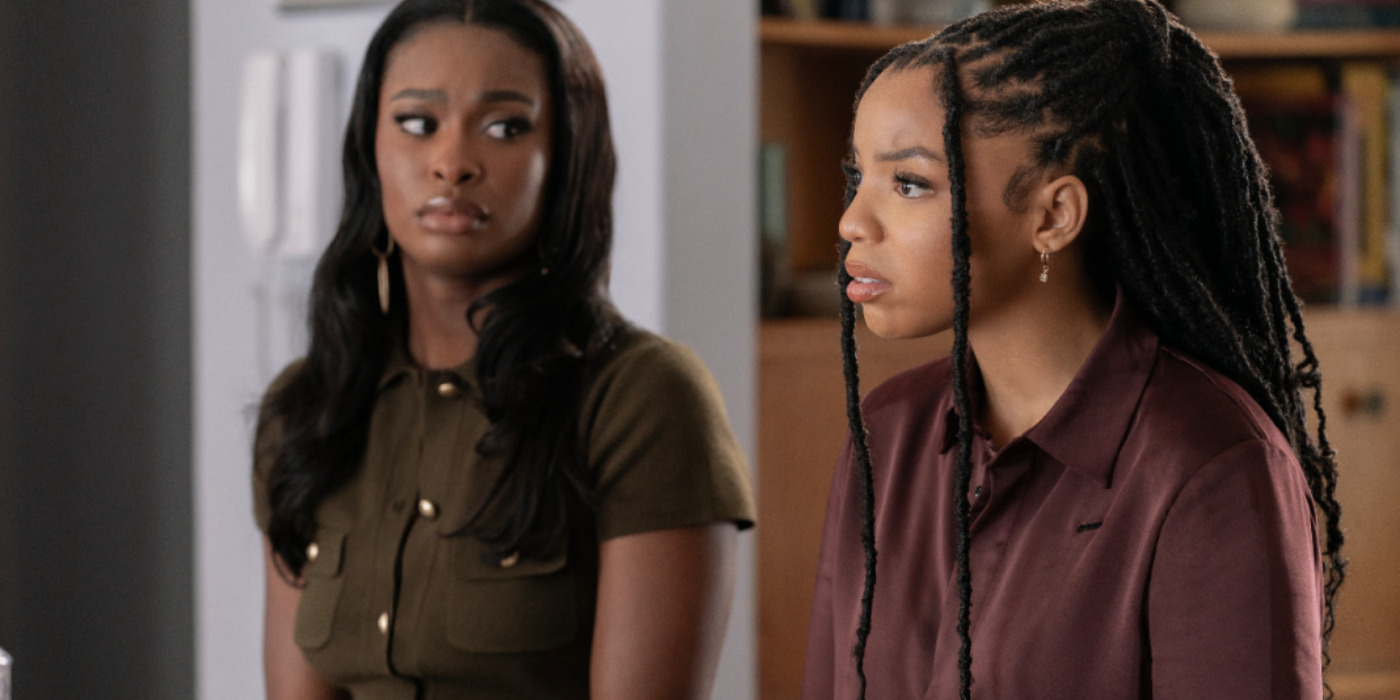
The narrative focuses on the darker side of wealth, highlighting how the presence of money and the never-ending greed for it paves the road to ruin. While the central family under the matriarchy of Audra becomes the more obvious peddlers of this idea, the protagonist isn’t untouched by it either. Laila’s ambition and her desire for success and notoriety as a violinist are significant aspects of what drives her into the clutches of the family. Furthermore, it entraps her in the family’s facetiously grandiose orbit at the cost of her willful ignorance. Thus, greed, not necessarily for money but for fame and a better future, becomes a vice for Laila’s character as well. Consequently, as the film retains a core thematic idea, the characters and their plights start to become all the more realistic and relatable even without the presence of a tangible real-life inspiration.
Strung Explores the Nature of Intergenerational Trauma in Women
One of the thematic elements that stand out in ‘Strung’ stems from its exploration of the three generations of women in Audra’s family. The matriarch herself presents the foundational root of the family, followed by her tortured daughter, Imani, and her traumatized granddaughter, Zuri. Much of the source of the friction in the family can be traced back to a central wound that has affected all three of these characters. However, their respective relationship with this incident and the impact it has on their relationships with the other two characters also deeply inform their characterizations and narratives. Consequently, complicated grandmother-mother-granddaughter dynamics emerge that add realism to each character.
In a conversation with Rolling Out, actress Lynn Whitfield, who portrays the character of Audra, spoke about the same. She said, “So often human beings present themselves in one way when there is so much going on inside of them emotionally, psychologically, spiritually, that is very different from how they present themselves. What we have here, going back to the question about the presentation of women and the facets of who we are, it’s generational. You see a generational presentation of the complexity of women, from the young girl to the characters Chloe (Bailey) and Coco (Jones) play, to the more mature women. You see many facets of who we are or can be as women. Maybe some things to aspire to, like great artistry and the love of life. Or, you know, definitely examples of who you do not want to be. People are not leading perfectly. So it is just interesting shades and facets of women that you see in this movie.”
Read More: Strung Ending Explained: How Did Zuri’s Father Really Die?

