
 Abhiroop Das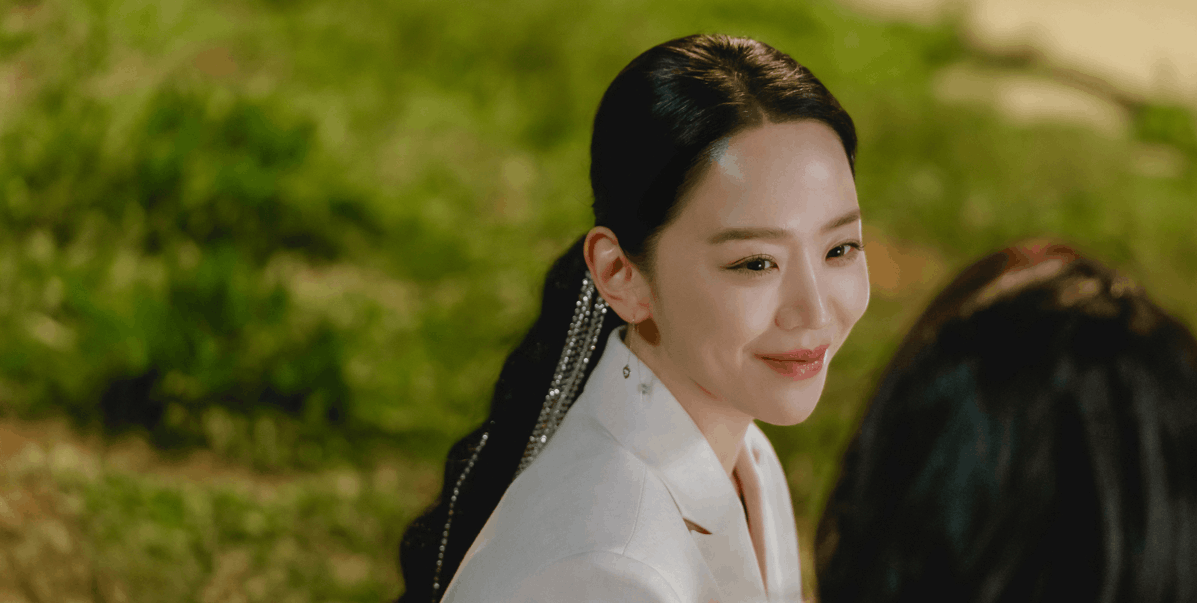
‘The Art of Sarah’ begins with the discovery of a dead body in the sewers, with a face almost purposefully disfigured beyond recognition. While Detective Park Mu-gyeong initially finds no signs of identification, the presence of a luxury bag by the deceased’s side leads him to Jeong Yeo-jin, the CEO of the fashion company Nox. Yeo-jin identifies the body as Sarah Kim, a mysterious collector of luxury items who is seemingly connected to the elite-only brand known as Boudoir. A flashback sequence reveals that Yeo-jin and Sarah were originally very close, and even dreamed of merging their professional ambitions via collaboration between Nox and Boudoir. The deal required a whopping 15 million won, and while the first month showed promising results, Sarah ditched Yeo-jin soon after, claiming the business all for herself.
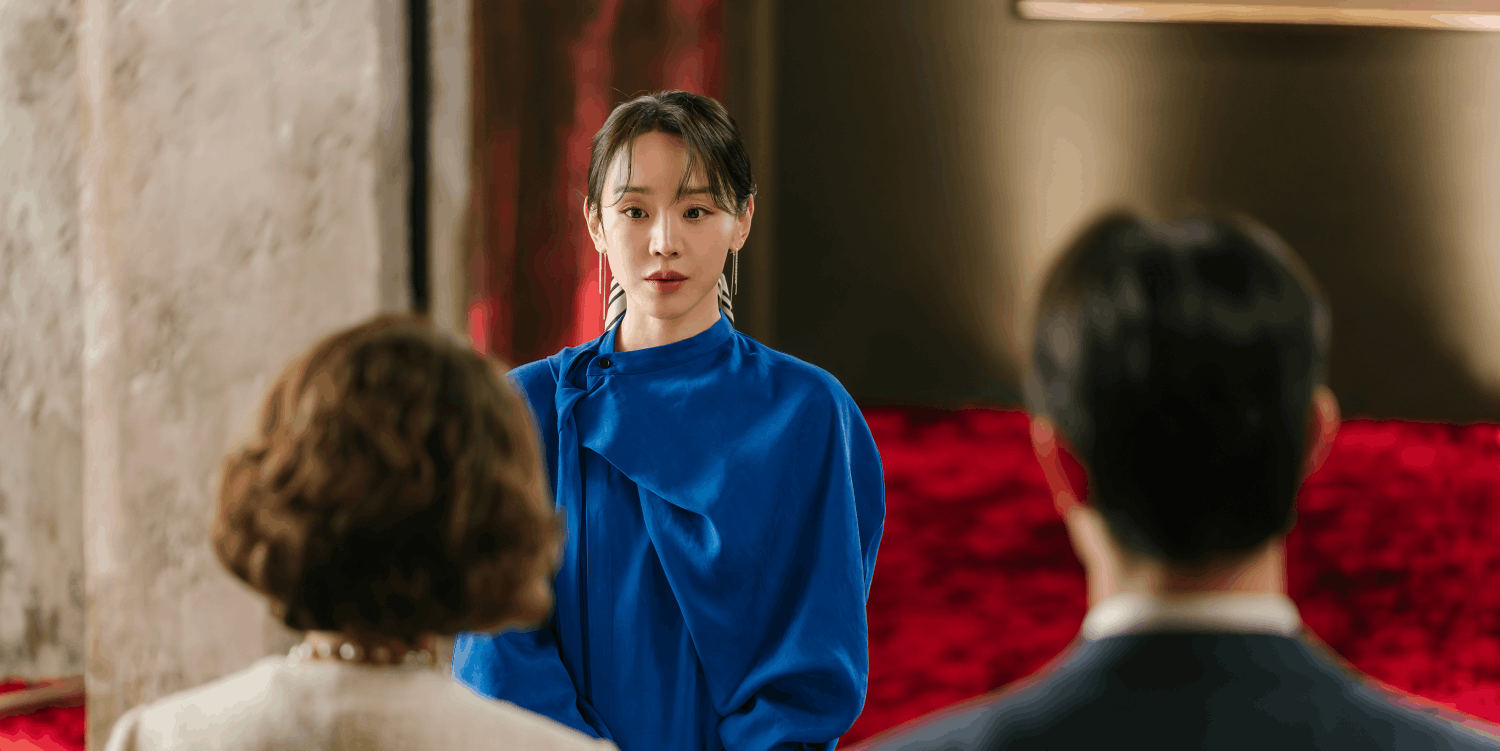
As Park looks deeper into Sarah’s past, he comes across the first of many curveballs: Sarah Kim doesn’t even exist in official records. Before long, it becomes clear that the deceased Sarah Kim was in reality a master con artist and had, in a few short years, tricked several influential people and minted millions in the process. Park eventually manages to trace Sarah back to one of her other fake identities, Mok Ga-hui, using which she landed a job at the famous Samwol Department Store. However, this quickly proved to be a disaster, and she soon found herself drowning in debt. Disappointed, Ga-hui decided to end her life by jumping into water, and while video recordings of her jump exist, nothing connects her to Sarah Kim.
With every layer that Park and his team manage to unpack, the story only gets more frustrating. However, this changes when they encounter Hong Seong-shin, a power-broker who once entered a fake marriage with Sarah while prepping her up as a kidney donor. Although he eventually got to know of her ulterior motivations, Seong-shin chose to spare her life, and in return, Sarah went ahead with the kidney transplant. This revelation, however, completely flips the investigation on its head, as Park realizes that the dead person is actually not Sarah Kim at all. Yet another flashback introduces us to Kim Mi-jeong, a fashion designer, whose luxury replicas became the bread and butter of Sarah’s fake company. However, Mi-jeong never gets any recognition for this, and over time, this leads her to the point of no return.
The Art of Sarah Ending: Who is the Real Sarah Kim?
At the end of ‘The Art of Sarah,’ Sarah Kim takes on the identity of Kim Mi-jeong and confesses to her own murder, knowing that it would lead to her arrest and imprisonment. Although this near-inexplicable turn of events leaves Park’s stomach in knots, he has no choice but to helplessly watch the pseudo-punishment unfold. However, beneath all these layers, the ending also puts a full stop to the mystery around Sarah Kim’s identity. The character we follow from the start of the series through various flashbacks is indeed Sarah Kim, even if that itself is not her real name. Where the identities split up is in the discovery of the dead body, which is later proven not to be hers. In reality, the construct known as Sarah Kim has been years in the making, and is so embedded into reality that Park has no choice but to accept her demands.
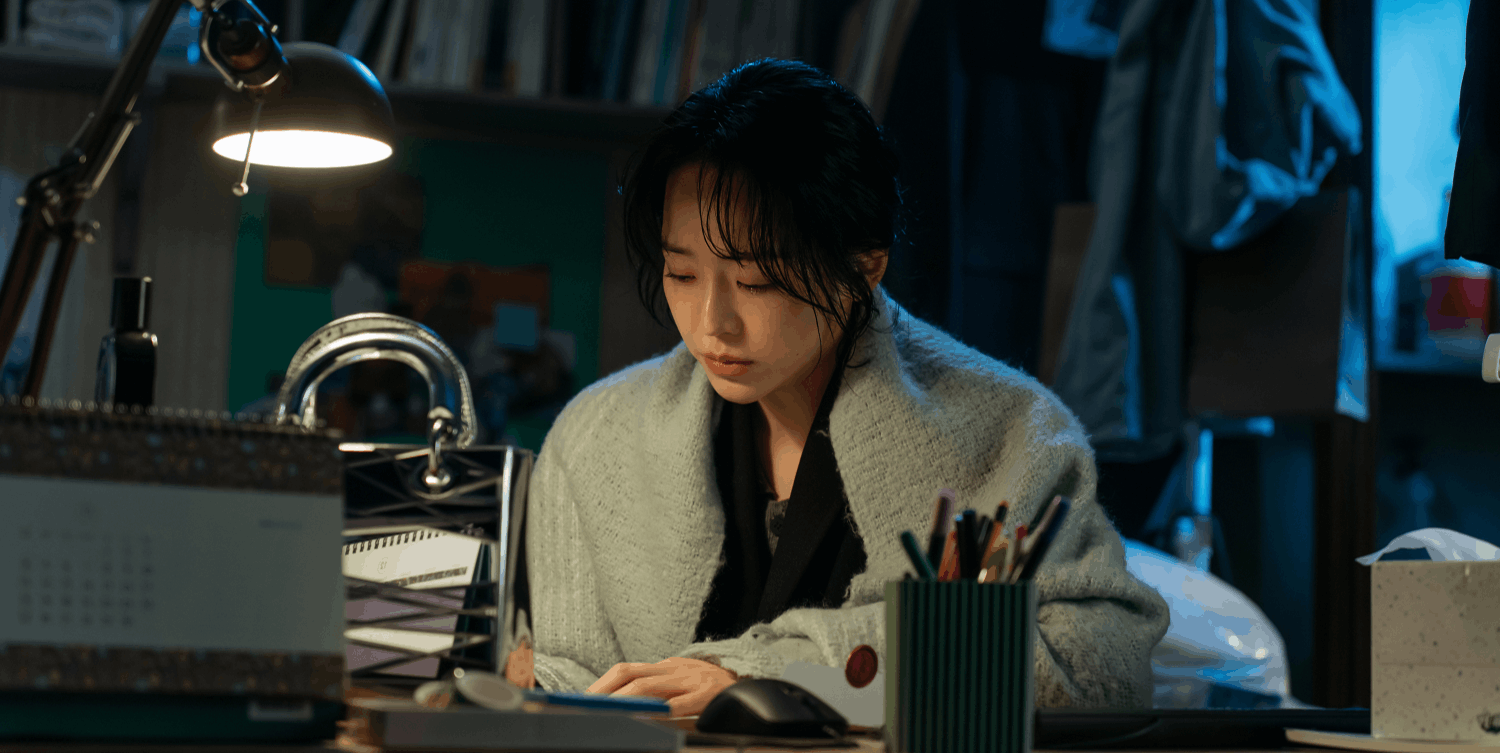
Although Sarah’s identity is technically confirmed in the final moments of the season, it is still warped by her ploys, which include assuming the identity of Kim Mi-jeong and claiming that she, as Kim, killed the real Sarah Kim. While this can create some confusion, all in-narrative evidence points to Sarah lying at the moment. The biggest clue for this can be found in a flashback sequence, wherein she explicitly refers to the other girl as “Mi-jeong.” Another important scene is when she first decides on the name Sarah, after noticing it in a women’s magazine. While Sarah’s nature as an unreliable narrator puts this latter perspective into question, there is still enough evidence in the story to confirm that she is merely pretending to be Mi-jeong in the ending.
Notably, while one half of Sarah Kim’s name comes from a magazine heading, the latter half, Kim, likely foreshadows her eventual adoption of Kim Mi-jeong’s identity. To that end, the connection between the two characters is actualized on an abstract level, showing how Sarah’s sense of self is made up of many fragments she has collected over the years. Still, the fluid nature of her names doesn’t necessarily translate to the subject of her identity. Despite claiming otherwise to Park, Sarah has a strong sense of self, which largely builds off of Mi-jeong’s comments on how the artificial can replace the real by virtue of indistinguishability. By truly believing in the idea of a “Sarah Kim,” Sarah effectively manifests herself into reality.
How Did Kim Mi-jeong Die?
Given that Sarah takes over Mi-jeong’s name and confesses to her own murder, the true story of Mi-jeong’s death ends up shrouded in mystery. In the finale, we see two specific renditions of what might have happened to the fashion designer, one from Park’s perspective and one from Sarah’s. While the latter perspective is supposed to carry more weight due to it being a recollection rather than an imagination, that is not the case. Sarah’s unreliability as a narrator is in preparation for this very moment, where she neatly sprinkles truth into lies to tell Park the perfect story. While both versions of the fateful night start out the same, with Mi-jeong confronting Sarah and attacking her with a knife, in Sarah’s recounting, Mi-jeong’s death is purely accidental.

Unlike Park’s rendition of events, where Mi-jeong dies in a prolonged knife fight with Sarah, the latter claims that Mi-jeong accidentally fell to the floor and hit her head. From there, Sarah gets her grand plan of letting Mi-jeong die with the identity of Sarah, following which she bashes Mi-jeong’s head till it’s unrecognizable. However, another major divergence between Park and Sarah’s stories comes in the aftermath of the initial blow. While both characters claim that Sarah dragged Mi-jeong’s body to the mall’s dumping grounds and then shoved it into the sewer, Park suggests that Mi-jeong didn’t actually die on the spot. Instead, she managed to survive for quite some time after that, slowly crawling her way towards light, before meeting her end right under the drain’s lid.
One major detail hiding behind these contradictory recollections can be found in earlier episodes, where Park catches Sarah red-handed in a lie. Although the police never make Mi-jeong’s cause of death public, Sarah somehow knows that she froze to her death. This raises questions about Sarah’s intent to kill in the first place, as both her and Park’s accounts suggest that Sarah bashed Mi-jeong’s head to death. Instead, it appears that a part of Sarah always knew that Mi-jeong was alive, and still let her die a slow, cruel death. Conversely, this can also represent Sarah’s subconscious desire to get caught, or rather, do the right thing. We see that happen when she gives away her kidney to Hong Seong-shin, and in Mi-jeong’s case, the moral tug is likely much stronger.
Why Does Sarah Accept Her Arrest?
Given the numerous legal loopholes, as well as a flawless alibi, Sarah always has the option to walk out of the station as a free person. This makes her later decision to voluntarily become Mi-jeong and accept punishment all the more puzzling. The most apparent reason for her change of heart, however, lies in her deep-seated feeling of guilt. While most of Sarah’s cons are directed towards the wealthy elite, who have repeatedly belittled her in the past, Mi-jeong marks an exception to the rule. In many ways, she reminds Sarah of herself, as a girl from a poor background trying to find her way in the high-society world of fashion. To that end, Sarah’s attempts to essentially steal Mi-jeong’s work represent a repeat of the cycle, turning Sarah into an enabler of injustice.

Another layer of Sarah’s strange decision to turn herself in can be traced back to the origins of “Sarah Kim” as an identity in the first place. Starting out as Mok Ga-hui, Sarah is infatuated with luxury, or more specifically, a life worthy of indulging in luxury. While that goal is achieved through her time as Sarah Kim, she finds herself increasingly empty on the inside, showing the mental toll of her perpetual state of reclusiveness. Conversely, Mi-jeong stands out as a foil in the most significant of ways: unlike Sarah, who revels in the art of conning people, Mi-jeong is a genuine creator of art.
While both characters dream of making it big, Mi-jeong is successful in carving out her own niche, and through it, her own sense of identity. Thus, Sarah’s attempts at taking over Mi-jeong’s life, first through her art and then through the imposition of her identity, are a fundamental corruption of one’s agency. Sarah’s actions in the ending, as such, are merely her attempt at burying the personality of “Sarah” for good, and instead leading a fresh life as her newest obsession: Kim Mi-jeong.
What Does Sarah Say to Park at the End? What is Her Real Name?
In the final moments of ‘The Art of Sarah,’ we learn that Sarah, registered as Mi-jeong, is convicted of the murder of Sarah Kim, who is in reality Mi-jeong. Following this, Sarah is sentenced to prison and leads a relatively uneventful life, that is, until Park comes to pay a visit. Sitting face to face in a room just like old times, Park asks her the one question that has perhaps been eating at him the most: what is Sarah’s real name? The farthest back we go is to her time at the Samwol Department Store, where she goes by the name of Mok Ga-hui. Following this, she presumably adopts at least two more fake identities, including one Kim Eun-jae, before ultimately settling on Sarah Kim. However, when the time comes for Sarah to reveal her birth name, the scene surprisingly cuts away, leaving things a secret.

While the creator’s decision to never reveal her real name can be confusing at first, the very last scene of the show provides some insight as to why. As Sarah looks back at Park one last time, it almost feels like she is looking at the audience. From here, the scene superimposes into a scene of Sarah dressed in the most luxurious of clothes, looking back at the paparazzi in all her glamor. In a way, this final version of Sarah is indeed the truest one, as the identity that she has built up for the world ends up consuming her own psyche. To that end, the erasure of Mi-jeong’s identity represents Sarah’s final attempt at taking over the narrative as a whole.
Read More: Is Million-Follower Detective a True Story? Is Baba Witch Based on a Real Influencer?

