
 Abhiroop Das
Created by Thomas Brandon, Peacock’s ‘The Copenhagen Test ‘begins with Alexander Hale, an intelligence analyst, making a strange discovery: his senses have been hacked. With his eyes and ears providing a direct livestream to an unknown entity, Alexander is not just at risk himself but has also unwittingly jeopardized his agency, The Orphanage. To survive this dilemma, as such, is to lean into the facade, and that leads him to become The Orphanage’s asset. However, with each episode of this spy thriller series, it becomes increasingly clear that there is no one that Alexander can fully trust, and that the only way to win the game is to become his own director, no matter the cost. SPOILERS AHEAD.
The Copenhagen Test Plot Recap
‘The Copenhagen Test’ begins with a flashback to Alexander Hale’s time as a military operative in Belarus, wherein he is tasked with a hostage rescue. Towards the end of the operation, he is informed that there are more hostages, and with just one extra seat on the chopper, he must prioritize American citizens. Things quickly go from bad to worse when Alexander is forced to choose between a Belarusian child and an American woman, and he ultimately chooses the former. In the present, Alexander is not a soldier, but an analyst working for The Orphanage, a top-secret agency that oversees the homeland’s entire intelligence network. Still wrecked with post-traumatic stress disorder from the choice he made that night, Alexander nonetheless yearns for a bigger role in the intelligence world, only for his wish to be fulfilled in the oddest of ways.

What begins as a strange buzz in his ears slowly leads him to investigate The Orphanage itself, and he ultimately comes to a chilling conclusion: his eyes and ears have been hacked. However, that’s not all, as The Orphanage has seemingly known this fact for weeks, and is planning to get to whoever is surveilling from the other side of the screen. Thus, Alexander is faced with a choice: whether to die then and there or become an asset for the agency, willingly compromising his senses further to get to the bottom of things. As per the plan, he is intentionally fed fake information, and that slowly leads the real culprit, a man named Frederick Schiff, to come out of the shadows.
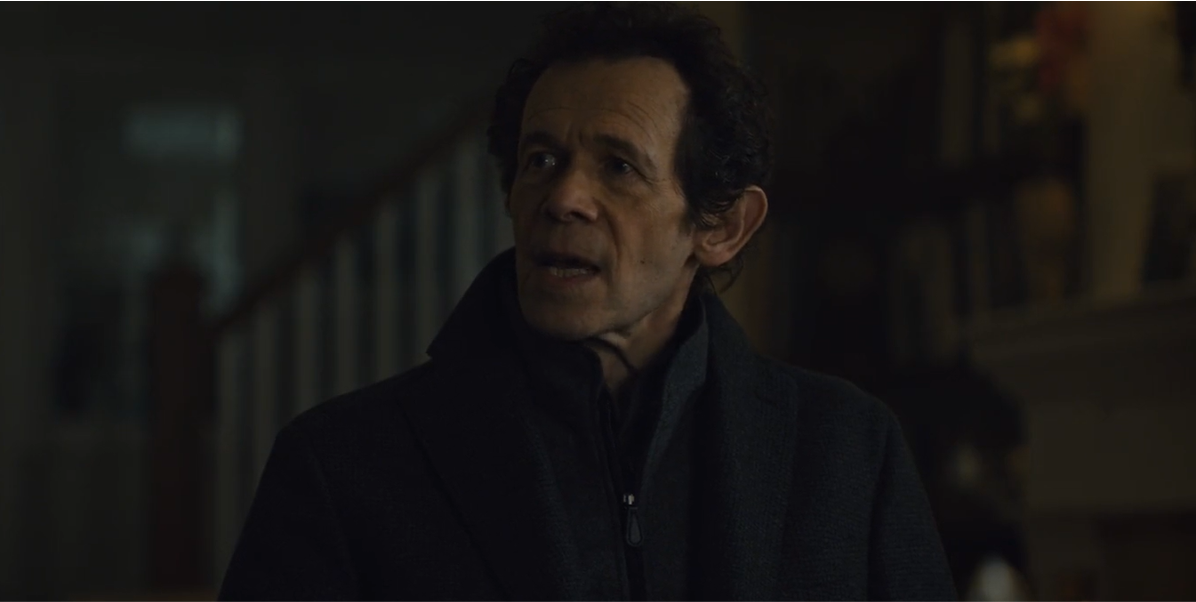
Schiff has a grudge against The Orphanage’s enigmatic leader, St. George, and he plans to stop at nothing to get his revenge. When he and Alexander finally come face to face, we learn of another angle to his plan: to threaten Alexander with the death of his parents. Worse, the nanites in Alexander’s brain, which facilitate the surveillance, are also slowly killing him, and he must save his parents before it’s too late. In a flash, Alexander is now forced to play the role of a double agent, hoping to outsmart Schiff and clue in The Orphage about his bigger plans. In the end, Parker, his handler, figures out the truth and works with him to lead Schiff to a fake St. George. Alexander manages to rescue his parents in the nick of time, but even with Schiff behind bars, there is still very little that can change his fate.
The Copenhagen Test Ending: Does Alexander Live or Die?
At the end of ‘The Copenhagen Test,’ Alexander miraculously survives the brain hack injury and is now able to turn the cameras on and off by himself. Following a tense battle at Smiley’s, Alexander bids his parents goodbye, fully believing this to be the last time he sees them. Before long, the adrenaline wears off, and all the symptoms return, this time tenfold, causing him to lose consciousness. From there, the next scene we cut to is, surprisingly, a room within The Orphanage, where it is revealed that Alexander survived a critical operation. While the nanites are still in his brain and bloodstream, their threat level has toned down significantly, which means that he can now live a long life without worrying about the hack’s side-effects.

The continued presence of the nanites in Alexander’s system also has a second, more sinister implication: that his perception hack is somehow still active. Luckily for him, The Orphanage manages to get its hands on Schiff’s entire crew, seizing every device that was surveilling Alexander. While the signal is technically still active, The Orphanage believes that there are no receptors left, which makes Alexander’s ability essentially harmless. Instead, Moira and his team now have a new objective, that of harnessing this ability to turn Alexander into the ultimate spy. However, this doesn’t come with the same level of dehumanization as before, as Moira personally gifts Alexander a watch that can turn his nanite signals on or off at the click of a button, giving him some much-needed bodily freedom.

While Moira’s gesture with the watch can be interpreted in good faith, knowing The Orphanage’s history of manipulative tactics, there might be a bigger game at play here. First of all, throughout the season, a buzzing sound has been associated with the nanite signal turning on or off. However, the watch seemingly bypasses that mechanism entirely, making it harder for Alexander to gauge things on his own. Furthermore, there is no guarantee that Moira doesn’t have a watch, or anything similar to his own, capable of remotely accessing Alexander’s abilities and using them for self-interest. Although The Orphanage is still in the process of setting up a surveillance facility that can tap into their spy’s brain, their reach is already large enough, especially on a psychological level, which makes Alexander’s series-wide doubts more justified than ever.
Who Hacked Alexander’s Brain and Why?
Season one ends with a devastating reveal that Alexander’s brain was hacked by none other than his own lifelong mentor, Victor Simonek. However, the young spy is not the only one to connect the dots, as both St. George and Parker are independently about to make the same discovery. The first gap in this puzzle is introduced way back in the earlier episodes, when Parker and team notice the nanite signals diverge into two, with one, weaker beam straying away to a remote location. While that second signal is initially chalked off to be extra noise, the finale confirms that it meant that there are not one, but two entities people spying on Alexander. St. George believes that there is likely one original hacker who set up the entire system. Schiff merely broke into this network and started using it for his own gain.
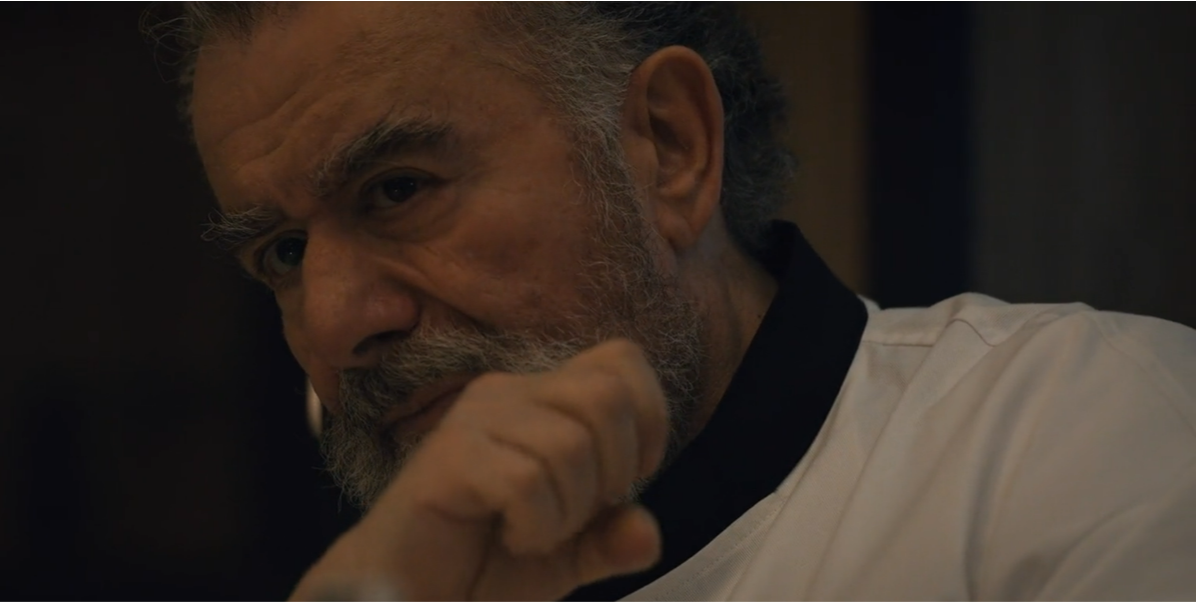
For Parker, the oddest thing about the whole operation is its swiftness, as Alexander is seemingly hacked, observed, and then put to work in a span of just six months. It is effectively impossible to scout and groom an operative in such a short time, making it more likely that Alexander was originally a part of a much bigger plan. The final piece in the puzzle is delivered from Cobb of all people, who explains how he found Alexander the night Schiff was arrested. Turns out, Cobb was tailing Victor in hopes of some information, and overheard that Alexander was by the carousel and injured. This scene is important on two levels, as it both confirms that Victor had real-time access to Alexander’s predicament and that he was also genuinely concerned about his protégé’s life.
Armed with all the facts, Alexander confronts Victor directly, and it is here that the chain of events is finally confirmed. Victor had been preparing Alexander for this task his entire life, but not necessarily with malicious intent. Victor further explains that Alexander is still the person he trusts the most, but for his larger plan to work, every step of this operation had to be top-secret. In another game-changing reveal, we learn that the Copenhagen test administered to Alexander was also issued by Victor as a test of moral instincts, making its results desirable in the long run. Furthermore, this also explains why Alexander survived the brain bleed in the first place, as his mentor specifically redesigned the nanites to be harmless, thereby securing his life in the long run.
Are There Others Who Are Brain-Hacked? Why is Victor Tracking Michelle?
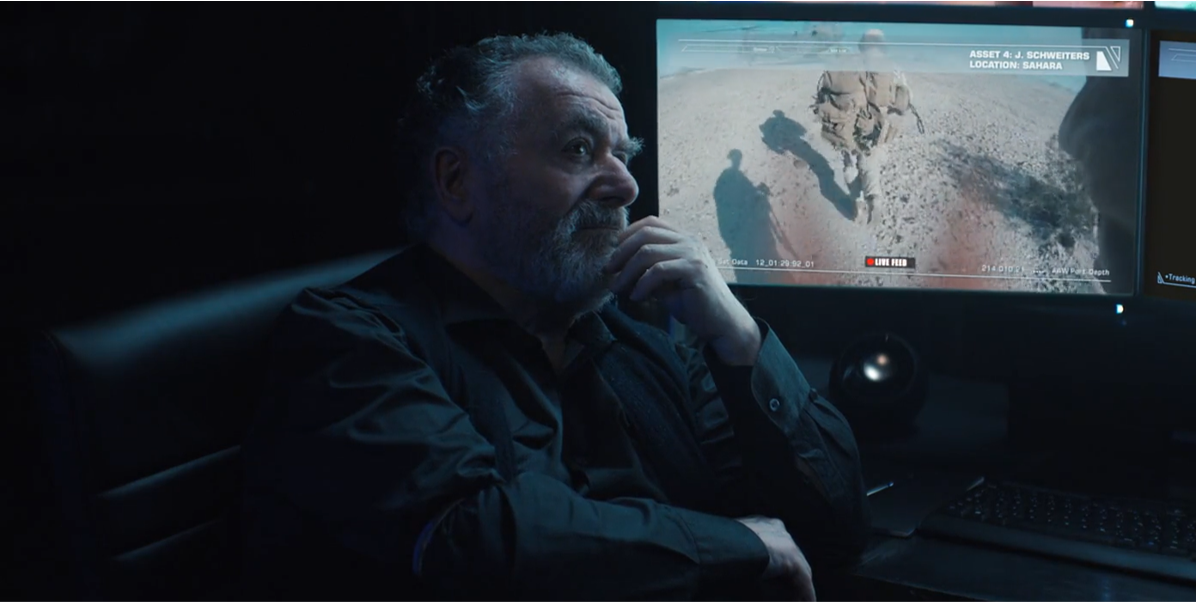
With the cat out of the bag, Victor has no choice but to let Alexander in on the plan, and that leads us to an underground dungeon. There, Victor reveals a setup similar to the one Rachel had at her hideout, except there is not just one surveillance camera, but six, of which five are active through assets B.Rao, N.Doherty, M.Cyr, J.Schweiters, and T. Ferriera. At the center, one of the cameras appears to be disconnected, implying that it might be Alexander’s. However, the five other feeds, which range from scenes from a military operation to those of everyday streets, all belong to other people, just like Alexander, whose senses have been hacked. Pointing at the feed of M.Cyr, Victor explains that this is the only other person who knows that their senses are tracked. However, it is likely that this person is actively working with Victor, given that they are tailing none other than Michelle.
Earlier in the episode, we learnt that Michelle has left the spy life behind and is now living with a new identity. However, Alexander’s reunion with her happens sooner than expected, as it turns out that Victor has a pin on exactly where she is. When an alarmed Alexander pushes back against this surveillance, Victor instead remarks that a spy can never quite leave the system. This declaration is layered in itself, as while it also applies to Victor himself, who remains involved in clandestine operations years after his supposed retirement, it also obscures his own involvement in engineering a system that cages people. Still, with this, he not only has a bargaining chip against Alexander, but also proof of concept about the particularities of Victor’s mission.

Notably, the season finale opens with a flashback to Rachel getting her first shipment of nanites-laden medicine, and here we learn that she has her own, fierce motivations to participate in the hack. Given that Schiff is not the mastermind behind the operation, he likely had no access to the drugs, making Victor the real distributor. If the implication here is that Rachel and Victor have been working together this entire time, then the former’s motivations can also be partially applied to the latter’s. The doctor wishes to create a world where no one suffers as she did, which somewhat aligns with what Victor had to endure in China during the 1970s. That, coupled with their stance on the Copenhagen Test, indicates that Victor’s group may be fuelled by ideas of anti-government intelligence, putting them directly against The Orphanage.
Is St. George Retiring? What’s Next For Parker and Cobb?
By the end of season 1, it appears that St. George is already in the preparations of retirement, but her final words on-screen leave things on a more ambiguous note. After promoting Parker to the position of Assistant Director of The Orphanage, she starts recounting how the plants in her office must be watered and cared for. While this can feel like a passing-the-torch moment, St. George playfully adds that these are instructions for when the time eventually comes. As such, Parker is now geared to be the next St. George figure in the agency, but that transition is unlikely to happen anytime soon. Still, with the recent death scare behind her, St. Parker might turn to spending more time with her partner, away from the draining and intense workflow of the agency she once pioneered.

For Parker, the promotion is not just a sign of her venturing deeper into the system, but also an opportunity to do better. This is indicated by two of her actions as the new Assistant Director. The first is to free Michelle of her past by erasing all records, in turn allowing her to walk out of the agency and start a new life. The second is more directly contrasted with St. George’s “kill-book,” which is a diary listing her failures that she kept buried underground. When given a notebook of her own, Parker chooses to start with a list of the lives she has saved, starting with Alexander Hale as the first entry. Things are looking up for Cobb, too, who is all set to land a job at the upper floor of The Orphanage, as he intended to from the start of the series. However, with even bigger mysteries brewing in Alexander’s life, the worst is yet to come.
Read More: The Copenhagen Test: Is The Orphanage Based on a Real Intelligence Agency?

