
 Abhiroop Das
Created by Thomas Brandon, Peacock’s ‘The Copenhagen Test‘ follows Alexander Hale, an ex-military operative who now works for an elusive intelligence agency known simply as The Orphanage. As he spends his days as a lower-level analyst transcribing documents, he yearns for a more direct involvement in the world of espionage, not knowing that he is a pawn in a much larger system. As it turns out, Alexander’s brain is hacked by an unknown entity, who is using this coverage of top-secret data for malicious purposes. When The Orphanage comes to know of this, they are faced with a choice: eliminate Alexander or turn him into their most challenging asset ever.
Before long, The Orphanage takes over Alexander’s reality, tailoring the illusion of a normal life, till their enemy makes a mistake. Thus, this spy thriller series transforms into the most elaborate game of trust, as Alexander’s diluted perception forces him to rewrite his definitions of allies and enemies. The Orphanage is at the heart of this contradiction, both participating in the narrative’s larger games and creating them along the way.
The Orphanage is a Fictional Agency That Serves as an Intelligence Guardian
The Orphanage is a fictitious clandestine agency created by writers Thomas Brandon, Jennifer Yale, Adam Benic, Marilyn Fu, and Jamie Chan. As the backbone of the entire narrative, the agency adds a creative layer to how intelligence networks are depicted in ‘The Copenhagen Test.’ While the show features on-screen variations of the members of the intelligence community, such as the CIA (Central Intelligence Agency) and the NSA (National Security Agency), The Orphanage itself is an invented overseeing entity. It is primarily meant to operate both beyond and parallel to these real-life agencies, sifting through high-order data to formulate covert operations. To that end, it is possible that the creators drew reference from real-life agencies in the homeland to create an authentic portrayal.

In real life, the nation’s intelligence community operates under a layered operational architecture, with there being no single entity such as The Orphanage overseeing key decisions. Still, the closest possible equivalent is potentially the Office of the Inspector General of the Intelligence Community, which is tasked with conducting independent audits, reviews, or investigations across various intelligence services in the system. While these parameters vaguely resemble the fictional agency’s roles and manner of operating, The Orphanage is specifically conceived as a top-secret entity that essentially does not exist on paper. This puts it firmly in the realm of fiction, and any real-life similarities are likely coincidental in nature.
The Orphanage is Intentionally Crafted to Exude a Pre-Digital Era Feel
One particular detail that makes the Orphanage distinct from its potential real-life analogs is its emphasis on paper-based communication. Jennifer Yale, the show-runner, told Awards Radar that this was an intentional creative decision. She added, “We spent a lot of time making sure that a lot of our tech in the upstairs, which is the orphanage that is the control room… was built in an analog way where there’s even a landline with a corded phone. You can’t feel futuristic or space-age. Cause paper’s unhackable.” Going one step further, she likened the aesthetics of the place to the Cold War-era paranoia, making it likely that the crew did research on the time period to make the show’s secret agency feel as real and well-wrought as possible.
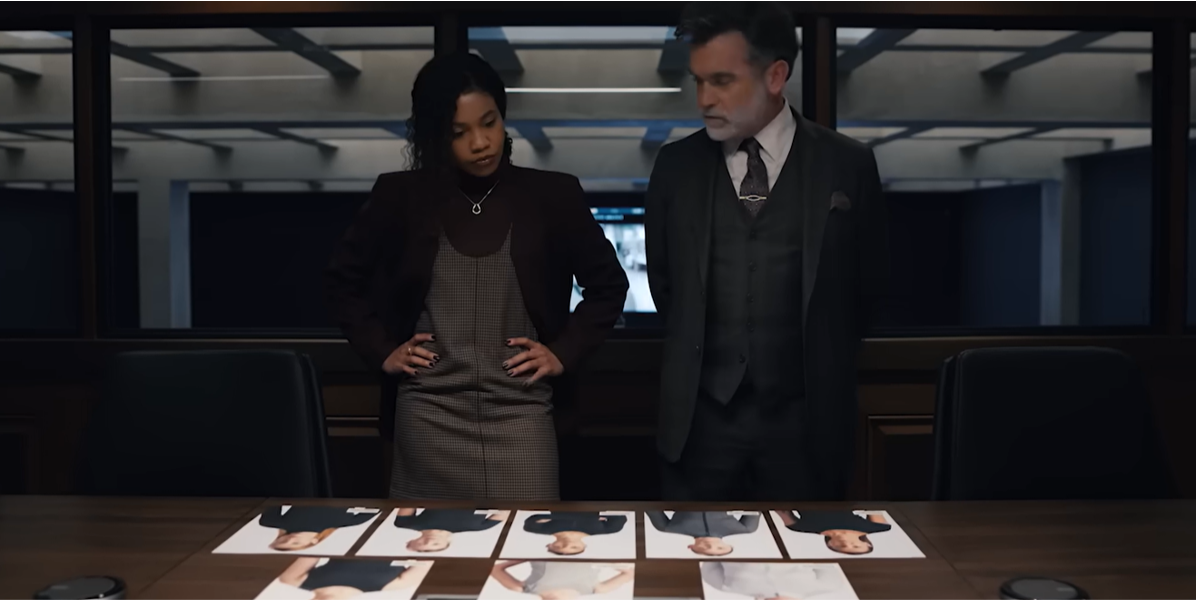
In an interview with The Mary Sue, series co-creator Thomas Brandon echoed the idea of The Orphanage evoking a period-piece aesthetic, while still retaining contemporary relevance. Notably, at one point in the interview, he even compared the fictional agency’s modus operandi to how things are done in the George Bush Center for Intelligence, the headquarters of the CIA. Specifically, he stated, “You go inside Langley, it’s just binders and binders of paper. Like they’re not even using computers for a lot of this stuff.” Thus, while The Orphanage is designed to supplant existing intelligence networks, most of its visual and narrative elements are partially rooted in reality.
Read More: Where is The Copenhagen Test Filmed?

