
 Abhiroop Das
Co-directed by Nottapon Boonprakob and Jakkarin Thepvong, Netflix’s ‘The Evil Lawyer,’ also known as ‘Thanai Pisat,’ brings together two lawyers who could not be more different in their approach to justice. Jittri, an infamous defense lawyer, is known for leaving no stone unturned in getting her clients, often criminals, mobsters, and politicians, out of jail. Mek, on the other hand, is a young do-gooder who, over the course of one fateful night, gets caught up in a murder. After being branded as guilty in the court of public opinion, Mek realizes that he has no choice but to let Jittri defend him, no matter what it takes. The Thai series is a fresh take on the legal thriller genre, one that examines systemic ills not from a distance, but through the eyes of a lawyer who isn’t willing to bend the rules.
The Evil Lawyer is an Invented Courtroom Story Steeped in Research
‘The Evil Lawyer’ is a work of fiction penned by Jakkarin Thepvong and Nottapon Boonprakob, with an original concept that Jakkarin co-developed with producer Songphon Jantharasom. Alongside its plot and characters, the show dramatizes several aspects of Thailand’s legal system and is among the first Thai courtroom dramas of its kind. Such a narrative scale, however, wasn’t achieved overnight and took the writing team several years of research, consultation, and brainstorming to get the finer details as close to real as possible, especially when it came to bringing a Thai court proceeding to life on screen.
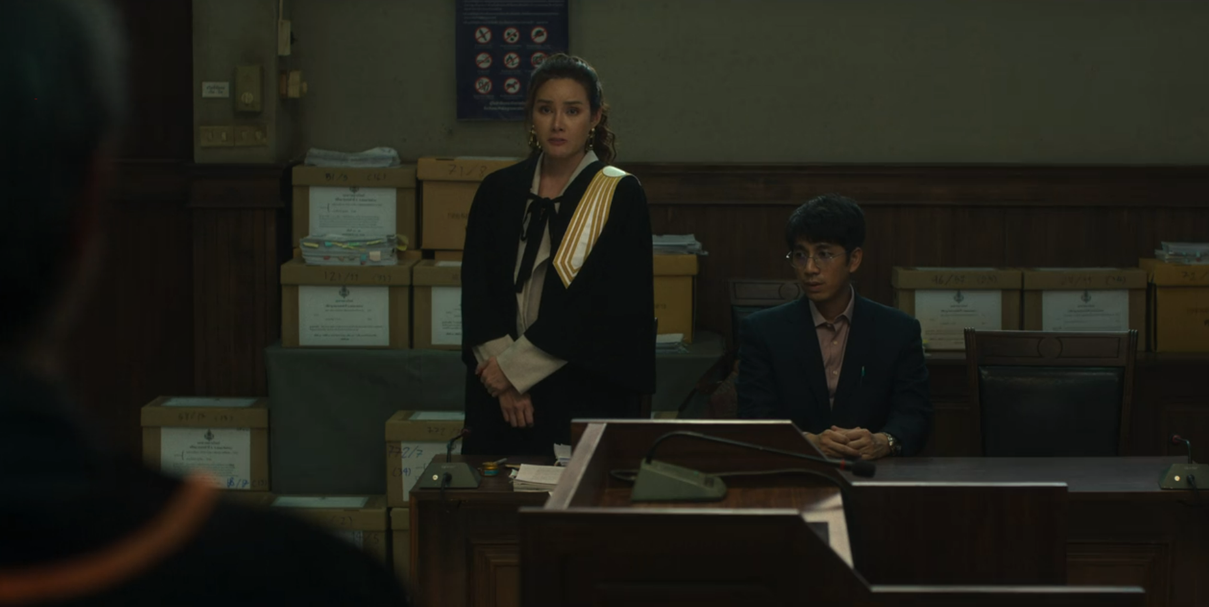
In a conversation with Variety, writer-director Nottapon revealed that he was largely unfamiliar with the justice system before he got on board with the series. In order to catch up, he, along with the rest of the creative team, began sitting in real-life courtrooms. The team closely observed judges, defense lawyers, and prosecutors engage in the legal proceedings, and before long, the system stopped feeling all too foreign. Nottapon explained that he began to see the individual behind the professional roles, and understanding their diverse experiences gave him the confidence to approach the show with a more human perspective.
Nottapon Boonprakob’s Perception of the Justice System is Fundamental to the Narrative
The next step for Nottapon Boonprakob and the team was to directly interview the people whom the show reimagines: lawyers, judges, prosecutors, NGO activists, and forensic specialists. While part of the reason for this process was to imbue the story with realism and a degree of accuracy, Nottapon also came out with a more refined understanding of the law, in how it molds and is molded by the people. In his Variety interview, the writer-director noted that everyone has imperfections or blind spots, but the fact that the same people must uphold the values of fairness and justice is what makes the court an interesting subject. For Nottapon, no system is perfect, and in line with that, ‘The Evil Lawyer’ serves as a larger commentary on the nature of crime and punishment, rather than just the Thai justice system itself.
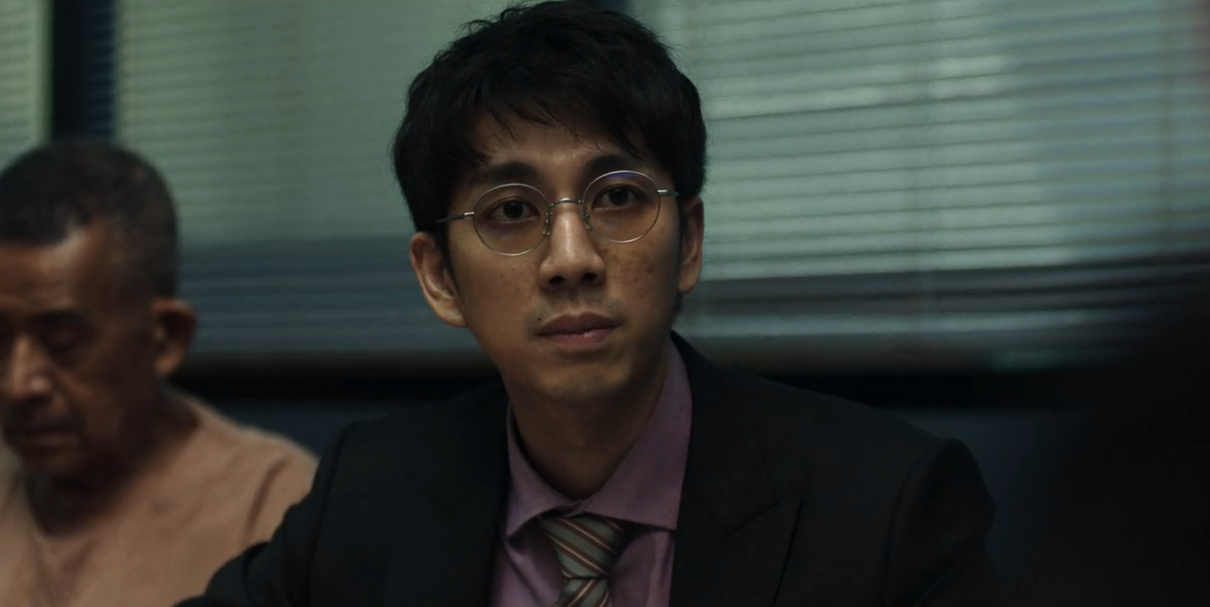
While writing the show with his team, Nottapon also realized that language itself is fundamental to how the law is interpreted and enforced. Words, he believes, can only be approximations of truth, and thus identifying the limits of language became the key to making the story feel authentic in its emotional conflicts and legal dilemmas. However, writing down a powerful sequence is merely one half of the process, as those drafts were then carefully reviewed by a team of legal experts. This was done to ensure that the cases presented on screen didn’t have any legal discrepancies or loopholes that could break the audience’s immersion, and it’s a large part of why every plot beat of the show feels so thoroughly thought out.
Jittri is a Fictional Attorney Who Brings the Label of Anti-Hero Into Question
Jittri, the eponymous “evil lawyer” of the show, is a fictional construct created by Jakkarin Thepvong and Nottapon Boonprakob. While storytelling is no stranger to the archetype of charming lawyers who bend the law, be it Taiza Kujo from ‘Sins of Kujo‘ or Saul Goodman from ‘Better Call Saul,’ Jittri brings in layers of context and intersectionalities that make her stand out. Incidentally, writer-director Nottapon Boonprakob told Variety that the character was initially conceptualized as an older man, before the writing room decided to reimagine her as a woman, and start from there.
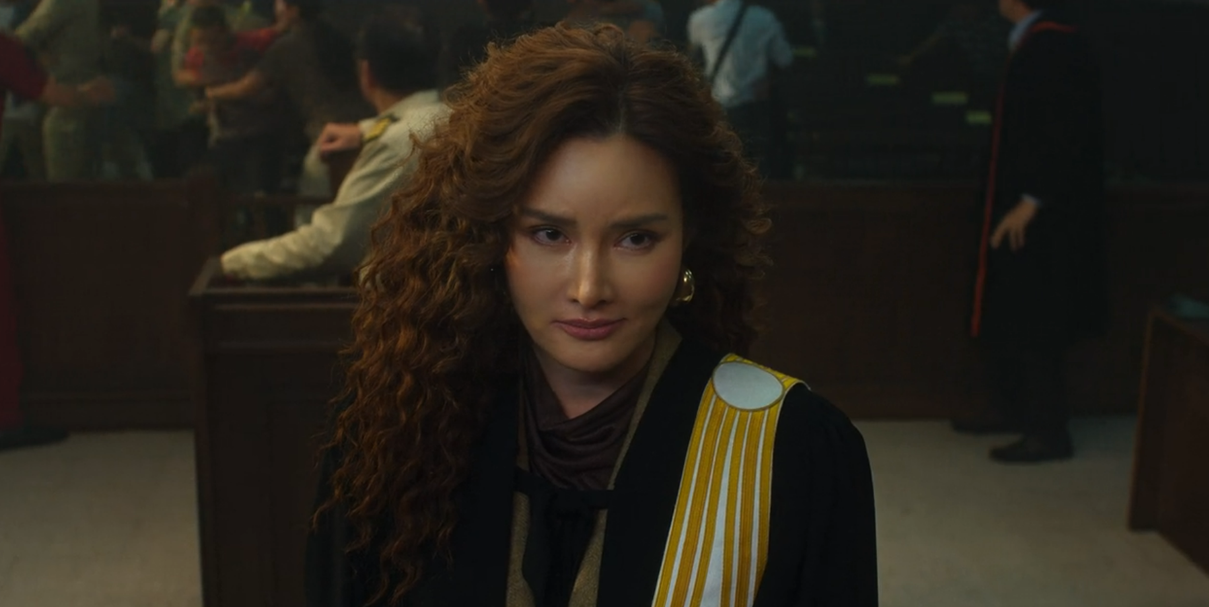
For Nottapon, the shift in gender helped the show gain an additional dimension, as he found it far more compelling to chart a woman’s journey to the top in an institution that is dominated by powerful men. He added that Jittri is a character who moves past ordinary labels of being an “evil lawyer” or an anti-hero, as her worldview is largely a sum of her circumstances, which the show seeks to highlight and critique. While she might not be based on any real lawyer, Jittri nonetheless emerges as a complex, inspirational figure, whose characterization is informed by a deep dive into the justice system as perceived by the writing team.
Read More: The Evil Lawyer Ending Explained: Is Mek Found Guilty or Innocent? Who is Kosol?

