
 Diksha Sundriyal
Netflix’s ‘The Great Flood’ begins with a woman named An-na waking up one day to discover that the world as she knows it is gone. At first, she notices the flooded streets, which she thinks is because of the heavy rain, but soon, the water enters her apartment, which is on the third floor. Realising that the water level will just keep increasing, she takes hold of her son and finds a way to survive. Their quest for survival turns out to be just the tip of the iceberg as the survival of the entire humanity seems to rest in An-na’s hands. Halfway through the movie, a major twist completely rewrites what we thought we knew about it. SPOILERS AHEAD.
An-na’s Simulation is a Test for Her Mettle as a Mother
A shocking twist in ‘The Great Flood’ arrives when it is revealed that An-na is caught up in a simulation that puts her in a time loop until she achieves the task set out for her. It turns out that An-na worked for a company called the Isabela Lab, which had set out to create humans synthetically in the case of an apocalyptic emergency. They were aware of the danger that was headed towards Earth, and because they knew they couldn’t do anything about it, they decided to focus on a way to ensure humanity’s survival even if all humans on Earth were dead. The problem with synthetic humans was that while they could create the body as well as the conscious mind, they needed to replicate human emotions to truly make their synthetic creation a human. This is where An-na came into the picture.
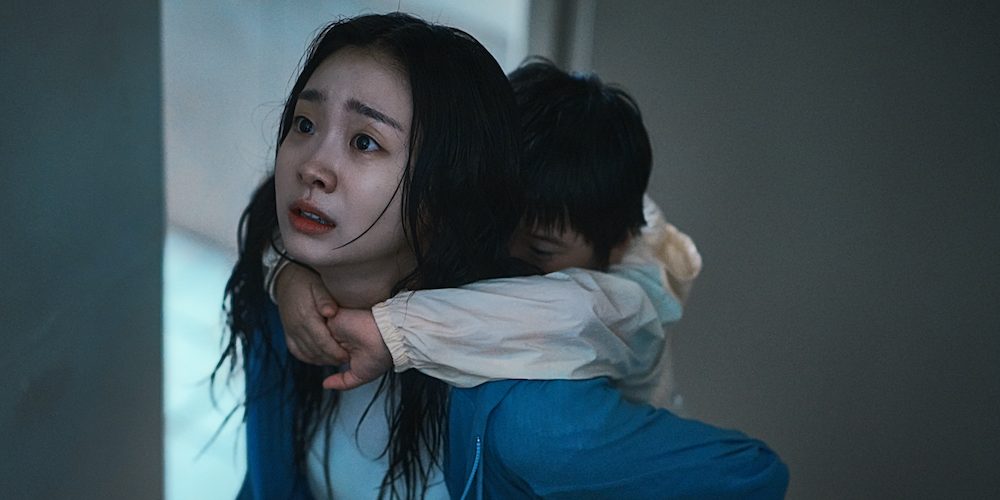
Her job was to create an Emotion Engine that would create human emotions inside the new humans. The issue with this project was that, unlike the body, emotions couldn’t be conjured out of thin air. They needed to be cultivated over time, which is why the babies, one of whom is Ja-in, are placed under the care of humans. This, however, gave rise to another problem. While right now they have living humans to take care of the synthetic children, the same might not be possible when the Earth is destroyed. This doesn’t mean that the babies would be able to take care of themselves on their own. They would still need a mother, and it would have to be sympathetic. But then, they would need the Emotion Engine to work for the mother too, which led to a new dilemma, and once again, An-na had the answers.
An-na believed that they should first create the children and then the mother because her emotions already need to be connected to the child. However, the love and bond that she feels for the child needs to be felt deeply. Moreover, the mother should love the child enough to have the conviction of saving his/her life when things get particularly tough. The apocalypse would render humanity dead, and if the remaining humans, most importantly the synthetics, were allowed to go back, they would need the heart to fight the challenges in front of them, especially their child. The problem was that at that point, they didn’t have enough time to create an Emotion Engine for a person. So, An-na creates a simulation world, where they can leave the mother in a confined space where she will be tested endlessly until she proves herself.
The Simulation Makes An-na Replay the Worst Day of Her Life
When a film reveals that simulations that rival real memories and experiences are involved, there is often a chance for confusion, because sometimes, like the characters, the audience doesn’t know what’s real and what’s not either. To make this clear, one must remember that the first half of the movie happened in reality. In fact, it really was the worst day of An-na’s life. The flood not only put her on edge to save her son, but she also got a message from her mother, who said nothing but words of affirmation and love, before passing away in the flood. The day ends in more heartbreak as An-na is forced to board the helicopter while Ja-in is left behind. Before leaving, An-na promises him she will come for him, and it is to fulfil this promise that she offers herself up as a test subject for the simulation test.
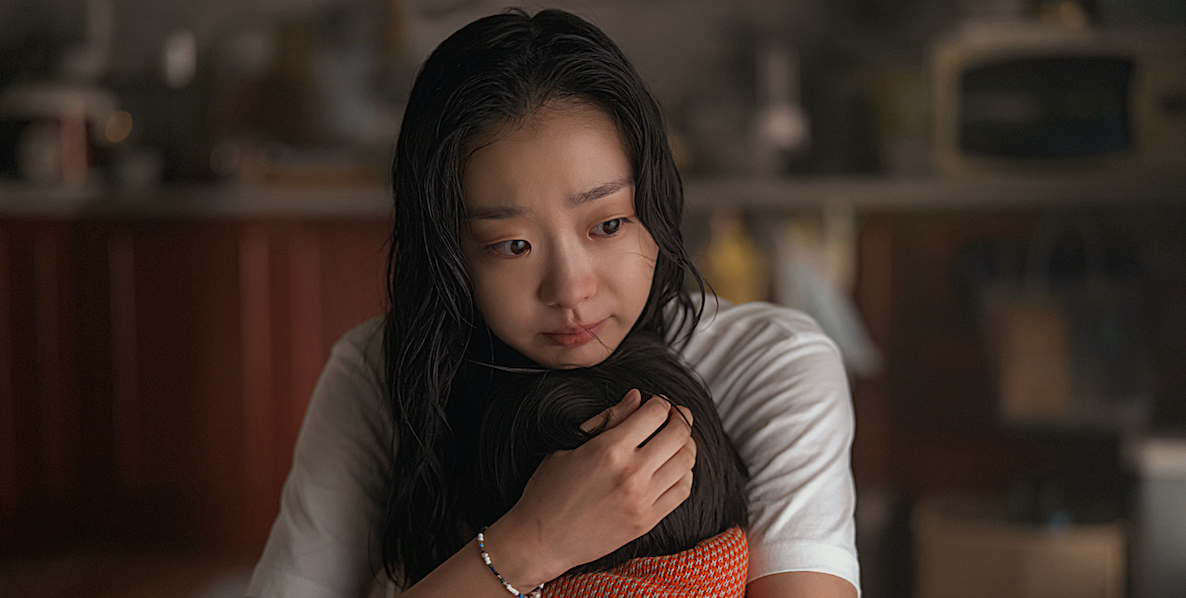
Before she knew that she would have to go through it herself, An-na designed a test to make sure that the Emotion Engine was working for the synthetic mother. To develop the feelings of love and survival against all odds, she needed to be put through a situation that would challenge her in all sorts of ways. The situation would be life or death, raising the stakes in the mother’s mind, as the safety of her child would be continually threatened. The task would be to find her missing child. It’s only when she succeeds in locating the child that the simulation would break, and she would be considered ready to be sent back to Earth as the guardian of a new generation. If she didn’t accomplish the task, she would be put back in the situation right from the beginning, the memories of the previous simulation erased from her mind, and she would have to start all over again.
An-na Goes Through Thousands of Variations to Find Ja-in
Clearly, no one could predict how many times a subject would need to go through the simulation in order to learn what the mother needed to and find her child. This is why the test was designed to run for an undetermined number of times over an unspecified period. At the time of designing the test, it was believed that all the memories of the previous simulations would be erased, but as the number of simulations increases, the mother starts to retain some memories. She remembers what happened to others in the simulation and how they behaved, based on which she would modify her behavior. There came a point when she even started to remember the things that had happened before the simulation loop even started. This showed that memories play an integral role in defining the emotions of the subject, and they even inform the actions that they would take.

As An-na starts to have memories of the real last day of her life, on which the simulation is based, she becomes more conscious of her decision. Some pieces are still missing for her, so she doesn’t yet see the full picture. However, she knows, in her heart, that she needs to find her son. At first, when Ja-in is nowhere to be found, it is her instinct as his caretaker (because that’s what she really was in the beginning) to find her. There are times when she gives up the search, which leads her to fail the test, and she has to start all over again. With all the repetitions, the desire to find Ja-in is etched in her brain, and her desire to find him becomes more prominent, until it transforms into a mother’s devotion for her child. It takes An-na some time to realise that she might not be the only one in the simulation to remember what happened to them in the previous loops.
Since she remembers what happened in real life, she knows that Son Hee-jo, who was sent to retrieve her and Ja-in, was killed in the end. She shares this information with him without thinking that he will believe her, but when he does, it becomes clear that the others can remember as well. This is also why the old woman remembered that Ja-in eats eggs and gives them to An-na in a container. It isn’t until much later that An-na realises that Ja-in, too, remembers everything, much more clearly than her. In the end, when she finds him hidden in a cupboard, he tells her that he hid there because she’d told him to do it in the real world. She promised she would come back for him, which is why he hid in the cupboard repeatedly. This explains why An-na chose “find the kid” as the quest to complete the subject’s transformation. It wasn’t just to train the subject to have motherly emotions; it was to fulfill a promise to her son.
Read More: The Great Flood Ending Explained: Do Ja-in and An-na Die?

