
 Saagar Kote
Directed by Cholo Laurel, ‘This, That and Everything in Between’ or ‘Ganito, Ganyan, Ganoon’ is a Filipino drama film that centers on Joanne, AKA Jo, a Manila-based TV writer determined to advance her career and earn a writing fellowship in Brooklyn. Her carefully organized life is disrupted when her estranged mother, Paz, suddenly returns to the Philippines after 27 years apart. Their long-awaited reunion forces Jo to confront emotions and unresolved issues she has carried for years. As mother and daughter attempt to navigate their difficult relationship, the past continues to influence their present, creating tension within the family.
Jo is also forced to reconsider the future she has planned for herself as Paz’s return changes the balance of her life. Their situation becomes even more complicated when Paz reveals a secret, leaving Jo and the rest of the family to deal with the emotional consequences of a past that refuses to remain buried. The movie deals with sensitive social themes, while also being an engaging story of family and meaning.
This, That and Everything in Between is a Moving Journey of Distance, Reconciliation, and Fate
With the screenplay penned by Cody Abad, Cholo Laurel, and Shania Sumergido, ‘This, That and Everything in Between’ places two complex women at the center of an escalating emotional crisis that pushes them to the limits. While the film is fictional, the characters at its core deal with very real feelings, forcing them to make difficult decisions in trying times. The story is essentially a meditation on the mother-daughter relationship in all its complexities. It shares a spiritual and thematic connection to other works like ‘Goodbye June’ from director Kate Winslet, ‘Blackbird,’ helmed by Roger Michell, ‘Pieces of April,’ crafted by Peter Hedges, and ‘His Three Daughters,’ an Azazel Jacobs directorial.
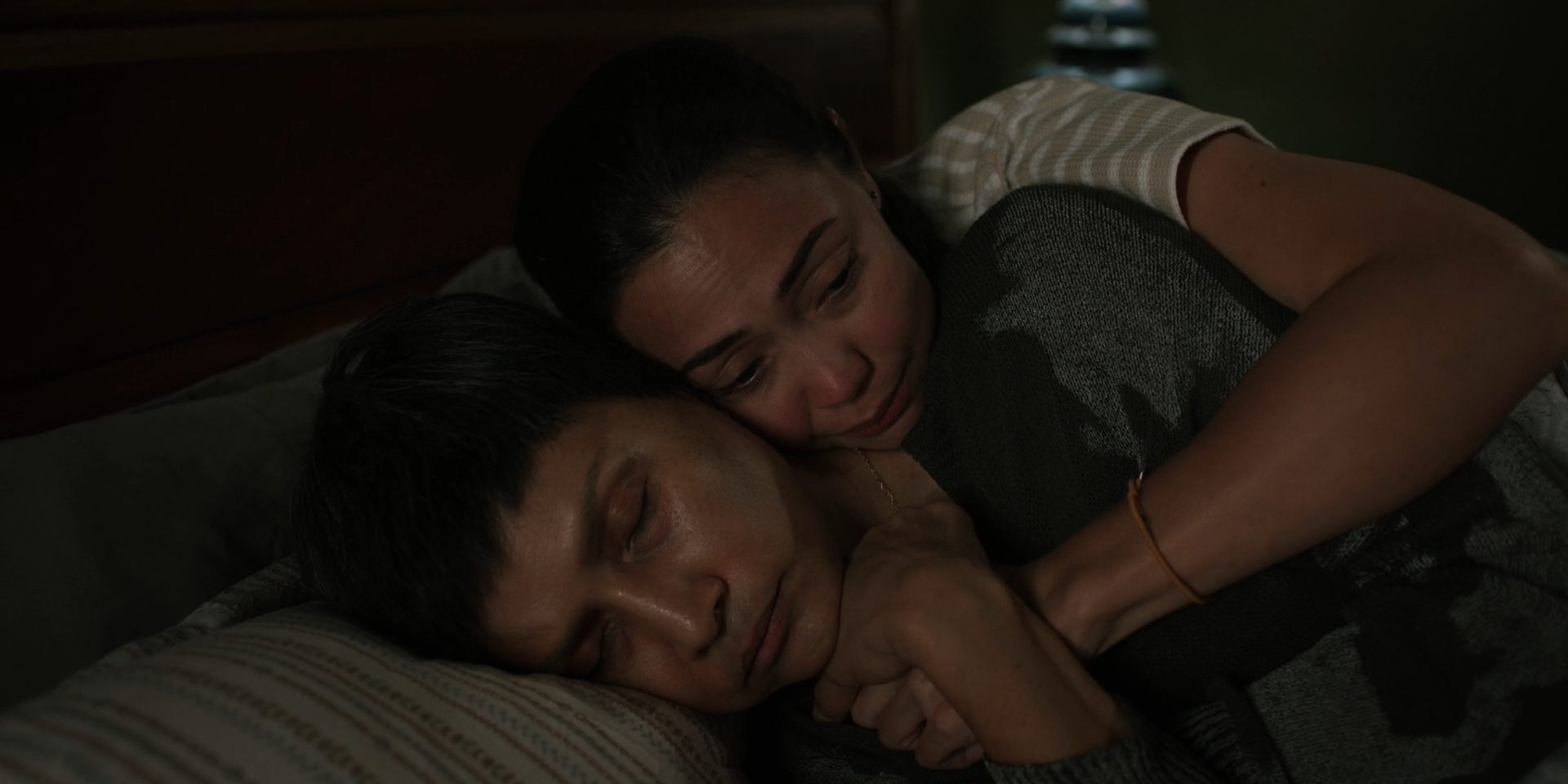
These films, along the lines of ‘This, That and Everything in Between,’ also shed light on puzzling relationships between parents and children, bringing familial tension to the forefront. The Filipino drama focuses on how an estranged mother tries to mend her relationship with an independent daughter who has built a life on her own terms. Distance and reconciliation are heavily emphasized, forcing the characters to confront difficult emotional moments. When Paz reveals that she has cancer, the equation gets more complicated for Jo and the rest of the family, who are already shocked by Paz’s return to their lives after more than two decades. A media report reveals the personal connection that actress Agot Isidro, who portrays Paz, felt towards the character. She revealed that the inspiration to play Paz came from her understanding of her own mother.
Speaking about the movie character during a Netflix media event, Agot stated, “We all have someone in mind, maybe in our family or in our circle of friends. I could relate to Paz because I could relate to my mom. Not exactly the same, but similar enough.” She also said, “That gave me a deeper understanding—not just of Paz, but of my mom too. I saw her frustrations, her insecurities. And that made me understand that it’s her defense mechanism. She’s not a bad character. She’s just complicated.” The mother and daughter are the beating heart of the story, and the ways in which their relationship evolves make it a grounded and socially relevant work of art.
Jo Attempts to Balance Her Personal and Professional Lives While Confronting Uncertainty
Jo is an imagined character who battles real psychological turmoil in her journey. Being a TV writer, she finds it difficult to totally avoid her personal issues from affecting what she writes. Jo’s extremely complicated relationship with her mother becomes her biggest challenge, forcing her to come to terms with certain realities that are capable of redefining her life. The TV writer is a character grounded in realism who faces an unexpected crisis at a decisive point in her life. Jodi Sta. Maria, who essays Jo, spoke about her perspective on the character. The actress opined, “She’s accomplished. She’s intelligent. She’s very strong. But the question is, why? What motivated this character to be the way she is?”

Jodi added, “If you look back, it’s because this strong, independent woman had to be that way. She didn’t have anyone to guide her during her growing-up years.” The narrative doesn’t stereotypically present Jo as a monolithic example of an “independent woman,” but adds layers of meaningful perspective to the evolution of her arc. While being strong and liberated, Jo also faces turmoil that exposes her vulnerability and personal struggles. She is not painted as a perfect person, but a flawed individual who has the capacity to stand up for herself. The writer also displays empathy and understanding during challenging moments, which adds a layer of authenticity to her character.
Read More: This, That and Everything in Between Ending Explained

