
 Aahana Swrup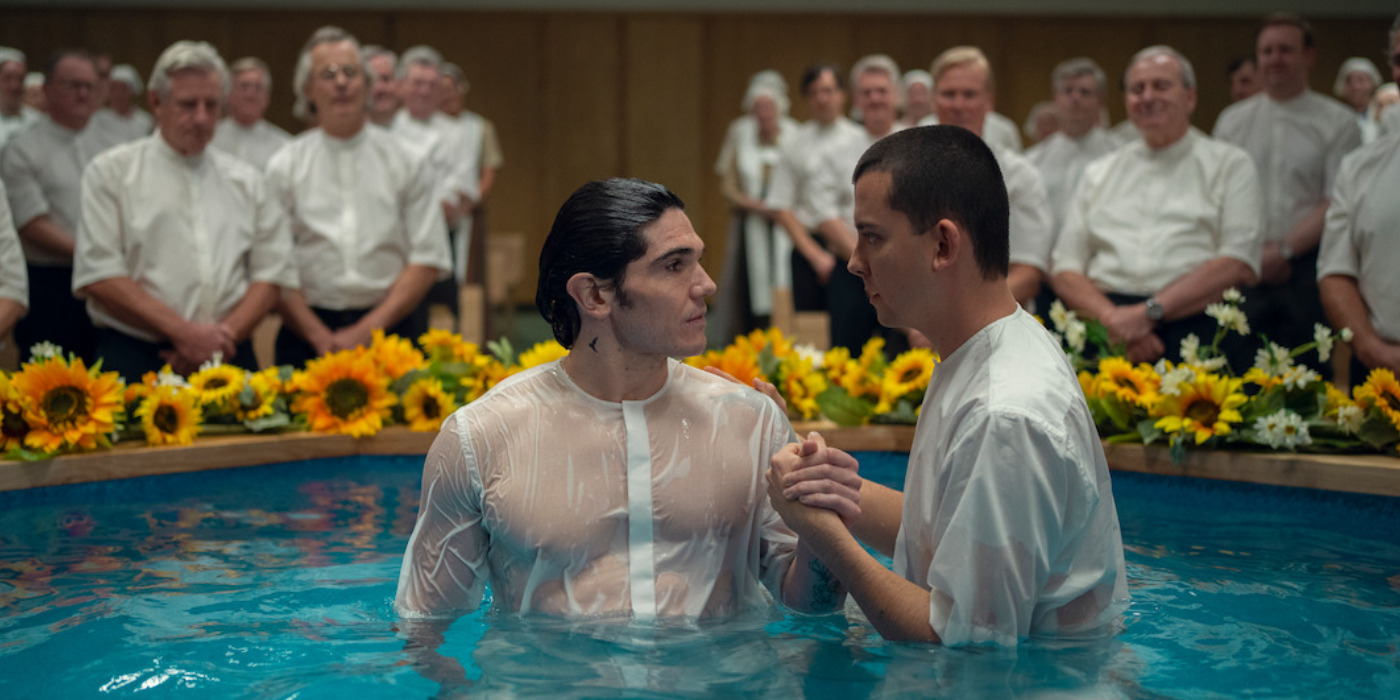
‘Unchosen’ presents a complex story about an isolated community and the impact of their cult-like society on a particular family. Born and raised in the Fellowship of the Divine, Rosie has always followed the guidance of her church’s leadership, the face of which is currently Mr. Phillips. As a conservative Christian church, the cult believes in strict gender roles, total isolation from the outside world, and a number of other systems that steadily start to become stifling for the young wife and mother. Therefore, when an outsider, Sam, enters the community through a series of fortuitous events, Rosie’s entire worldview is turned upside down, opening her up to new experiences but also new threats. However, as the newcomer with a mysterious past continues to consolidate himself into the cult’s good graces, it threatens to topple over everything Phillips and the other elders have been desperately holding onto.
Julie Gearey Based the Fellowship of the Divine on Stories From Real-Life Religious Cults
For the most part, ‘Unchosen’ charts a fictitious story that has no direct basis in real life. Even so, during the show’s development, creator Julie Gearey mined significant inspiration from actual off-screen cults and the stories shared by a number of former members. This deep dive into the lived experiences of individuals was sought out through social media and online forums, which allowed the creator to get in touch with ex-cult members. After gaining their trust and ensuring that their anonymity would be completely protected, Gearey was able to learn about their first-hand experiences and secure an authentic understanding of how such cults operate.
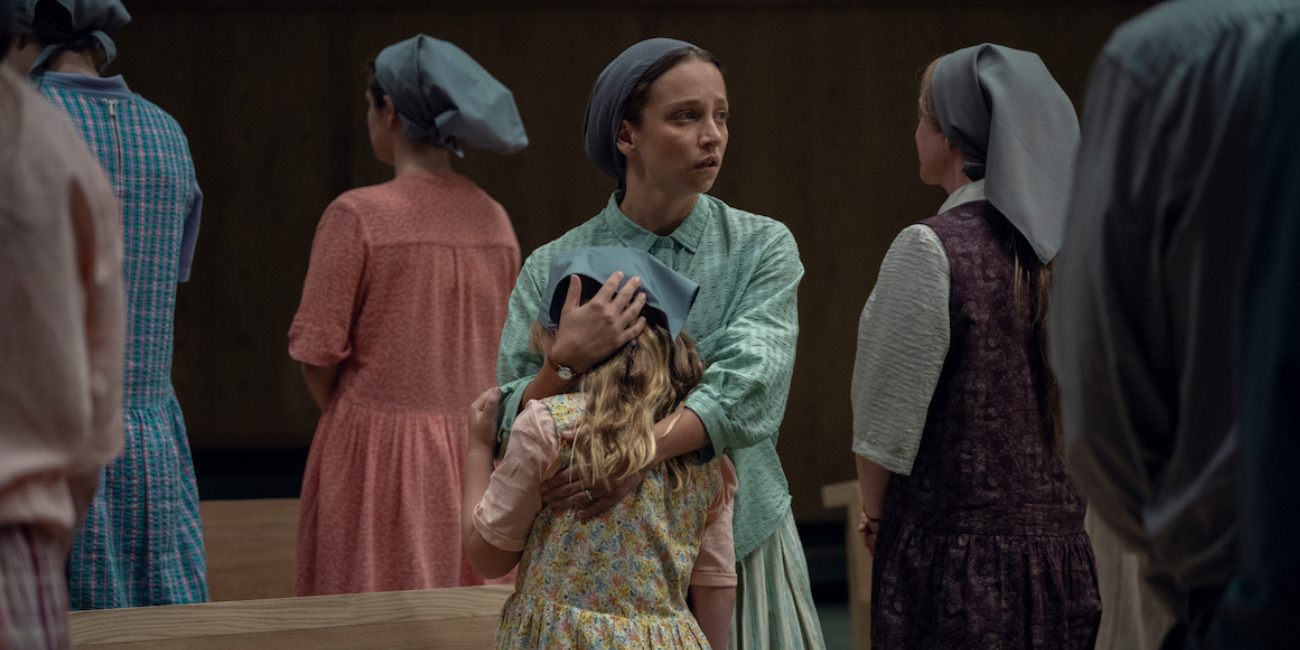
Furthermore, Gearey also worked with an academic specialist to ensure that her vision for the otherwise fictional series retains a realistic and factual foundation. As such, while the Fellowship of the Divine doesn’t take inspiration from any singular real-life cult, the fictitious organization ultimately finds a firm basis in reality. Reportedly, a suspected estimate of 2,000 cults is believed to be operating in the United Kingdom, making the rise of such abusive and exploitative organizations a hidden epidemic in the country. Such cults have been found to be directly responsible for sexual abuse, social isolation, and financial manipulation of numerous members.
Although Gearey has never named any specific cults as sources of inspiration for the creation of the Fellowship of the Divine, multiple elements of the fictional church were mined from reality. For instance, Phillips and his group’s employment of alcohol as a punishing tool for non-conformist or rebelling members was lifted from stories of a real-life cult. Similarly, the rampant and oppressive misogyny and homophobia that inform Rosie and her husband, Adam’s, relationship with their church also remain rooted in realism.
Asa Butterfield Looked Into Multiple Real-Life Cults In Preparation For the Role
Much like the creator Julie Gearey, the co-lead actor Asa Butterfield also looked to real-life cult organizations to get a deeper understanding of the social and religious elements that made up his character, Adam. The actor delved into numerous documentaries, including Netflix’s miniseries ‘Keep Sweet: Pray and Obey,’ which explores the inner workings of the Fundamentalist Church of Jesus Christ of Latter-Day Saints. Likewise, he also delved into the BBC documentary, ‘Bruderhof Community,’ which scrutinized the eponymous Anabaptist Christian movement in Sussex, England. The sect, founded 100 years ago, has 23 settlements globally and boasts around 3,000 members. The group follows Jesus as per their teachings in wait for a “glorious future kingdom.”
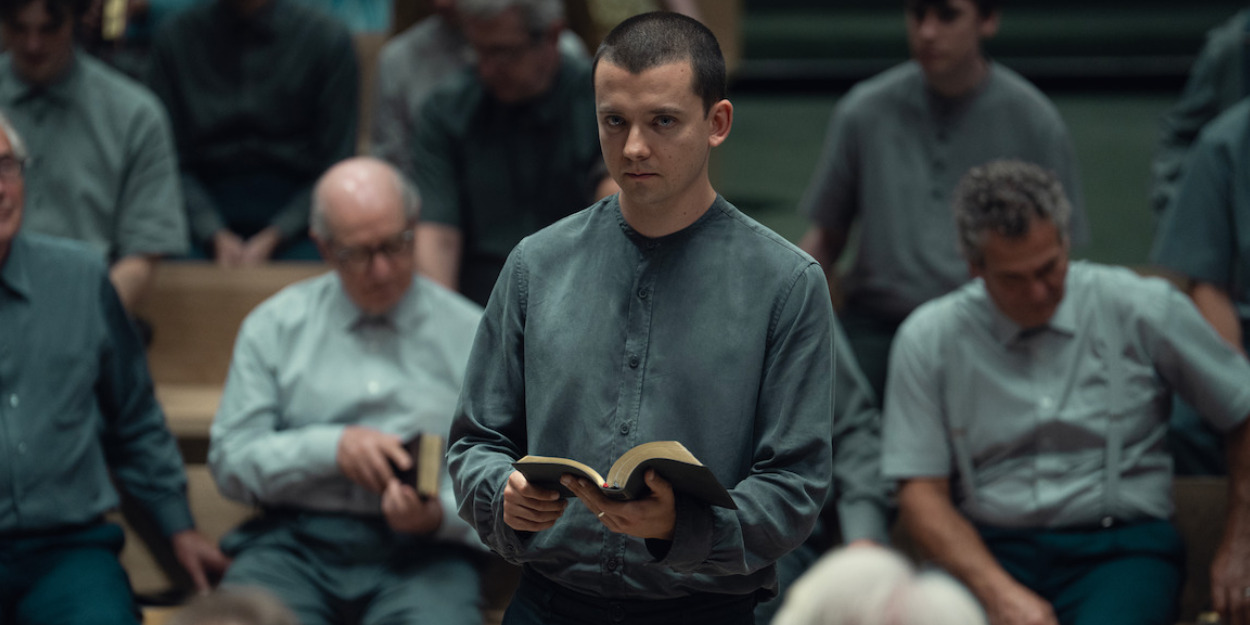
They partake in communal living, shared possessions, and are strictly against electricity, smartphones, or any other type of technology. The community is known for making children’s toys and furniture, which is sold by a business that is worth multi-millions, that also funds the entire community. Additionally, they also adhere to harsh gender norms between men and women and patently restrict any same-sex relationships. Additionally, Butterfield also looked into The Brethren, a religious group that has famously received criticism, labeling it a cult while the organization maintains its identity as a Christian Church. While none of the aforementioned cults are explicitly sources of inspiration for the on-screen depiction of the Fellowship of the Divine, their material and social reality still possesses a direct influence on the project.
Mr. Phillips is a Fictitious Cult Leader With a Realistic Storyline
Similar to other elements of the narrative in ‘Unchosen,’ Mr. Phillips, the leader of the Fellowship of the Divine, is also a work of fiction. His character was created explicitly in service of the storyline and bears no direct counterparts in reality. Still, much like the cult at the center of the story itself, the leader also ends up bearing a notable basis in reality. Alongside enforcing the oppressive and exploitative systems of the church on community members, Phillips also victimizes his community on a personal level by using his position of power to sexually harass and abuse the women under his leadership.
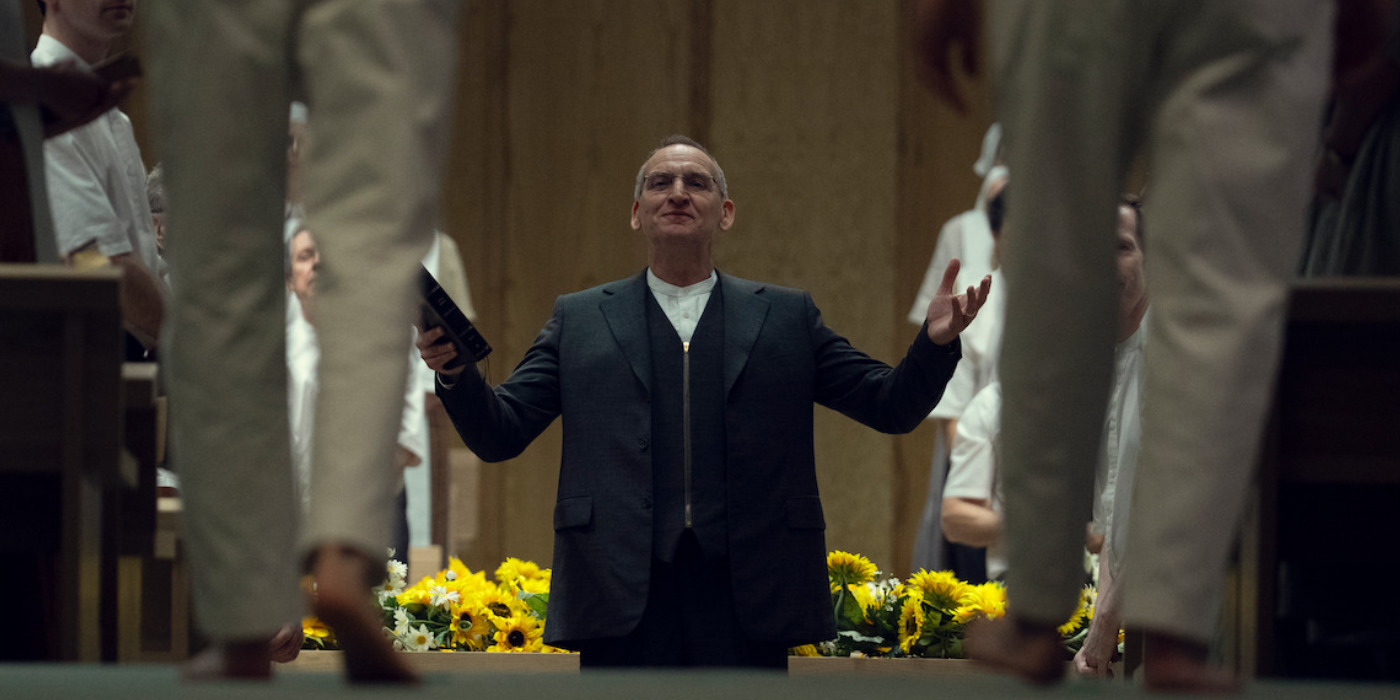
The sexual abuse and exploitation of women in cults, religious or otherwise, has been a long-recorded phenomenon. Thus, through his character, the narrative seeks to explore the same. However, ‘Unchosen’ makes the conscious decision to further expand his character past a one-dimensional caricature by infusing his storyline with more avenues. Despite being the cult leader, Phillips loses his own son, Matthew, to the community’s rigid rules and structures. As a result, he devolves into alcoholism, which fuels a vicious cycle of abuse.
In a conversation with Radio Times, actor Christopher Eccleston spoke about this aspect of his character. He said, “What attracted me to Mr. Phillips was ‘Unchosen’s’ writer, Julia Geary. There’s a great trend in drama at the moment for antagonists who are toxic, white, apparently heterosexual, late-middle-aged men. Thankfully, Julia gave him dimension and placed him in a story of tragedy involving the loss of his son and alcoholism. It’s a gift of a role because of the awkward questions it asks of our audience.”
Read More: Undertone: Is Abyzou Based on a Real Demon?

