
 Shivangi Sinha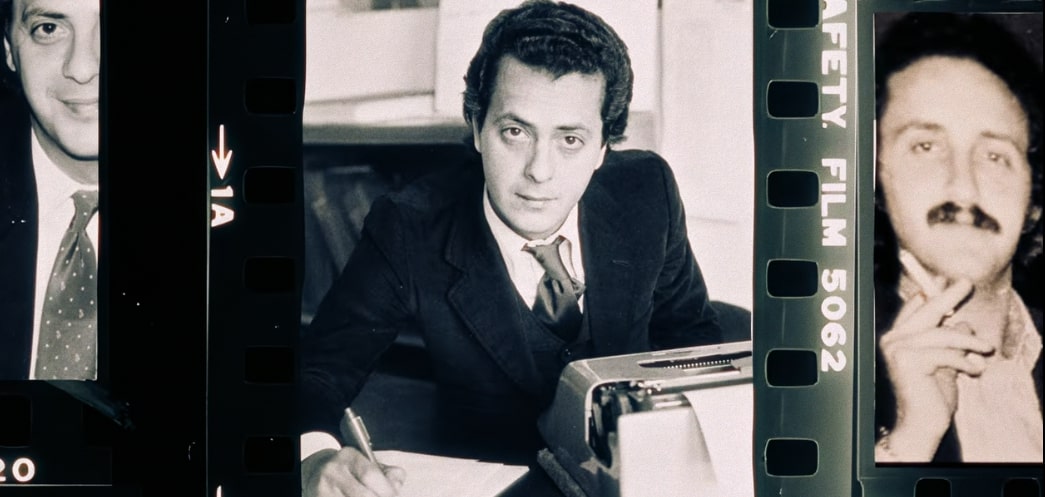
Netflix’s ‘Paparazzi King’ explores the life of the notorious and controversial media figure Fabrizio Corona, while also placing emphasis on the presence and influence of his father, Vittorio Corona. The docuseries highlights how Vittorio’s career, values, and standing in Italian journalism shaped Fabrizio’s early environment and worldview. It examines the impact of growing up in the shadow of a respected public figure and how that legacy both influenced and contrasted with Fabrizio’s later choices.
Vittorio Corona Made a Distinct Voice For Himself as a Journalist
Vittorio Corona was born on May 9, 1947, and grew up in Catania, Italy. Inspired by the path of his older brother, the well-known and respected journalist Puccio Corona, Vittorio set his sights on a similar profession. He studied history and philosophy and began his career in local journalism with La Sicilia. Those who knew him have said Vittorio was far from conservative in his thinking, and his views often clashed with the dominant public and political attitudes in Catania at the time. As a result, he relocated to Milan during the 1970s publishing boom. In 1975, he was appointed deputy editor of Annabella, a women’s magazine.
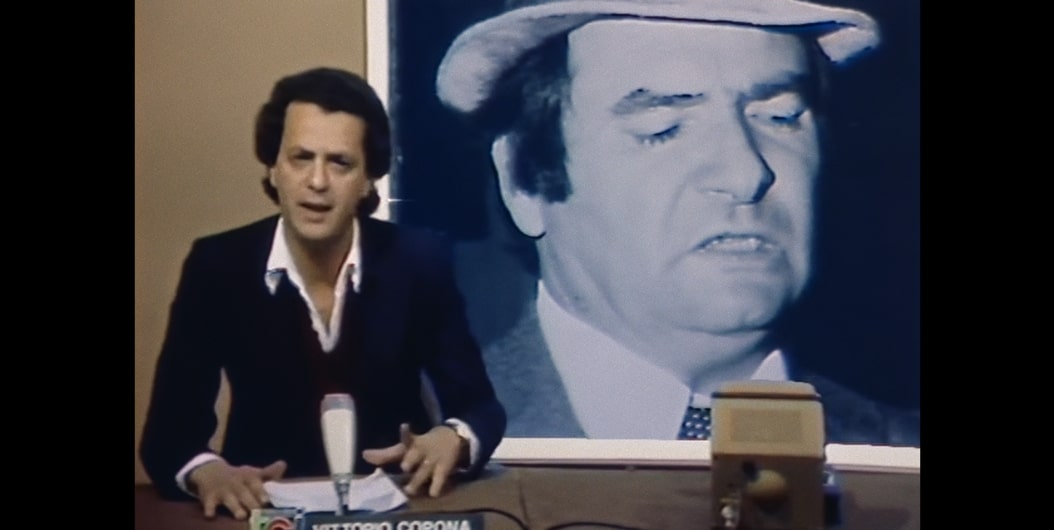
He modernized its tone, language, and editorial direction and placed a stronger emphasis on progressive themes and contemporary views of womanhood. By the early 1980s, Vittorio had established himself as an innovator in Italian media. In 1983, he became editor-in-chief of Moda, published by Nuova Eri in collaboration with RAI and Flavio Lucchini. Over more than 100 issues, he combined fashion, entertainment, and cultural commentary, redefining visual storytelling through bold graphics and photography aimed at younger, independent readers. Between 1985 and 1988, he brought this vision to television by directing ‘Moda’ on Rai Due, helping transform fashion into a mainstream cultural conversation on public TV.
He continued this trajectory with 1990 ‘Mode’, a late-night Rai Due program that aired from 1989 to 1990. In 1988, he launched King, a pioneering magazine that introduced sophisticated lifestyle journalism for modern men. He became known as the one to redefine what modern television looked like at the time, and he rubbed shoulders with some of the most prominent names in the fashion industry. In 1994, Vittorio joined Indro Montanelli’s La Voce, and his influence expanded further when he worked on Fininvest’s Studio Aperto for Italia 1. At the time, he was serving as the deputy editor at, and took to entrepreneurship by founding Village, Corona Produzioni, and developing television projects for Rai International and Telemontecarlo.
Related
Vittorio Corona Passed Away After a Long Illness
It was only after his brief period at La Voce that Vittorio Corona began to experience serious health problems. Over time, he became largely confined to his home, where he lived with his longtime wife, Gabriella Privitera, while his children visited him regularly. By then, Fabrizio Corona’s career was gaining momentum, and in Vittorio’s later years, he was increasingly identified publicly as Fabrizio’s father rather than solely for his own achievements.

During the Vallettopoli period, when Fabrizio warned his parents that he might be arrested, Vittorio was reportedly deeply shaken and is said to have cut off contact with his son for nearly three months. Although they eventually reconnected, the reconciliation was reportedly brief. Vittorio passed away on January 24, 2007, in Milan, surrounded by family and friends. After a long illness and years of pain, his death was seen by those close to him as a moment of long-awaited peace. His family has chosen not to share his medical history and wants him to be remembered for the revolutionary work he has accomplished.

