
 Aahana Swrup
Created by Luiz Villaça, Leonardo Moreira, and Donna Oliveira, ‘Habeas Corpus’ presents a riveting story about the fight for justice within a corrupted system. The Portuguese crime-drama series centers on Inez Franco, a criminal defense attorney who, after facing a life-threatening attack at the courthouse, switched professions to professorship at a law university. As a sensationalized case unravels in the eyes of the public and the court about a double homicide, the professor puts together a study group with the intention of reopening the trial of Jonathan Ferreira, who was found guilty of the murders.
Inez not only believes in the inmate’s innocence, but she’s also certain that his trial was unjust and unlawful. Thus, the lawyer and her team take on a deep-pocketed firm that has an incentive to retain Jonathan’s conviction, as well as the entire justice system that failed the young man. However, little does Inez know that one of the candidates, Marina, sports a connection to the case and the lawyer’s own past. Through its legal foundation, the Netflix show retains a sense of realism that has fascinating roots attached to it.
Habeas Corpus Charts a Fictional Story Drawn From the Reality of Innocence Project Brasil
The characters, their storylines, and the central criminal cases depicted in ‘Habeas Corpus’ remain a work of dramatized fictionalized. Yet, the screenplay for the series, penned by Leonardo Moreira, possesses an interesting basis in reality. The series mines its foundational inspiration from Innocence Project Brasil, the criminal cases they tackle, and their work in fighting for justice. The non-profit Brazilian association is involved with the issue of innocent convictions, working toward the reversal of miscarriages of justice. The organization analyzes cases where people who are potentially innocent have been falsely convicted of crimes. Once they have obtained the necessary evidence to challenge these convictions, they bring the cases to court, seeking justice and freedom for the wrongfully convicted individuals.
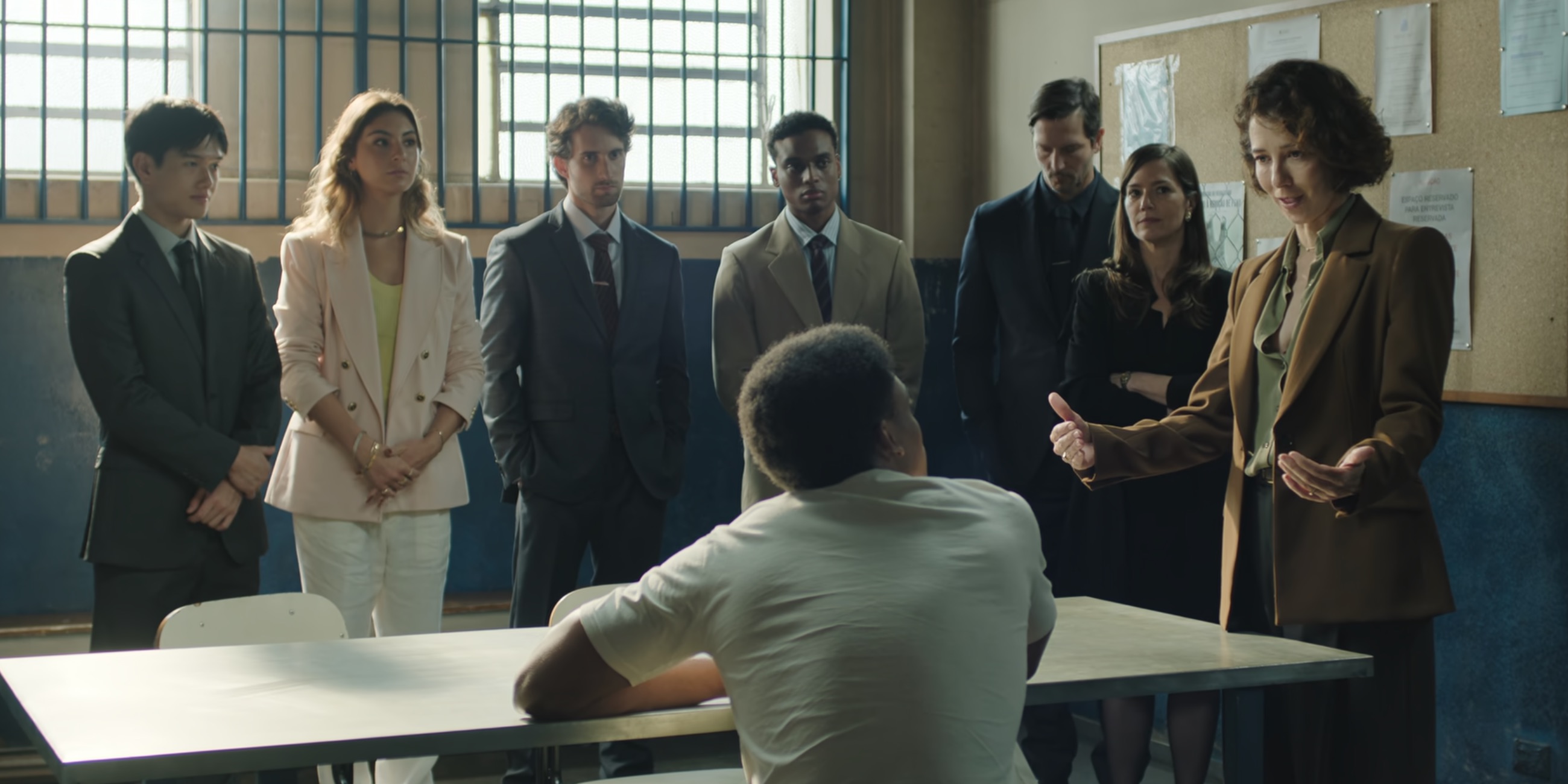
Neither the organization Innocence Project Brasil, its real-life members, nor any other associated individuals are employed as direct inspirations for the series’ narrative. Instead, the fictionalized show builds upon the association’s mission statement, highlighting the prevalence of wrongful convictions and corruption in the Brazilian justice system. In the show, Inez Franco and her group of law students become a modified, abridged version of the non-profit organization, retaining the latter’s goals of public service and justice. By enlisting the Innocence Project Brasil as a key influence, the series holds on to a grounded source of inspiration that infuses even its fictionalized storylines with a sense of realism. Ultimately, even though the narrative itself isn’t a biographical account of an off-screen criminal case, the story as a whole retains a connection to reality.
Habeas Corpus Highlights the Reality of False Convictions in Brazil
Despite the fictionality of Jonathan’s case, the premise of ‘Habeas Corpus’ remains rooted in reality. Reportedly, Brazilian courts have a history of overturning convictions at a high rate. In 2023, the country’s supreme court overturned 377 wrongful convictions or arrests. These cases shared a common ground of arrests and convictions being made on the basis of “recognition” by victims as the sole evidence. Many of these identifications were made in person or through photographs. As per reports, the regulation of these photo albums with images of the suspects is inadequate. Allegedly, in some cases, suspect photographs were shared with the victim through WhatsApp. Although more rigid guidelines around photo recognition were set in 2022, the problems in the system persist.

Discussing the same matter in connection with one of her defendants, defense lawyer Lucia Helena de Oliveira said, “There are also cases of people who were wrongfully convicted before the guidelines were set and who remain incarcerated.” False conviction and corruption within the justice system remain a problem recognized and felt on a global scale. For instance, studies suggest that at least 4.1% of death row defendants could be exonerated. In the US alone, Between 2% and 10% of inmates with convictions are reportedly innocent. Additionally, eyewitness misidentification is credited with 69% of wrongful convictions. Therefore, the story presented in ‘Habeas Corpus’ finds a universal anchor in matters of justice and wrongful convictions. As a result, even without any direct inspirations in reality, the show manages to attain a sense of realism through its thematic identity.
Read More: Where is Habeas Corpus Filmed? All Shooting Locations

