
 Abhiroop Das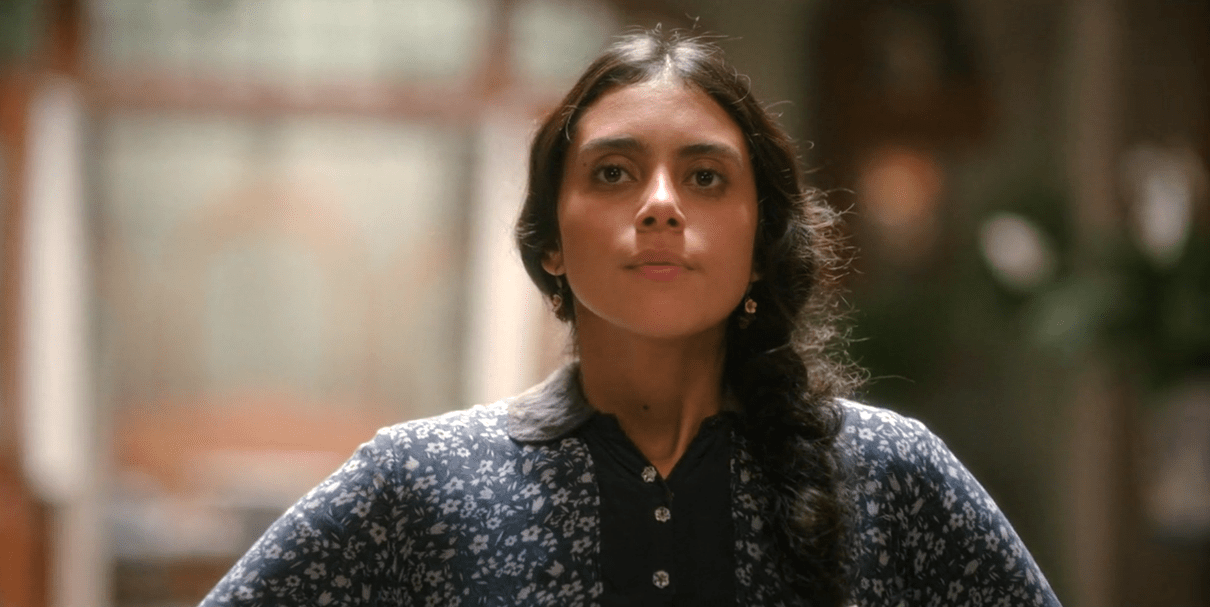
Created by Catalina Aguilar Mastretta, ‘Lovesick,’ originally titled ‘Mal de amores,’ travels back in time to Mexico in 1910, the year when the Mexican Revolution began. Emilia Sauri, a young apothecary in Puebla, becomes our eyes and ears into this world, capturing all the ups and downs that come along the way. While she is already the heir to her family’s famous Botica Sauri, her real dream is to become a doctor and save as many lives as possible. That’s not all, though, as there is also her on-and-off relationship with Daniel, which gets constantly punctuated by his desire to join the revolution. As time passes, Emilia trains to become a doctor, unaware that she will soon find herself at the center of a complex love triangle, where the myriad threads of her life come together.
Emilia Sauri is a Fictional Doctor With Loose References to Ángeles Mastretta’s Family Tree
While Emilia Sauri is a fictional character created by author Ángeles Mastretta for her novel ‘Lovesick,’ she does have some vague connections to real life. To begin with, some aspects of her characterization can be traced back to Ángeles’ own family, such as Emilia’s last name. In an interview with Nexos, the author revealed that the surname Sauri comes from one of her eight great-grandmothers, Deifilia Sauri. Apart from this one detail, though, Ángeles didn’t base any other characteristic of her protagonist on Deifilia, who wasn’t a doctor in real life. Another person from whom Ángeles drew references was her own grandmother, who was born in 1893, the same year as Emilia.
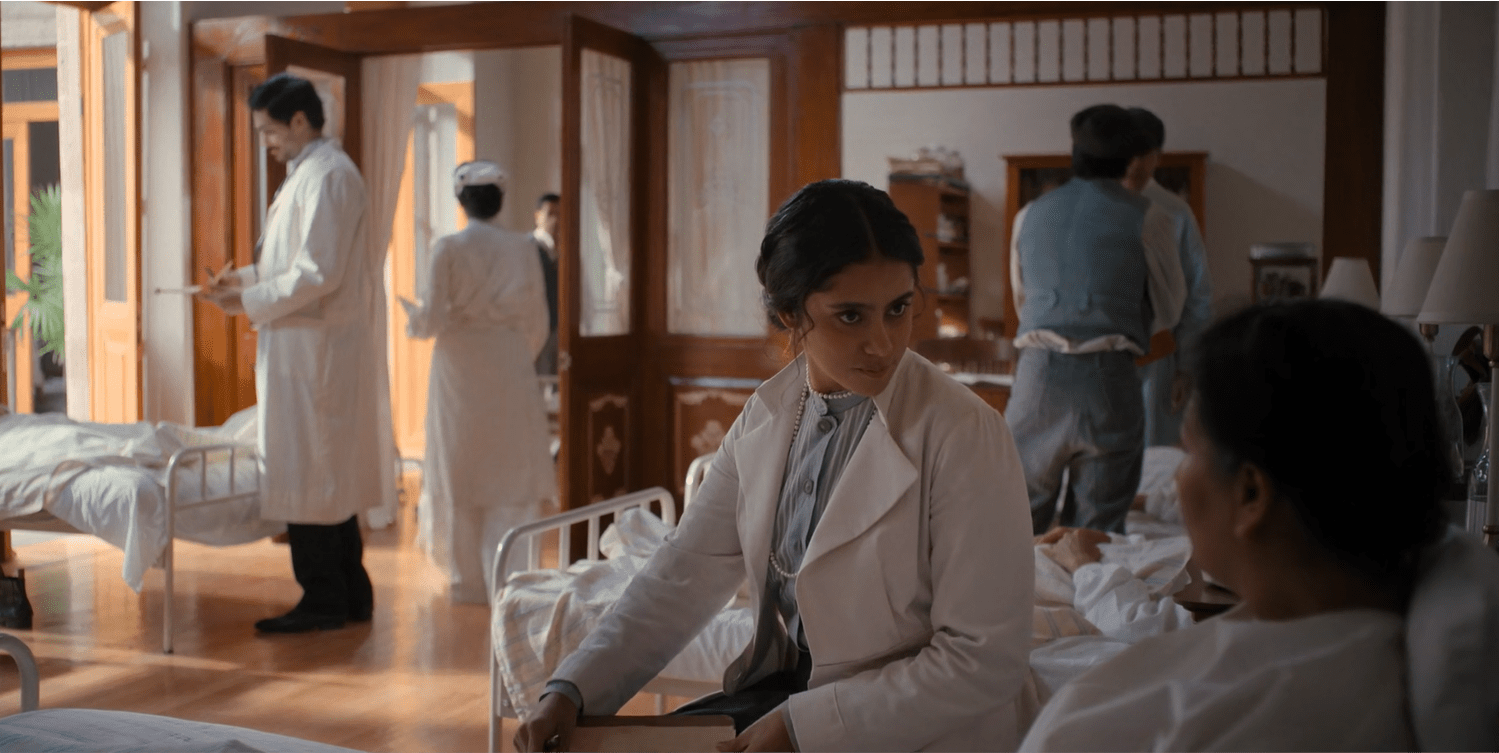
In a conversation with La Opinión, Ángeles said that she designed Emilia as almost the opposite of her own grandmother, despite them being born around the same time. She described her grandmother as peaceful and conservative, contrasting her with Emilia’s rebellious nature during the Mexican Revolution. In doing so, the author also began to imagine Emilia as the version of herself she would have wanted to be if she had been born in 1893. While these creative interests definitely informed how Emilia came to be, her arc as a whole is nonetheless a work of fiction. Instead of basing the character on a real-life Mexican doctor from the 1910s, she decided to create a new identity from scratch, one whose story is as much about love and romance as it is about medicine.
Emilia’s Love Story Contextualizes Her Journey as a Doctor in the Story
When asked what primarily inspired the creation of ‘Mal de amores,’ Ángeles Mastretta revealed that her goal was to invent a woman who is in love with two men at once. From this vague idea of a love triangle, she began conceptualizing Emilia, first visualizing her at home feeding chickens and wondering how she could love two very different people at the same time. From there, Ángeles began to expand on Emilia’s character arc, bringing the story’s setting into play to convey her anxieties and dilemmas. Fittingly, Ángeles’ daughter Catalina Aguilar Mastretta, who is the director and co-writer of the show, described Emilia’s coming-of-age as analogous to the story of Mexico itself.
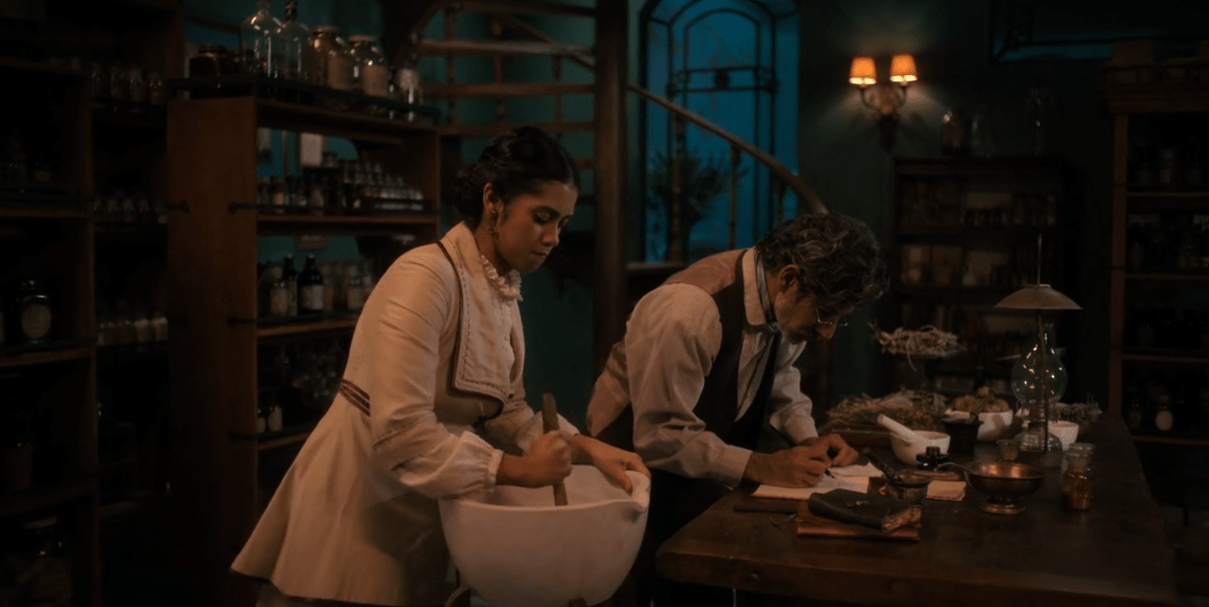
While Emilia may not be a real doctor, her role in the story does align with historical precedents. By the late 19th and early 20th centuries, Mexican women were gradually entering the field of medicine, overcoming significant social and systemic barriers. In 1887, Matilde Montoya became the first female physician in Mexico, triumphing over prejudices from different corners of society. Following that, she went on to join and lead numerous women’s organizations and became a recognizable voice in the early stages of Mexico’s feminist movements. Though Emilia may not be based on Montoya, her arc in the series follows a roughly similar trajectory. This is largely because of the effort Ángeles put into researching that period, and that sense of realism is also reflected in the TV series.
Read More: Lovesick: Is Botica Sauri Based on a Real Apothecary?

