
 Abhiroop Das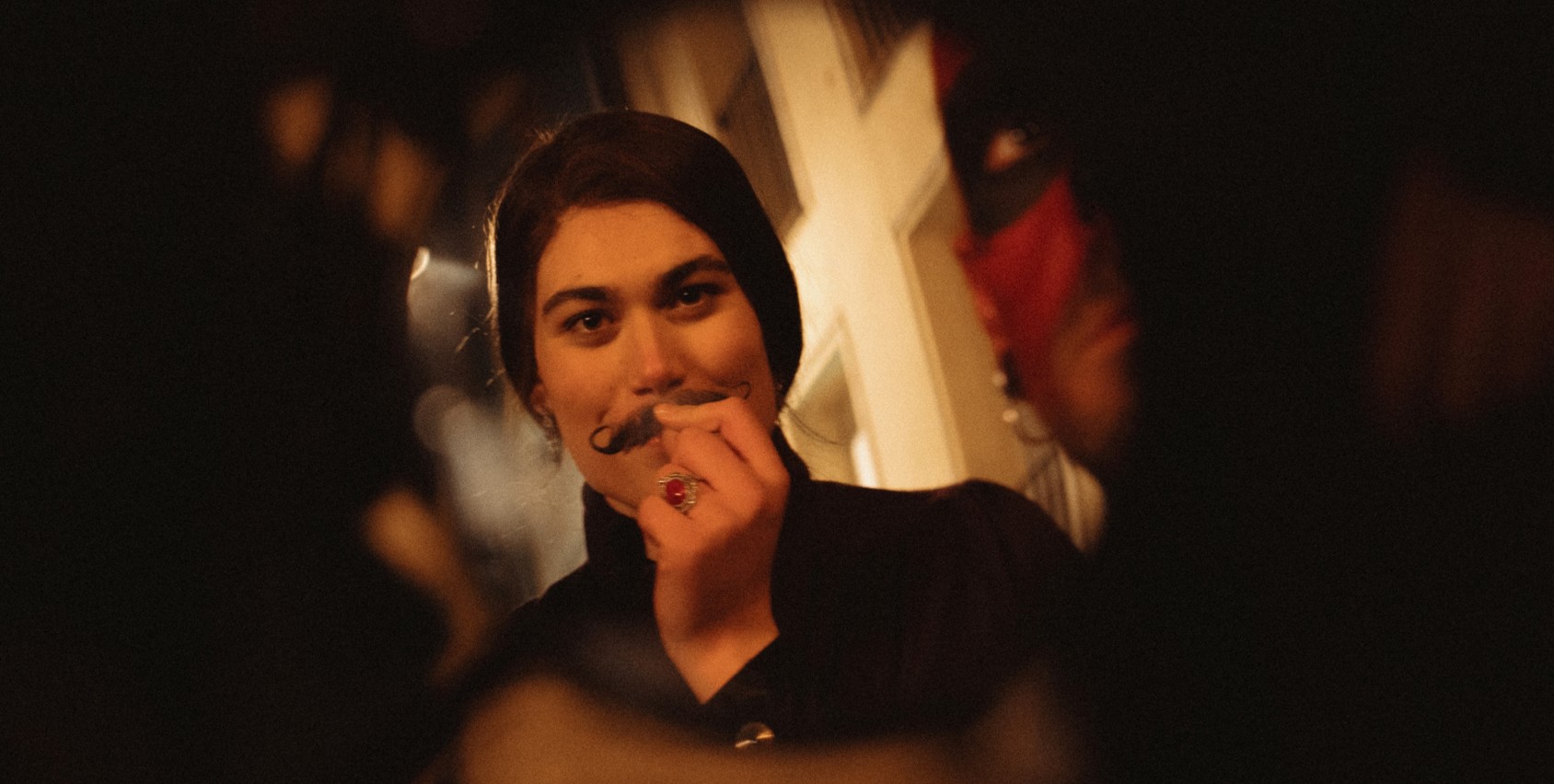
Helmed by Fernando González Molina, Netflix’s ‘My Dearest Señorita‘ follows Adela, who is raised in a conservative household and discouraged from asking questions about her gender and sexuality. However, when she secretly undergoes a medical examination and discovers her intersexuality, everything she has learned in life begins to shift. Before long, Adela decides to leave for Madrid all by herself and begins on a path of self-discovery. She is not alone on this journey, though, as a string of friends and mentor figures help Adela figure out what she truly desires from life. Originally titled ‘Mi Querida Señorita,’ this Spanish drama film explores intersexuality from multiple perspectives, charting and blending together several lived experiences along the way.
My Dearest Señorita is a Work of Fiction That Reimagines a Seminal Spanish Film
‘My Dearest Señorita’ is a fictional story based on a 1972 film of the same name by Director Jaime de Armiñá, who co-wrote it with José Luis Borau. The original project is known to be among the first Spanish films to have an in-depth discussion on topics of sexual orientation and intersexuality. For its modern retelling, writer Alana S. Portero steps in with a fresh take on Adela’s life while preserving many of the elements that make the source material click. In a conversation with Cadena SER, Director Fernando González Molina explained his vision for this adaptation. While he considers the original film to be a masterpiece and felt excited about paying a tribute to it, Molina also highlighted that Borau’s work was a product of its time.

In the interview, Molina dubbed some aspects of the movie shadowy, in the sense that their meaning could be intuited but not expressed on screen freely. For Molina, a loose adaptation allowed for a greater focus on Adela’s intersexuality and how it interacts with the larger narrative. In the original movie, cis actor José Luis López Vázquez plays the role of Adela, but Molina found it imperative that an intersex actor essay the role in this modern reimagination. He also wanted the role to go to a good actor who understood the emotional depth of the script, and that’s where Elisabeth Martínez came in as the perfect fit. While her performance in the film is central to how the movie unfolds, Molina also believes that the story goes beyond channeling any one journey.
When it came to crafting an ending, Molina decided that the conclusion had to be ambiguous for the film’s message to truly speak to the audience. In a story about confronting binaries of thought, the director found the themes of self-love and exploration to be universal. Nonetheless, there is also a personal angle to why he feels so attached to Adela’s story, and it all goes back to the late 90s. During the conversation, Molina explained that he was the same age as Adela in 1999 and had recently arrived in the city of Madrid. He recalled interacting with queer people who had come from smaller towns to tell their story in cities like Madrid or Barcelona. It is possible that Molina was inspired by his experiences in creating a world in which art serves as a healing agent.
My Dearest Señorita Highlights the Importance of Intersex and Trans Rights
For writer Alana S. Portero, the movie is contextualized by the era in which it’s written, which she described as one of truth, bodily agency, and diversity. While Spain ranks among the highest when it comes to LGBTQ+ rights, major protective laws for intersex and transgender people didn’t come into effect until the 2000s. Prior to 2023, Spain had no nationwide prohibition on intersex genital mutilation, with only a few autonomous communities, such as Madrid, Aragon, the Balearic Islands, and Valencia, having laws that explicitly restricted such procedures on minors. Reportedly, surgery was only allowed in these communities after the patient reached an age deemed appropriate by the respective legislative bodies.

On February 16, 2023, the Ley Trans, or Trans Law, was passed by the Spanish government, banning genital alteration of children under the age of 12 nationwide. The exception includes cases where surgery can prevent health complications that may arise from intersex characteristics. The Trans Law also brought forth numerous other progressive changes, including gender self-identification and a nationwide ban on conversion therapy, but where ‘My Dearest Señorita’ shines is in dramatizing Adela’s life at the turn of the century, before such protective measures. Through this story, we get a profoundly realistic look into intersex identity, both on a personal and social level.

