
 Aahana Swrup
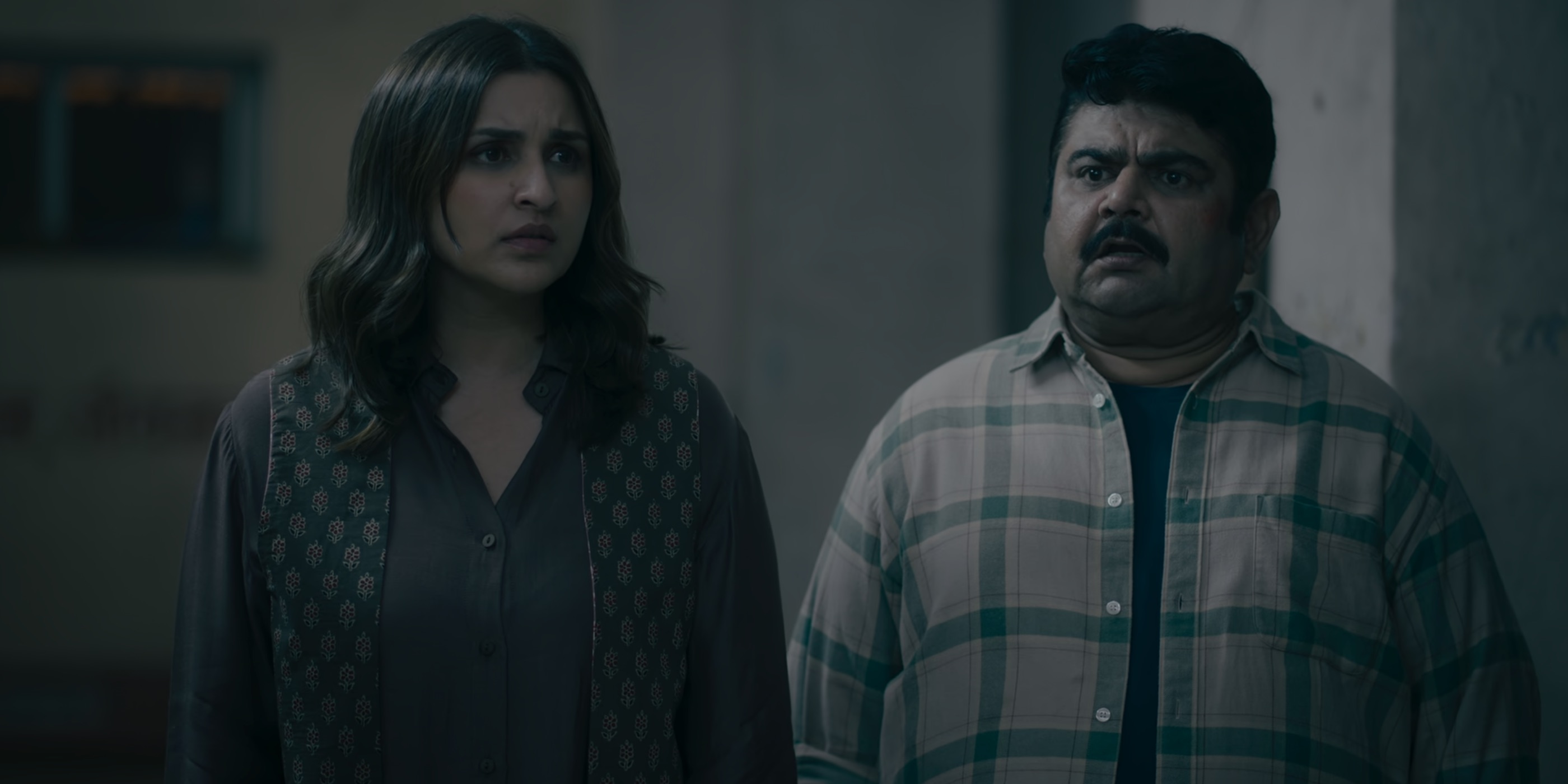
‘Reporting Live’ is a crime thriller film that pitches journalists at the center of its narrative. In the village of Visargaon, the collapse of a bridge leads to the loss of numerous lives. When reporter Sandhya Yadav and her video journalist, Vindo Sharma, arrive on the scene to cover the tragedy, they learn the bitter truth about an illicit industry breeding in the area’s dark underbelly. Illegal sand mining operations, most of which happen in broad daylight, have been running rampant in the village, exploiting the community, its infrastructure, and local labor.
As a result, Sandhya and Vinod take it upon themselves to bring the truth about this racket to the public. Nonetheless, they soon learn that the illegal operations are much bigger than they seem, connected to a network of wealth and power known as the sand mafia. As the story progresses, the narrative employs the on-screen reporters to delve into the realities of the danger faced by journalists off-screen.
Sandhya and Vinod are Fictional, But Their Narratives Sport a Link to Reality
‘Reporting Live’ presents a fictional story with a tangible basis in reality. The film is inspired by the reality of illegal operations that pervade India’s sand mining industry. Sand extraction remains a globally relevant practice due to the mineral’s vital utilization in construction and infrastructure development. As such, the high demand creates a supply chain for this resource, with plenty of scope for illegal activity to run wild. This has led to the creation of a widespread cartel that is primarily involved in the illegal mining of the mineral, mostly from riverbeds. Such practices tend to have a variety of negative impacts on social and environmental levels. Over the years, many journalists have attempted to cover the reality of this issue.
In 2013, Sandhya Ravishankar, a journalist from Chennai, Tamil Nadu, published a story about the illegal sand mining issue. On the same day that the piece went live, the publication received a defamation lawsuit. The journalist who continued writing about the issue alleges that she received threatening phone calls and became a subject of stalking in the aftermath. In 2015, an independent journalist named Jagendra Singh met a horrifying end after suffering from severe burn injuries. Prior to his death, he had been writing about illegal sand mining in the area and its connection to a local politician. In the end, the police concluded that his death was a result of suicide. On the other hand, the journalist’s family claims that he was attacked.
In fact, before succumbing to his injuries, Singh accused the authorities of the immolation attack. Similarly, in 2016, two journalists, Karun Misra and Ranjan Rajdev, died as a result of roadside shootings. Both journalists were covering stories of illegal mining activities. In Misra’s case, the police were able to connect the attack to mafia activity. Alternatively, the media speculated that Rajdev’s death could have been a result of his journalism as well. All of these instances highlight the dangers that real-life journalists have faced after getting involved with the issue of illegal sand mining in India. Although none of these individuals were direct sources of inspiration for the characters of Sandhya and Vinod, it’s likely that their real-life stories influenced the narratives of the fictional journalists.
Reporting Live Explores the Dark Side of Journalism Through Sandhya and Vinod
In ‘Reporting Live,’ Sandhya and Vinod face an uphill battle in their quest to expose the sand mining mafia and their illegal conspiracy. The duo has to face harassment and threats along every step of the way, and their storylines remain perpetually clouded by danger. Unfortunately, this is the reality for many investigative journalists around the world and in India. According to the Committee to Protect Journalists, accountability remains lost in almost 80% of the cases worldwide in which journalists face retaliation for their work. In its 2024 Impunity Index, India was ranked 13th. In cases specifically linked to the illegal sand mining operations, South Asia Network on Dams, Rivers and People, or SANDRP, recorded the deaths of 5 journalists and activists between January 2019 and November 2020.

Likewise, in 2020, Daniel Bastard, the head of Reporters Without Borders’ Asia-Pacific desk, spoke about the sand mafia in alleged connection to Shubham Tripathi’s murder. He said, “The links between sand mafia bosses and local police chiefs mean that, when journalists are murdered in connection with their reporting, the police investigation is almost always closed without further action. The vicious cycle of impunity needs to be broken by means of legislation guaranteeing journalists’ safety.” Ultimately, even though the characters presented in ‘Live Reporting’ are works of fiction, their narratives seem to be significantly influenced by reality.
Read More: Reporting Live: Does Zoey the Dog Die? Who Killed Her?

