
 Abhiroop Das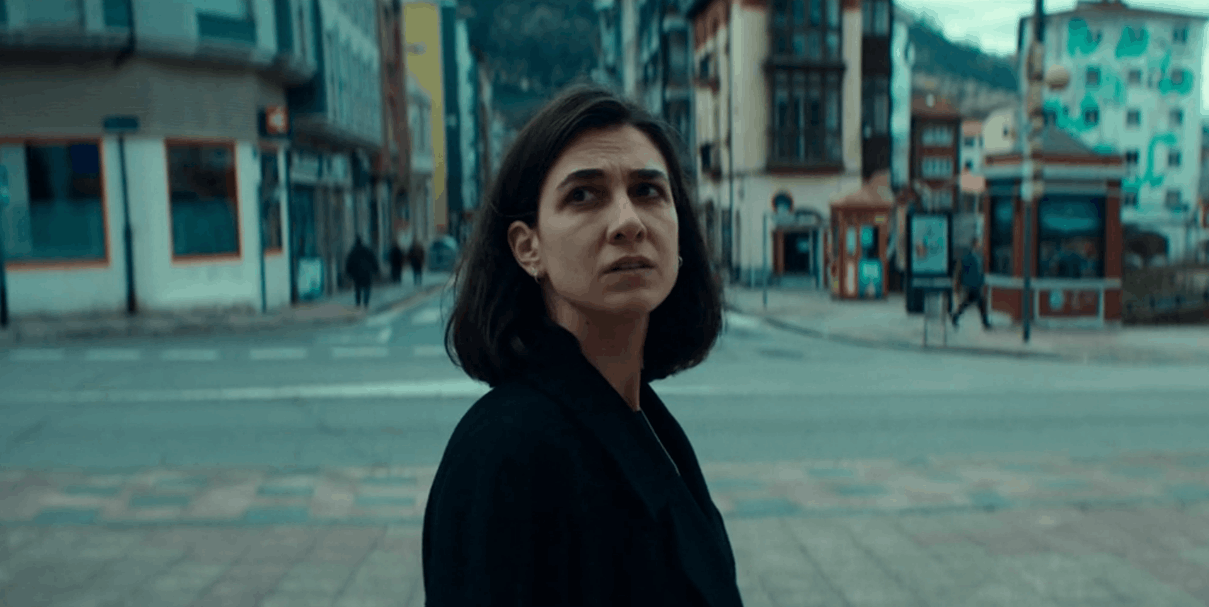
Helmed by Roger Gual, Netflix’s ‘The Truthers,’ also known as ‘Los Creyentes,’ tells a multifaceted tale about truth, belief, conspiracy, and everything that lies in between. Following her mother’s unexpected passing, Ruth returns to her hometown, only to find out that everything has changed in a rather brief span of time. The most jarring transformation, however, is that of her father, Martin, a veteran of the Spanish Civil Guard, who seems to have taken to a number of conspiracy theories. As his thoughts start making less and less sense to Ruth, an invisible barrier of sorts develops between father and daughter, forcing them to doubt what is going on in the other’s mind. By the end of this Spanish psychological thriller, the reality of Ruth’s world is put into question, especially in the face of overwhelming narratives. SPOILERS AHEAD.
The Truthers Plot Synopsis
‘The Truthers’ begins with Lucia ringing up her daughter, Ruth, again and again, but to no avail. The look she wears is one of concern and confusion, but far away, in Germany, Ruth seems to be too busy with her job as a night-time bartender and simply ignores her mother’s calls as she parties for the night. By the morning, the one calling is her father, Martin, who informs that Lucia is dead. Rushing back home, Ruth discovers that Lucia seemingly fell in the washroom and passed away, but some of the details don’t add up. Martin reveals that Lucia took up drinking again not long after Ruth left, and of late, it had become too disruptive for the family. However, Ruth has a hard time believing that, and is further surprised by the fact that her mother locked the door while bathing, something she had never done before.
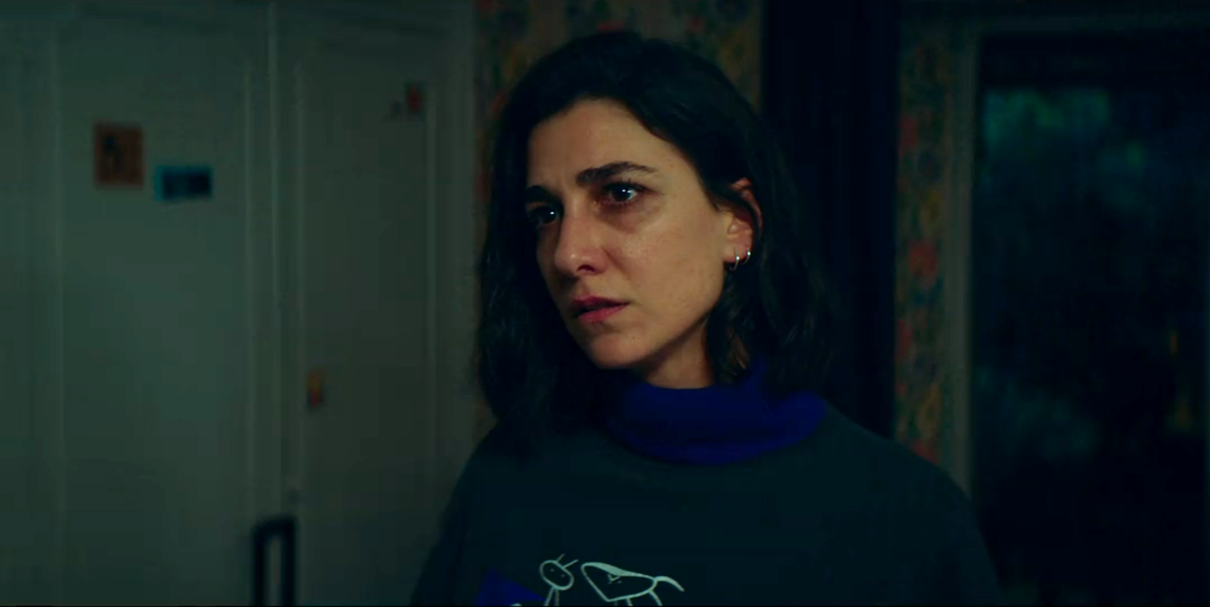
To top things off, Ruth also discovers some voice notes left by her mother, wherein she details Martin’s eccentric and increasingly suspicious behavior as of late. Lucia notes that Martin has given in to some conspiracy theories and spends most of his time locked up in his attic. Ruth’s mixed feelings about her father only grow when she notices that he has developed a deep sense of paranoia towards Certyx, a newly built pharmaceutical company in town. He believes that the company is using the town’s animals and humans for drug experimentation, and connects it to the disappearance of a local child named Alejandro, for whom search and rescue efforts are still underway. Spooked out, Ruth tries contacting the authorities, only to realize that her father has connections at every level and might manipulate the truth.
Ruth’s ex-partner, Aron, turns out to be a new employee at Certyx, and the day after he is invited for dinner at Martin’s, his ID card goes missing. Ruth immediately believes that her father is behind all of this, but cannot quite prove it. Instead, she makes some new discoveries, including a set of hidden cameras at the house, and a woman named Berta, with whom Martin has been in regular contact. As it turns out, Bertha had to give up custody of her kids after her belief in conspiracy theories went too far, and Ruth believes that something similar is happening to her own father. The last straw in all of this is when she feels groggy after drinking Martin’s herbal tea, and grows convinced that he drugged and killed Lucia. While all this plays out, Martin and Berta’s real plan turns out to be infiltrating the Certyx building, for reasons that only come to light after it’s too late.
The Truthers Ending: How Did Ruth’s Mother Really Die?
‘The Truthers’ ends by confirming that Ruth’s mother wasn’t killed or attacked, but genuinely fell to her death by pure accident. Though this can be hard to believe at first, considering the suspicious circumstances that led to her death, and Martin’s even more suspicious response to it, therein lies the subversive conceit of this film. While we are made to focus on Martin’s conspiratorial affinities for the entire run-time, in reality, it is Ruth, and by extension the viewer, who slowly feeds into a conspiracy about Lucia’s death. Despite there being no hard evidence of murder, our preconceived notions, both regarding the genre and Martin, lead to a conclusion that is quite far from the truth, but fits into the dramatized nature of such belief.
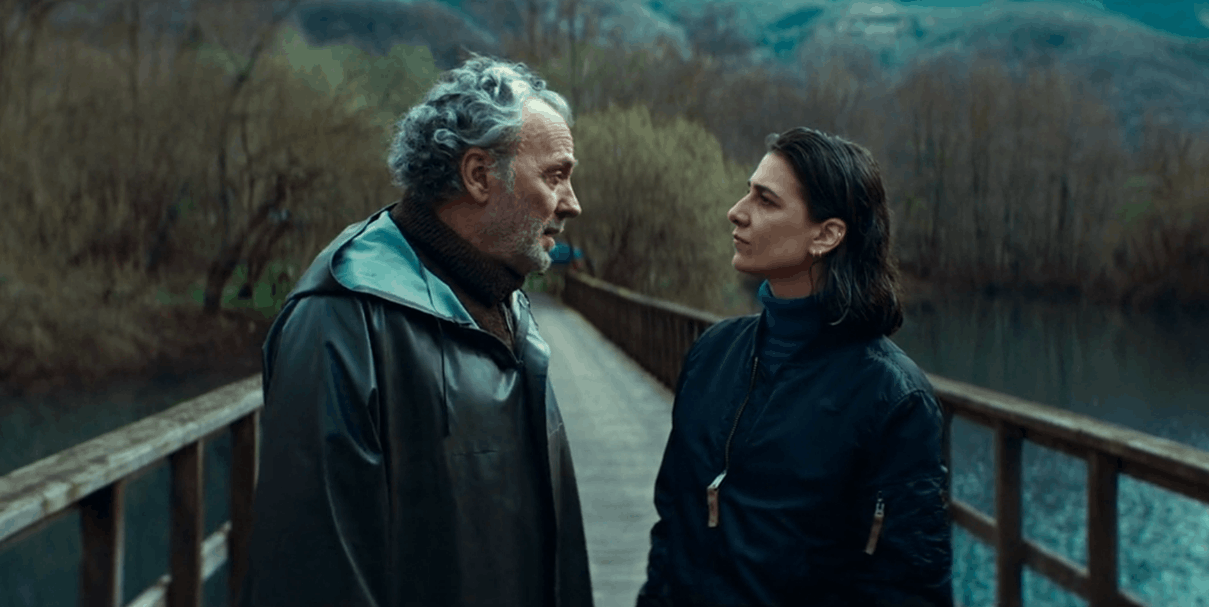
The two instances of conspiracy in this movie, emerging from Martin and Ruth, follow a somewhat parallel trajectory. In Martin’s case, it is likely a trauma response that gets accelerated following Alejandro’s disappearance, and for Ruth, it is her mother’s death. Before long, both Martin and his daughter object to the changes in their lives, be it the town that is being altered by the arrival of a big pharma company, or the uncharacteristic actions of Lucia that only remind Ruth of how disconnected she was from her family. Much in the same way, conspiracy and paranoia become tools of coping with the sheer inexplicability of reality for both the characters, only causing them to fight amongst each other in a desperate attempt to become the singular “truther” of this story.
Though it is never confirmed beyond doubt that Lucia died of an accident, the important detail is that Martin almost certainly had no active role in it. Where both he and Ruth become passive contributors, however, is in their alienation of Lucia over the course of several months. There is even a chance that her death was neither a murder nor an accident, but a case of suicide, but that idea is not brought up in the movie. Instead, we get a piercing glance into the minds of two people deeply anguished about their reality. The loss of Lucia leaves Ruth with only faint memories and an overpowering sense of guilt for not being there for her mother. The irony in this, however, is that this same guilt eats up her relationship with her father, reiterating the tragedy.
Are Martin and Berta Dead? Were the Conspiracies Real?
In its final moments, ‘The Truthers’ reveals that both Martin and Berta die in the explosions they themselves created under the pharmaceutical building, leaving behind a much-contested legacy. Though we never actually catch the moment of their death, the faint booms in the background are evidence enough. Even though the blowing up of the walls all but proves that there are no tunnels. Martin and Berta refuse to even consider that they be wrong. Instead, they decide to push even deeper, perhaps knowing that they are marching towards their own deaths. What makes this particularly complicated, however, is that on some level, they genuinely believe that it is to protect innocent lives, which makes it far from a simplified case of conspiracies taken too seriously.
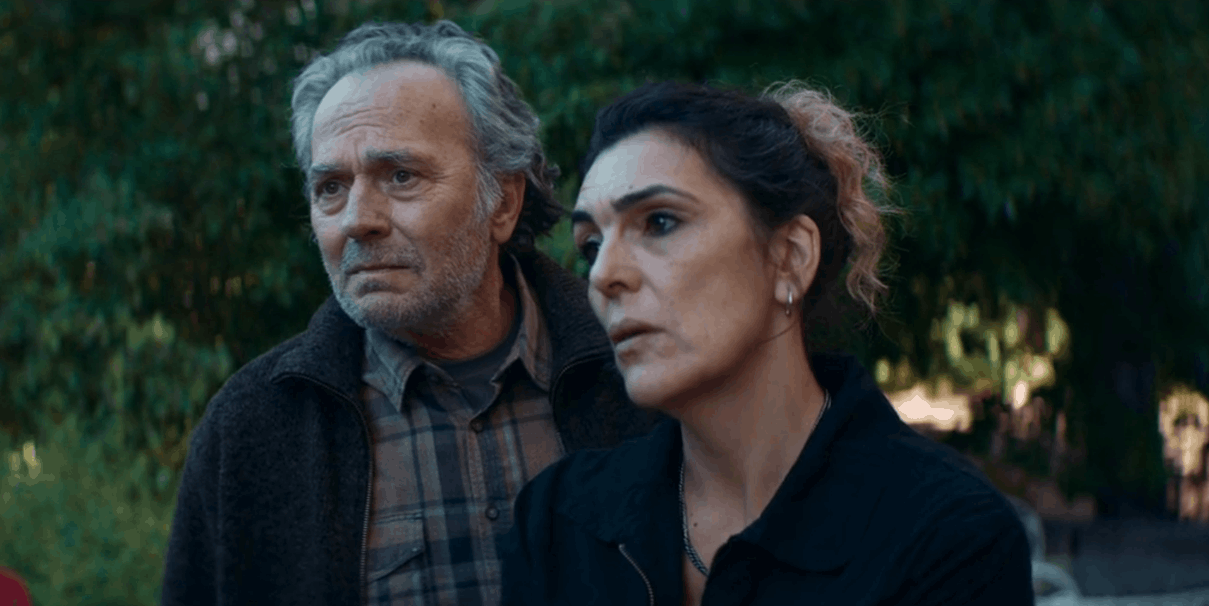
The fact that both Martin and Berta come from a law enforcement background is likely a clue as to how they ended up with their present beliefs. Ruth notes at one point that her father never brought or used a gun in his house after returning from service, and something similar is said about Berta, who later reissues her weapon and keeps it at her home. It is likely that both she and Martin are responding to a deep-seated post-traumatic stress, which is triggered years after a normal life, specifically when a pharmaceutical company takes root in their hometown, causing pollution and gentrification. Sensing a shift in the town’s environment and culture, some parts of Martin’s psyche go into a defensive mode, and from there, fears of a child-kidnapping cabal take root.
Given that Martin and Berta never quite find any underground passageways, it is likely that their beliefs about a tunnel hiding kids were likely wrong. However, the substantial coverage for this idea in underground media circles conveys that there might be a kernel of truth, after all. At its core, the movie is about approaching every bit of information with some skepticism, but never allowing it to take hold of one’s mind. In that regard, both Martin and Berta end up becoming victims of a system that is far greater than them, self-valorizing their isolation and what appears to be a lone pursuit for justice. This stunt has its ripple effects, however, as the final shot of the movie reveals that the conspiracy now has widespread attention, with people donning masks and marching down the streets, convinced that there is a hidden truth to the evil of this world, even if that can never be fully ascertained.
Where is Alejandro? Is He Dead or Alive?
In its most heartbreaking twist, the movie also confirms that Alejandro is dead and that his body is located inside the lake. While we are never told for certain if this was a murder or an accident, the most likely explanation appears to be that Alejandro was cycling downhill and somehow fell into the lake, drowning to his death. How exactly he fell there, however, remains a mystery, as the location is too well-known for nobody to realize that a child’s body is down below. Ironically, its status as a popular picnic spot is now diluted due to the pollution that most likely emerges from the pharma company’s toxic waste. With no one playing or swimming in the lake waters anymore, Alejandro’s body remains there for quite some time before Ruth connects the dots and alerts the police.

Though Alejandro’s body is ultimately found, that alone cannot rule out the possibility of foul play. It is entirely possible that he was kidnapped and later pushed into the lake along with his cycle, so as to remove evidence. However, the movie doesn’t make us privy to any such investigation, and neither are there any references to an alarming forensic reveal or criminal tie-in. All things considered, Alejandro’s death is likely a pure accident, not unlike Lucia’s, and it’s the collective reaction of people that gives it an unfamiliar shape down the line. It gets to a point where actually finding Alejandro becomes secondary to Martin, who can hardly trust his own daughter’s words. Instead, his mind redirects to fulfilling its own conviction, even if it means death before a resolution.
In some ways, Alejandro’s cruel fate epitomizes the kind of cold, inexplicable reality that cannot be easily explained away with facts and logic. In fact, in these circumstances, the emotional reaction of a community becomes as important as the tragedy itself. What begins as group efforts to search for the child soon turns into a desperate hunt for answers and explanations. When none are provided, some, like Martin, turn towards the eccentric, convinced that it is their only way to deal with larger crises. Fittingly, the ending of the movie serves as a reminder that there is no shortage of unresolved mysteries in this world, and so long as one’s perception can be even slightly distorted, the dance of conspiracies and truths is likey to continue forever.
Read More: Where Was The Truthers Filmed? All Shooting Locations

