
 Aahana Swrup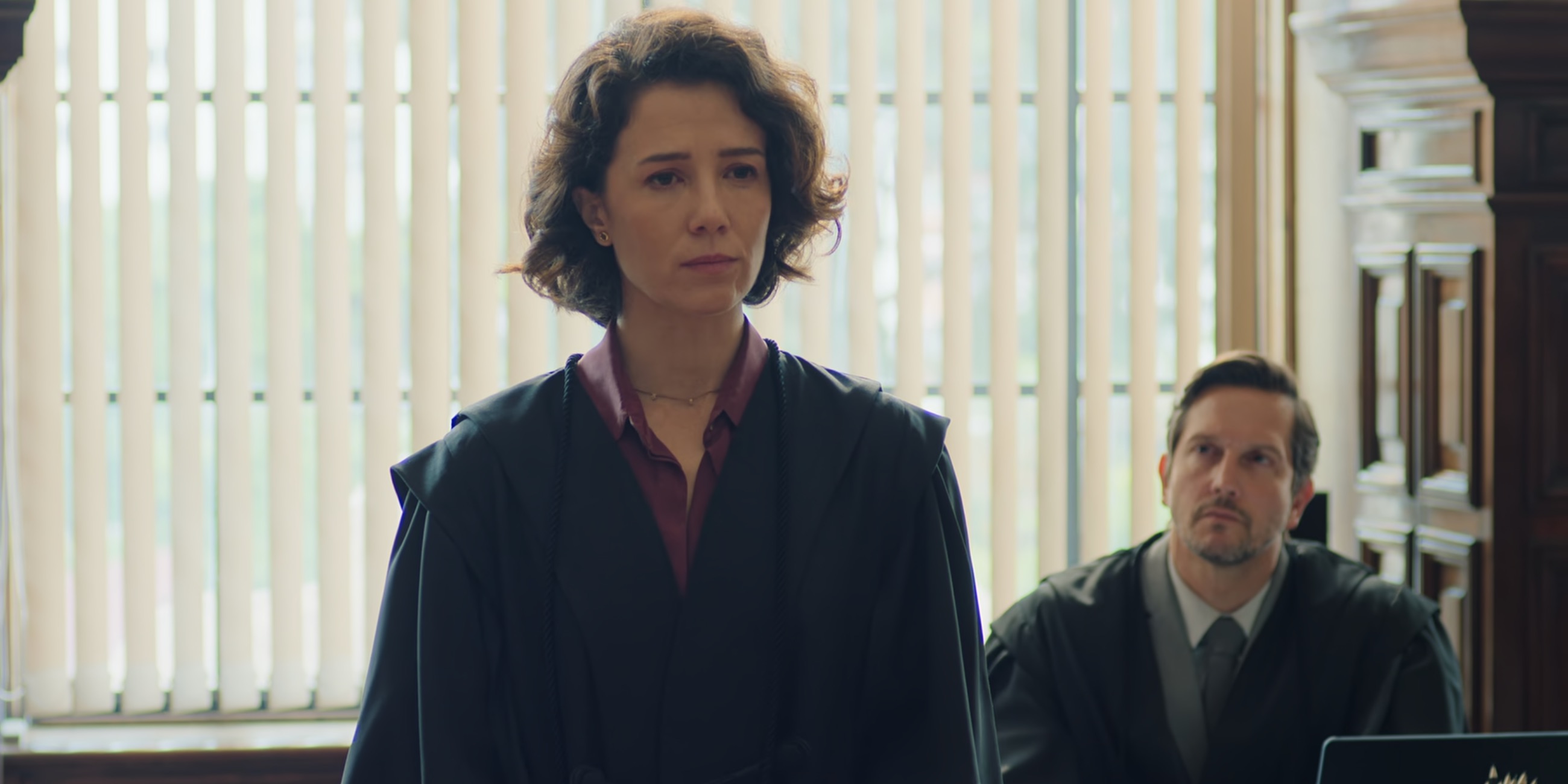
‘Habeas Corpus’ is a Portuguese series that delves into the idea of evaluating innocence and guilt within an inherently corrupt system. At the helm of the series is Inez Franco, a former criminal lawyer who is haunted by a career-defining regret that got her shot in a courtroom. A few years after the incident, she had settled into life as a professor at a law university.
However, when a public-facing case resurfaces involving a double homicide that led to the incarceration of a 19-year-old Jonathan Ferreira, the lawyer refuses to stay in retirement any longer. She puts together a study group of her students to review Jonathan’s case, prove his innocence, and the wrongful conviction. However, unbeknownst to her, one of the candidates she selects, Marina, is hiding a tense link to Inez’s sordid past. In the process of rehashing the old case, the dynamic between the two develops and sheds some light on the lawyer’s past. SPOILERS AHEAD.
Habeas Corpus Recap
Eight years ago, Inez Franco was shot in the middle of a trial while trying to prove a woman guilty of setting fire to land owned by a high-profile politician. The man who fired the bullet was the defendant’s husband, who promptly committed suicide in the aftermath of the attack. Since then, the lawyer has retired from the courtroom and turned to the classroom. With the start of the new term, the professor brings her students’ attention to a current case unfolding in the public eye. A few years ago, there was a double homicide at the Vasquez residence, leaving the family’s patriarch and housekeeper dead. The police suspected the daughter, Renata Vasquez, of having called a hit on her father. A 19-year-old delivery driver named Jonathan Ferreira was found guilty of carrying out the murders. While the latter was imprisoned for the crime, Renata’s court case was still dragging on.

Interestingly enough, Inez’s old law firm was representing the defendant in the case. In her classroom, the professor tells her students to look into the case to present a review, which would determine the placement of a select few students into a study group. Off-the-bat, Marina, remains eager to earn her seat at the table. Thus, she teams up with another ambitious student, Kim, to extract some information from Neusa, the eyewitness in Jonathan’s case. Alternatively, Lima and Raquel talk to the convict’s brother. Bernardo, the son of Pedro, Inez’s old partner at the firm, extracts no meaningful leads of his own but ends up selected into the group anyway. Yet, the idea threatens to fall apart when Jonathan refuses to accept the lawyer’s help in filing a Habeas Corpus report, arguing that his imprisonment has been unlawful. Nonetheless, Marina is able to talk him into changing his mind.
Although Inez doesn’t know it, Marina is actually the daughter of Eliane, the defendant whose case ended in the attack on the lawyer’s life. The student is working with the professor because she wants to learn everything from her and use it to free her mother from her own wrongful conviction. For the same reason, she remains willing to break and bend a few rules in ensuring Jonathan’s freedom. Over the course of their investigation, the team manages to uncover multiple transgressions by the justice system. As it turns out, the police had abused and harassed Jonathan’s wife, Leticia, using her to get a false confession out of the young man. Additionally, old precinct tapes buried in the archives reveal that Detective Cristina Ogini threatened, intimidated, and abused the convict during interrogation. However, by then, Raquel, who remains unconvinced of Jonathan’s innocence, leaves the group and starts an internship at the Civil Force, a department of which Cristina happens to be the new Head.
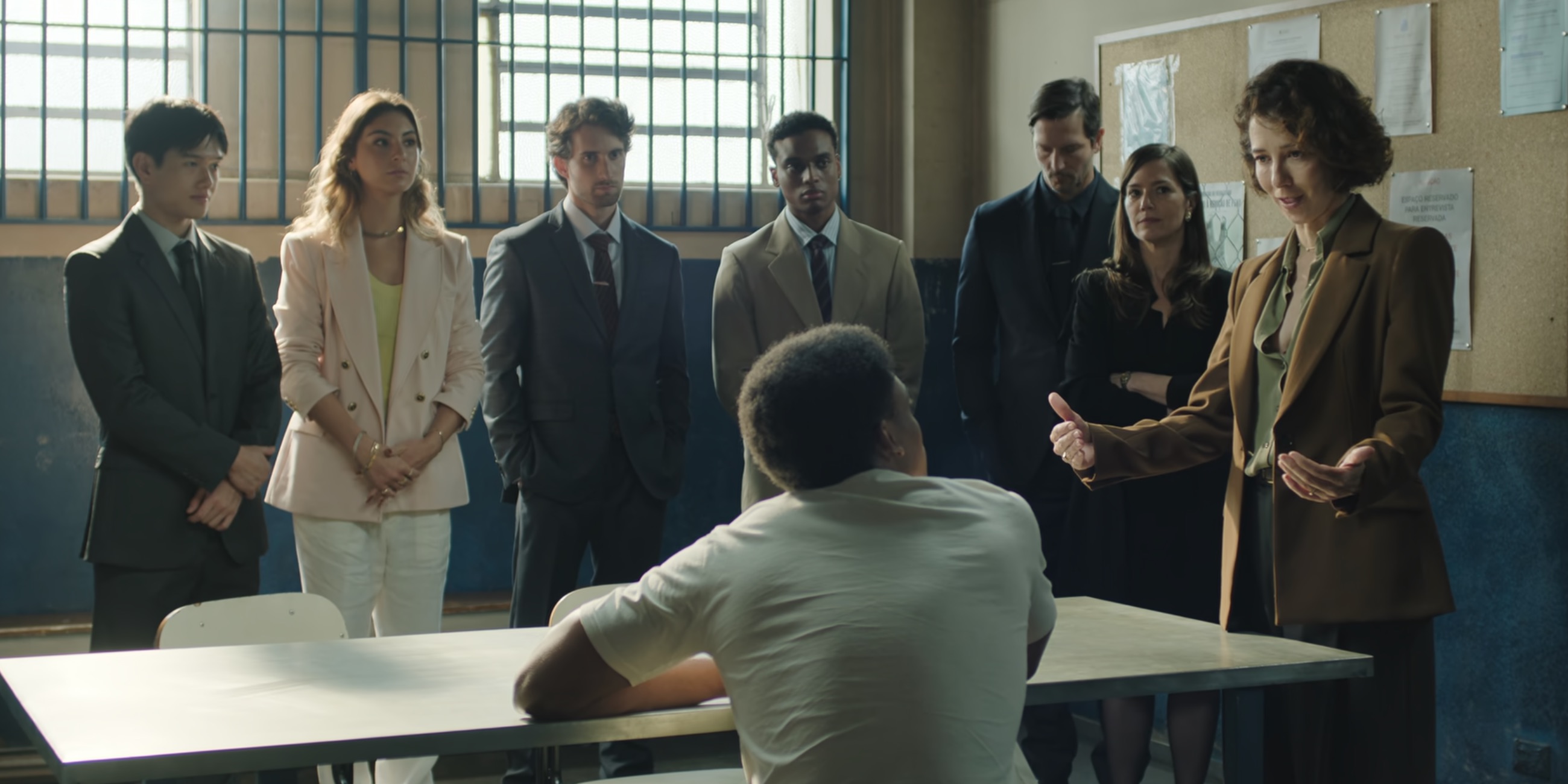
As such, Cristina catches onto Inez through Raquel and begins employing intimidation tactics. She also manages to get the professor momentarily suspended from the university, forcing the group to function out of her house. Meanwhile, Pedro’s firm, where Murilo, the lawyer’s ex, is also a partner, contests the group’s Habeas Corpus appeal. This leaves them with no choice but to pursue a criminal review directly against Cristina, a feat which comes with its fair share of danger. Although this, paired with the discovery of Marina’s connection to Eliane, almost leads to the group’s disbandment, the group manages to find its way back to each other with a new resolve. Around the same time, Murilo begins to second-guess his ways and offers to join forces with Inez. Thus, with a proper law firm backing them, the team finally takes on Cristina in the courtroom, where Jonathan’s future and the system’s ability to right their own wrongs hang in a precarious balance.
Habeas Corpus Ending: Does Jonathan Get Acquitted? Who Was Really Guilty of the Murders?
Jonathan’s conviction happened under highly dubious circumstances. Initially, after the crime, Renata Vasquez’s uncle and his nephew, Evandro and Helio, were arrested for the crime. After their initial arrest, they changed their statements, naming Renata as the mastermind behind the plan, who hired them to assassinate her own father. They also added Jonathan as their collaborator, labeling him the killer, which renders them only accessories to the crime. This way, Evandro, the real murderer, gets to escape a murder conviction. The police also fabricated an eyewitness, identifying him at the scene of the crime. Afterward, the police drag Jonathan out of his house in the middle of the night and keep him in prison for days. In that time, they physically and psychologically abuse the accused, trying to force a confession out of him.

In fact, they even threaten his wife, Leticia, and his young child, Bruno, to get their desired result. The detective on the case, Cristina, even buys off his public defense lawyer, Flavio, to ensure he is barred from proper legal counsel. Instead of fighting for his client’s innocence, the latter encourages Jonathan to confess, insisting that it would get him a lessened prison sentence. Simultaneously, threats to his family’s life further pushed him toward the same decision. In the end, after trying to fight for his innocence and continuously failing, the defendant ends up confessing to the crime. In the aftermath, he receives 72 years in prison, which effectively robs him of any and all hope to return to his old life and see his family again.
For the same reason, Jonathan is initially skeptical when Inez decides to reopen his case. Yet, through their joint effort, the professor and her team of students are able to amass the evidence needed to prove his wrongful arrest, the invalidity of his confession, and the eyewitness statement. Even after their Habeas Corpus appeal fails and Cristina manages to bar some of their evidence from courtroom usage, the group refuses to back down and takes the fight to her with a criminal review. In the end, Inez wins the case, finally bringing Jonathan his freedom after six years of false imprisonment. Still, the bitter truth remains that even the overturning of the conviction won’t bring back the years the corrupt system stole from his life.
Does Eliane Work With Inez? Is She Innocent?
Despite unraveling eight years before the events of the series, Eliane’s case remains an influential force over Inez’s narrative. Back then, she was entangled in legal troubles with Eno, a politician who had his eye on her family’s land. According to her, he even orchestrated the murder of her brother to unlawfully obtain deeds of the property. Nonetheless, Elaine refused to move from the land. As a result, in an attempt to ensure her evacuation, Eno pursued a legal case against her, accusing her of setting fire to the property in an attempt to ward off his people. In this case, he hired the counsel of Inez, an ambitious up-and-coming lawyer who was willing to do whatever it takes to surpass her father’s impressive legacy.

In the courtroom, Inez ruthlessly managed to get a confession out of Eliane, who owns up to starting the fire, albeit in self-defense. In turn, the lawyer goes on to convince the jury that, regardless of intention, she had committed a crime and subsequently deserved to be convicted for it. Her accusations against the woman are ultimately what drove the defendant’s drunken husband to shoot her before pulling the trigger on himself. However, when Inez emerged from the aftermath of the attack with her life, she had an ethical epiphany. She realizes that she was in the wrong for peddling the politician’s agenda forward, despite knowing he had employed illegal methods against Eliane and her family, all in an effort to take her land.
Therefore, Inez tries to undo her mistakes by attempting to reopen Eliane’s case, this time as her defense attorney. Nonetheless, the convict refuses to work with the lawyer. After everything that has been done to her, she refuses to concede the other the satisfaction of redemption and absolution. Mostly, she doesn’t trust Inez in the slightest. Nonetheless, after Jonathan’s case, Marina manages to convince her mother that there is hope for her to finally return home as well. A concluding scene, that will likely remain a secret from Inez leads to another revelation. As it turns out, Elaine has been innocent all this time. In reality, it was young Marina who had set fire to the land. Yet, in order to keep her daughter safe, the mother, much like Jonathan, had supplied a false confession.
What Happens to Cristina? Why Did She Frame Jonathan?
The Vasquez case could have been a straightforward murder case where Evandro and Helio’s robbery attempt led to the deaths of two innocent civilians. However, Cristina changed the case’s blueprint after she took over from the detective originally assigned to it. The reason she does this is that Jorge Vasquez’s murder had the potential to garner significant public attention, especially if a scandalous investigation surrounds it. For the same reason, she offers the real culprits a deal. She wants them to accuse Renata, the daughter, of orchestrating the entire thing in an attempt to steal her father’s inheritance.

In turn, Cristina offers Evandro and Helio a way to shorten their prison sentences. She creates the circumstances for the duo to pass off the blame to Jonathan, the delivery driver, who had no real connection to the murders. The circumstances offered just enough scope for the detective to create a case against the innocent man using her unethical and illegal methods. By doing this, she gains media spotlight around the same time when the position for the Head of the Civil Force opens up. As a result, she staged Jonathan’s entire case to snag a career-defining promotion. Nonetheless, in the end, she is removed from this position as she faces the consequences of her actions once Inez brings them to the light.
Is Renata Vasquez Innocent? Did She Orchestrate Her Father’s Murder?
Renata Vasquez’s potential involvement in the deaths of her father and her housekeeper is intentionally left ambiguous by the narrative. The facts of the case are as follows. When Evandro and Helio first gave their statements to the police, they claimed that the murders were the result of a robbery-gone-wrong. However, afterward, the uncle amended his statement, claiming that Renata had hired him to carry out the attack. Eventually, in the aftermath of his death, when Helio finally tells the truth about his deal with Cristina, he makes no mention of the heiress’s involvement. Yet, it’s entirely possible this is because the nephew was oblivious about an arrangement between her and his uncle.

Ultimately, the narrative is inconclusive about whether or not Renata had a hand in the murders. This is because the story isn’t about the murder case. Instead, it’s about the corruption in the system that allowed Cristina to bend the rules and put an entirely innocent man behind bars. By framing Jonathan, extracting his confession, and “solving” the case, she polishes her own reputation. She has no real interest in bringing justice to either of the victims. In the end, the only people who could have confirmed or denied Renata’s involvement are Evandro and the woman herself. Nonetheless, the former is dead, and the latter has no incentive to be honest if she is behind the attack.
Read More: Is Habeas Corpus Based on a True Story?

