
 Abhiroop Das
Directed by Norichika Ôba and Tomoyuki Takimoto, Netflix’s ‘Straight to Hell,’ also known as ‘Jigoku Ni Ochiru Wa Yo,’ chronicles the rise of post-war Tokyo through the eyes of Kazuko Hosoki, the real-life legendary fortune teller, TV personality, and novelist, who is fictionalized in this Japanese drama series. When a budding writer named Minori gets commissioned to write Hosoki’s biography, she begins her personal research, as well as a long series of interviews that reveal the many layers of Kazuko’s life. However, before long, the two narratives begin to mismatch, and Minori realizes that the truth about Kazuko’s past is greyer and far more complicated than what she bargained for.
In almost all of her interview sessions, Kazuko’s beloved pet dog, Tiara, becomes hard to miss, which is why the dog’s mysterious disappearance during the ending sequence prompts equal parts confusion and fear, especially for Kazuko, who by then is on a soul-searching journey of her own. SPOILERS AHEAD.
Tiara Will Likely be Found, but Not Without Kazuko Reflecting on Her Actions
One of the biggest mysteries of ‘Straight to Hell’ that goes unresolved, even by the end, is the fate of Kazuko’s pet dog, Tiara. In the final moments of the season, Tiara goes missing inside Kazuko’s enormous, brutalist house, and in search of the dog, she begins checking out every nook and cranny. What she discovers, however, is not Tiara but an imagined projection of her childhood self, which then opens the doors to her larger resolution as a character. Though this appearance is a part of a creative visualization, it doesn’t quite answer the actual question at hand. Given how the entire house is shut, it shouldn’t be possible for Tiara to vanish into thin air. The most likely answer is that she is still inside the house, possibly scared of Kazuko’s outburst and hiding.

Though it should be a matter of time before Tiara the dog is discovered if it’s inside the house, a worse potential might be in store if the house has open exits. In the first place, for the writers to add such a sequence, and that too so abruptly, doesn’t make sense unless it’s for a greater narrative effect. Instead, there is a chance that a much grimmer fate awaits Tiara, perhaps as a direct result of Kazuko’s actions. Kazuko’s desire to control every single element of her life often comes at the cost of her personal relationships, and in this case, bidding goodbye to Tiara might just become the tipping point. However, the scene doesn’t outright confirm any one possibility, and given what we know, Tiara’s vanishing has more to do with symbolic storytelling than anything.
Tiara’s Association With Kazuko’s Child Self Opens up Several Symbolic Interpretations
Notably, Kazuko comes across her younger self while looking for her dog, and while the link might not be apparent at first, it connects to two themes. The first is her belief that the world is split between predators and prey, where the weak can only stop being harassed by the strong by replacing them. Though Kazuko internalizes that belief and builds much of her life through that framework, it’s the simplest of relationships in her life that end up being the most precious one. Chiyoko, for instance, sees her as a genuine sister-like figure, but it’s ultimately Kazuko’s greed that corrupts that relationship. Though this doesn’t exactly happen between Kazuko and her pet dog, Tiara’s case becomes a microcosmic expression of what Kazuko’s worst traits are capable of doing to others.
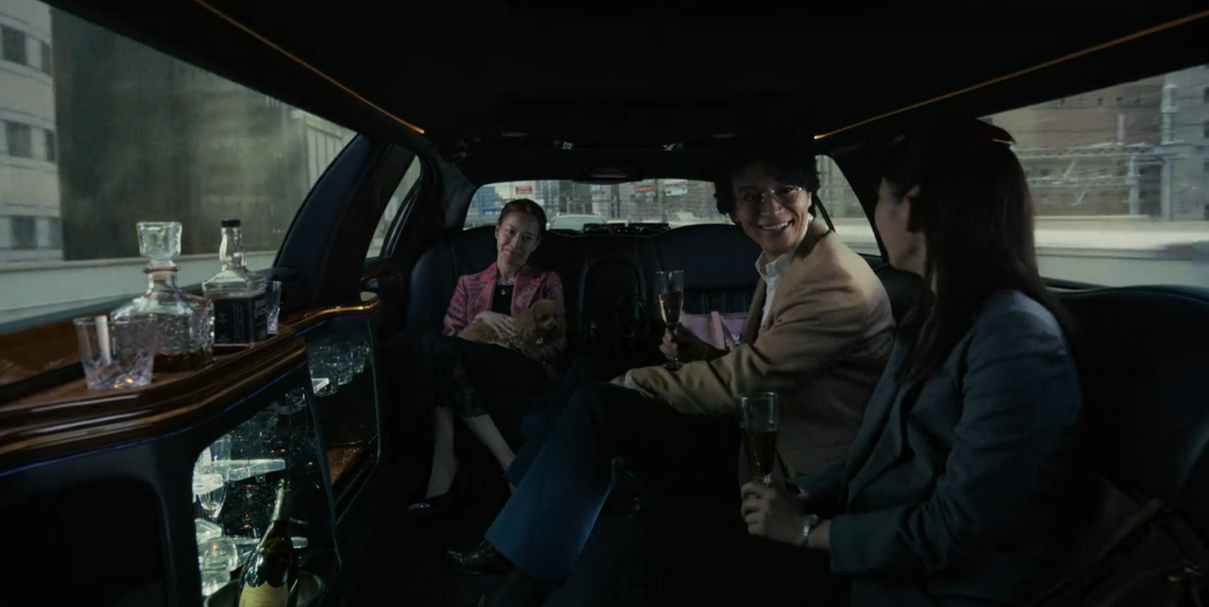
Another interpretation of Tiara’s disappearance flips the script on its head, placing the dog in the same narrative position as young Kazuko. Particularly, these are both innocent figures who become the subject of tides often beyond their control. Where the nuance comes, however, is how, in Tiara’s case, it’s Kazuko who becomes the controlling figure. Be it the meal that Tiara eats, or the specific vests she wears every day, all are determined by Kazuko, who repeatedly mentions her unfulfilled desire to be a mother. In vicariously loving Tiara like her child, however, she ends up potentially restricting the dog’s life.
In this case, the parallel to young Kazuko holds up surprisingly well, as all she has done her whole life can be summed up as an excessive defensive mechanism to protect her psyche from the worst reality has to offer. Tiara’s disappearance, as such, has less to do with the specificities of the plot and more to do with the symbolic meaning it carries.
Read More: Is Netflix’s Straight to Hell Based on a True Story?

